ROLE:
Product Designer
COMPANY:
Vertigo (para MEC)
PROJECT:
Portal Acesso Único
YEAR:
2022
Executive Summary
Overview
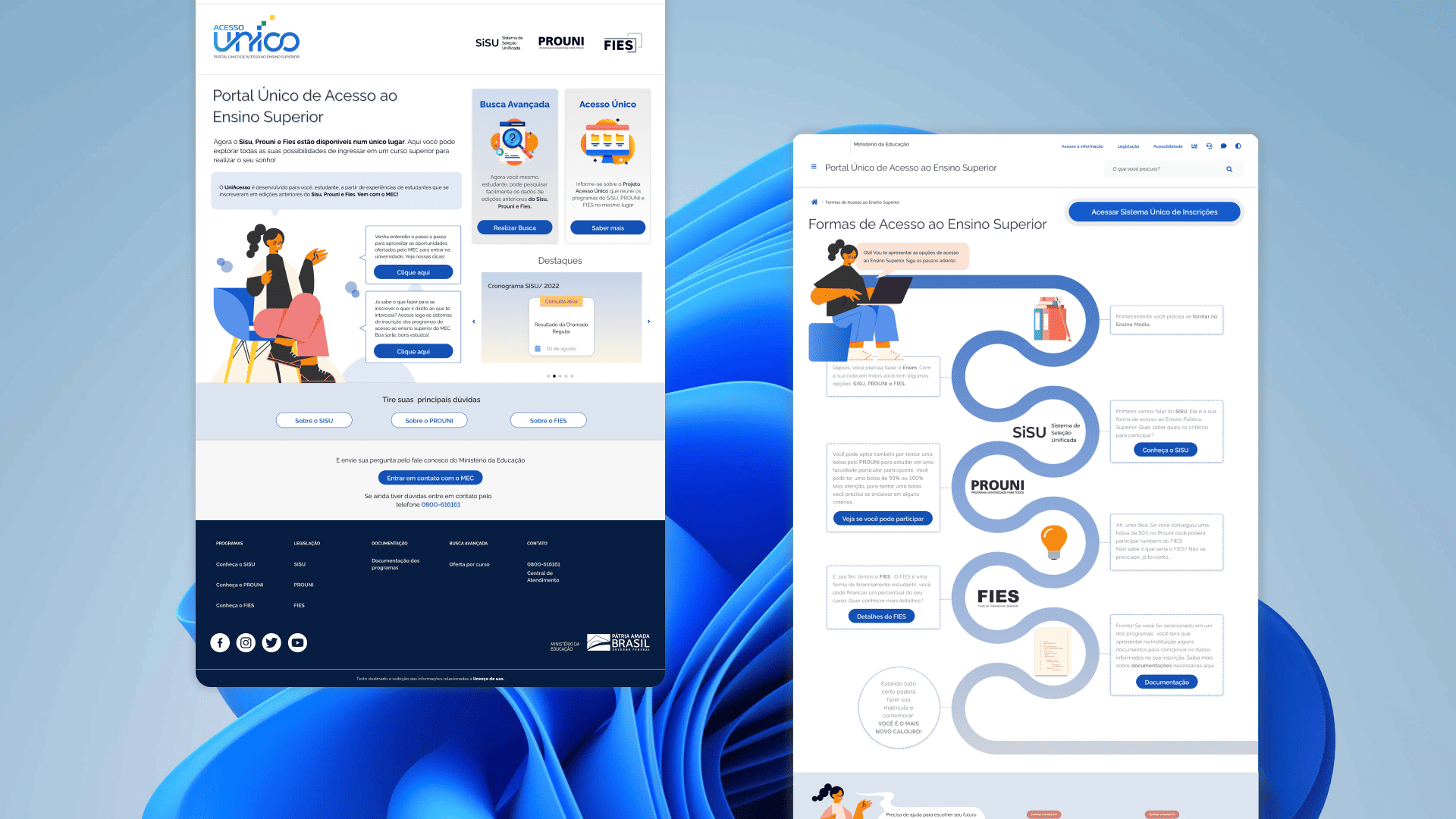
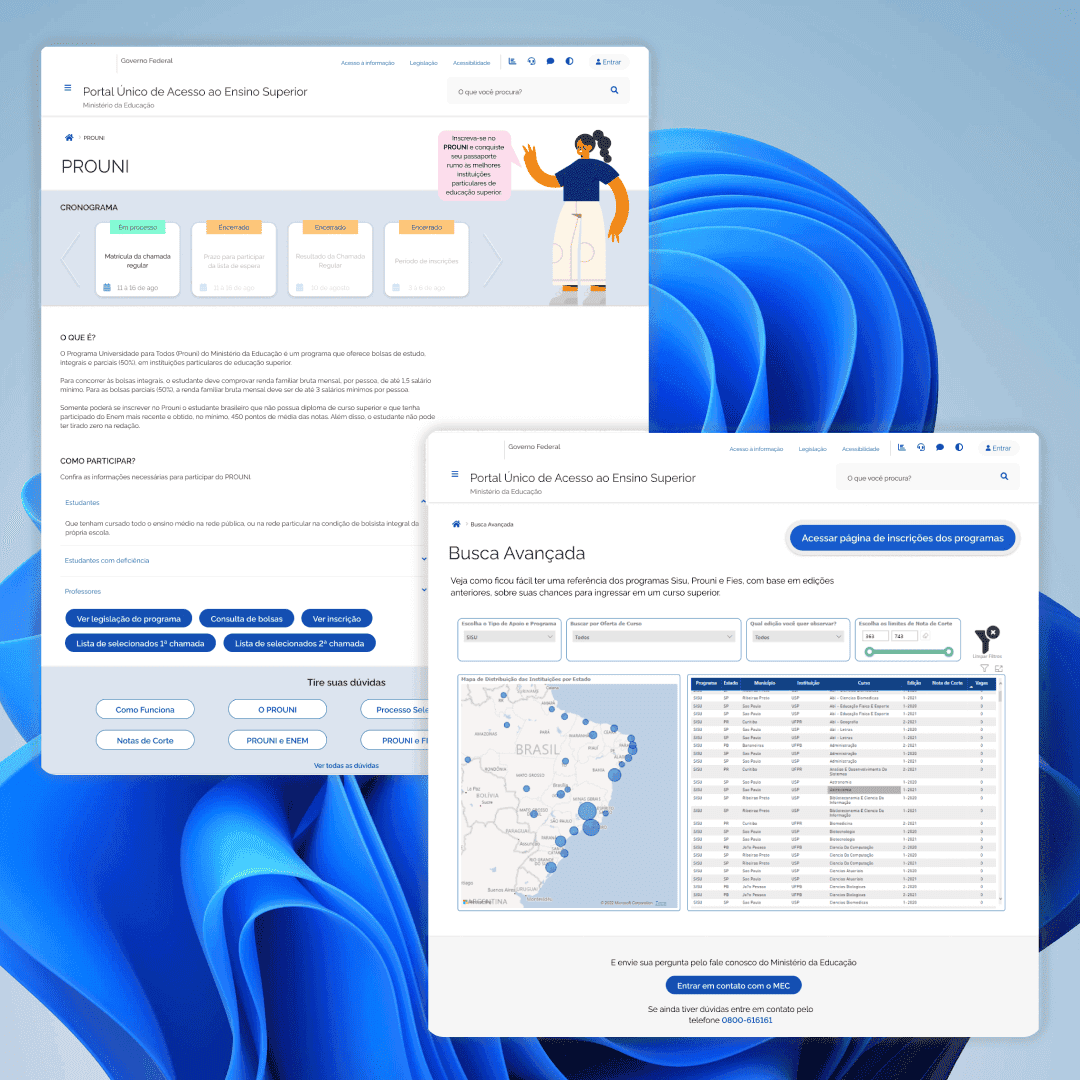
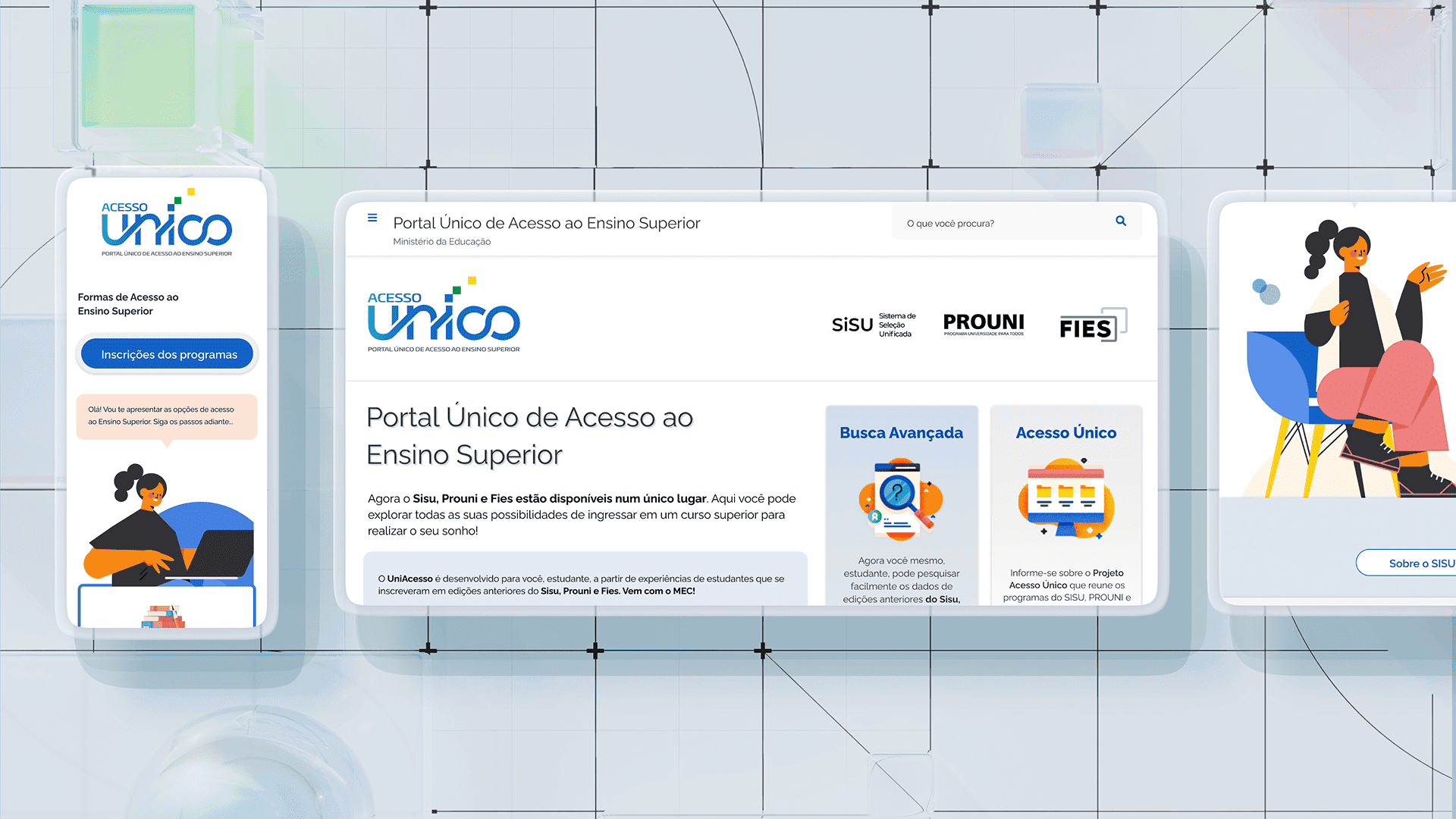
Acesso Único is a large-scale digital platform created for Brazil’s Ministry of Education (MEC) to unify access to federal higher education programs such as Sisu, Prouni, and FIES into a single operational ecosystem.
The initiative transformed fragmented and highly bureaucratic application journeys into a centralized, scalable, and accessible national experience, serving millions of users under extreme delivery constraints and high traffic demand.
The project combined complex eligibility logic, public policy requirements, accessibility standards, and operational scalability within a fully responsive platform launched nationwide in under three months.
My Role
Product Designer (via Vertigo)
Contributed to the design strategy and orchestration of a large-scale national platform
Structured complex eligibility and application flows into scalable user journeys
Participated in the full Design Sprint process, from problem framing to validation
Collaborated closely with Product, Engineering, and stakeholders under high-pressure delivery timelines
Helped balance usability, accessibility, operational constraints, and scalability requirements
The Challenge
Design and launch a unified national platform capable of:
Consolidating multiple federal education programs into one operational ecosystem
Translating highly complex eligibility and regulatory rules into intuitive decision flows
Supporting millions of users with different levels of digital literacy and internet access
Handling nationwide traffic peaks during critical enrollment periods
Ensuring accessibility and consistency under strict government standards
Delivering at extreme speed without compromising reliability or scalability
Systems Complexity
The project required balancing multiple layers of complexity simultaneously:
Regulatory and governmental constraints
Multiple interconnected education programs
High-volume operational flows
Accessibility requirements at national scale
Responsive behavior across low-end devices
Massive traffic peaks during enrollment periods
Users with highly diverse digital literacy levels
The core challenge was not only designing interfaces, but orchestrating a scalable service experience capable of simplifying institutional complexity for millions of citizens.
Key Decisions
Validate early with low-fidelity prototypes (Maze) → ensured usability before scaling
Run a full Design Sprint (5 days) → enabled fast alignment and rapid ideation
Adopt the gov.br Design System → accelerated delivery and ensured compliance
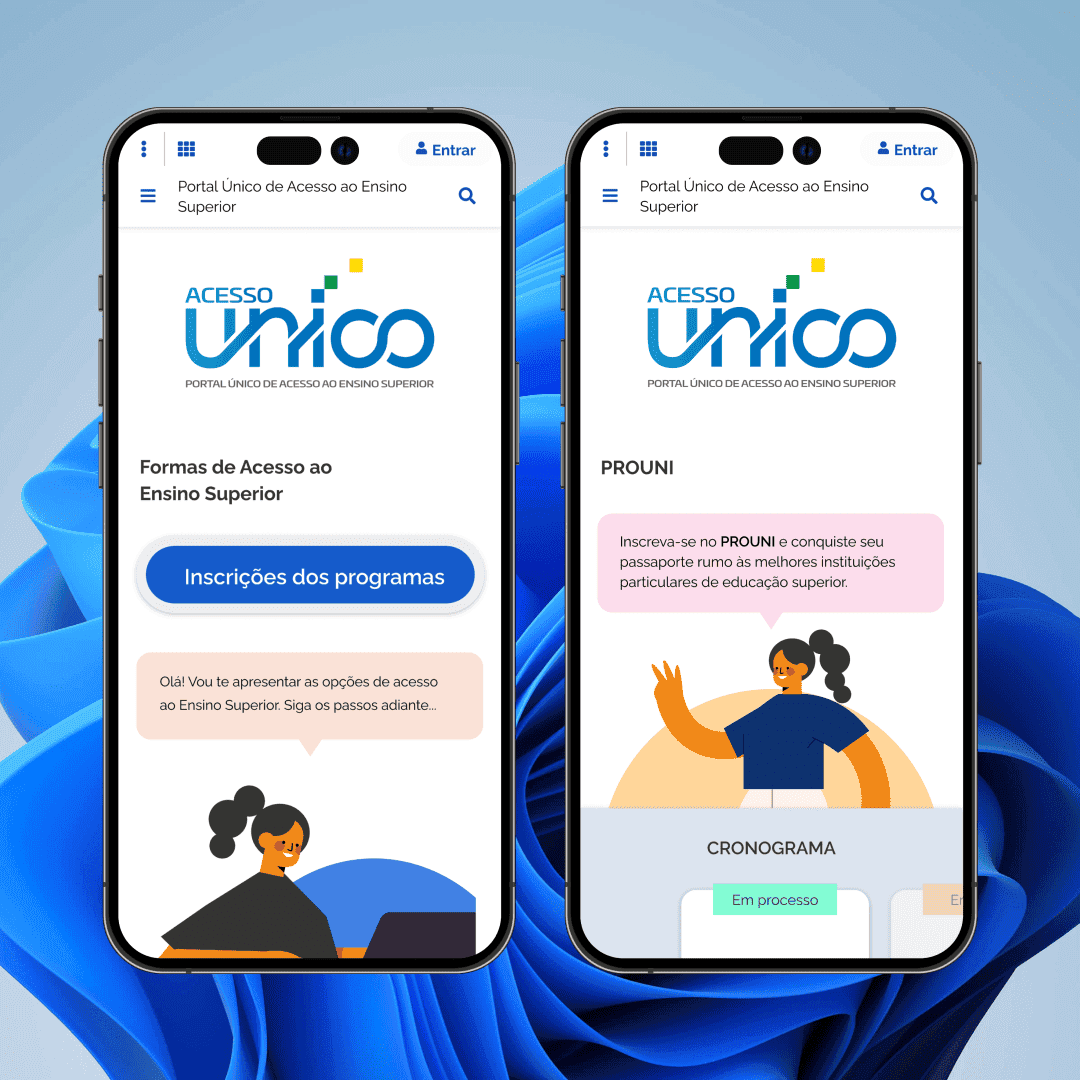
Design responsively from the start → addressed real user behavior across devices
Work in parallel with Engineering → reduced rework and enabled fast delivery
Impact
Unified access to Brazil’s main federal education programs
Supported more than 2 million users in the first year
Reduced operational fragmentation and duplicated user effort
Improved clarity across eligibility and application journeys
Established a scalable foundation for future government digital services
Demonstrated the viability of rapid large-scale public digital transformation
Key Learnings
Large-scale public platforms require systems thinking, not only interface design
Simplicity is the result of reducing operational and cognitive complexity simultaneously
Fast delivery depends on alignment quality more than process volume
Design systems become strategic accelerators in high-scale environments
Accessibility and scalability must be embedded from the beginning, not added later
Deep Dive
I worked on this project under the direction of Vertigo, contributing to the design and experience of a large-scale government platform with high traffic and nationwide impact. I joined the team one week before the Design Sprint, which served as the project's foundation; in a record-breaking three-month timeframe, we integrated user research to transform complex eligibility rules into an intuitive, high-impact national experience.
The project was part of a broader digital transformation initiative aimed at improving accessibility, transparency, and efficiency in public services. From a product perspective, the challenge was to design an experience capable of handling complex eligibility rules, large volumes of data, and multiple user journeys, while remaining clear and accessible to millions of students for the entire Brazilian population with different levels of digital literacy.
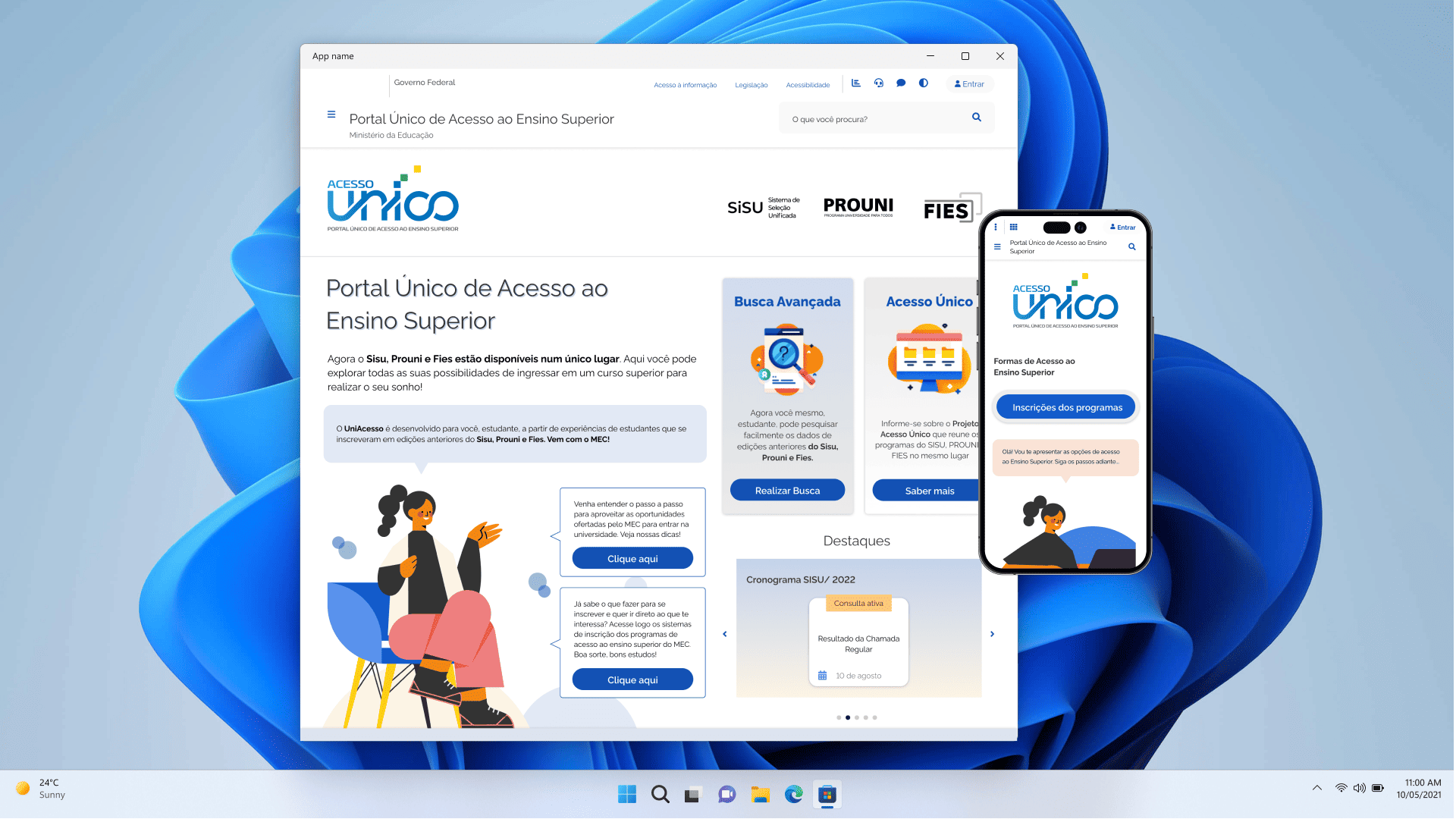
URL: https://acessounico.mec.gov.br/
Process
Unlike more traditional approaches, Acesso Único was conceived under extreme time constraints, requiring a highly streamlined, collaborative, and delivery-oriented process.
The project structure was based on four main stages:
Full Design Sprint (5 days)
Validation with low-fidelity prototypes (Maze)
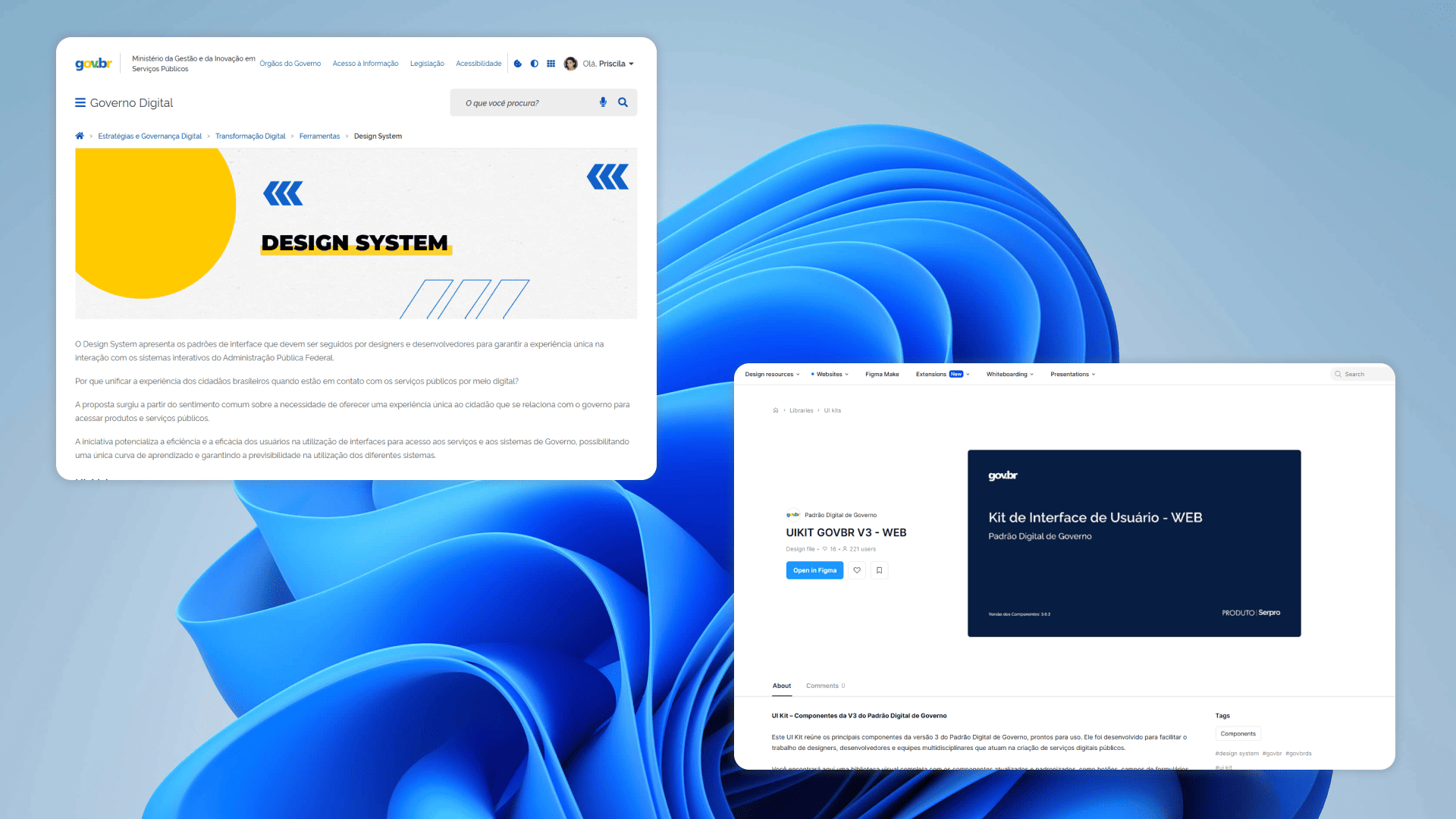
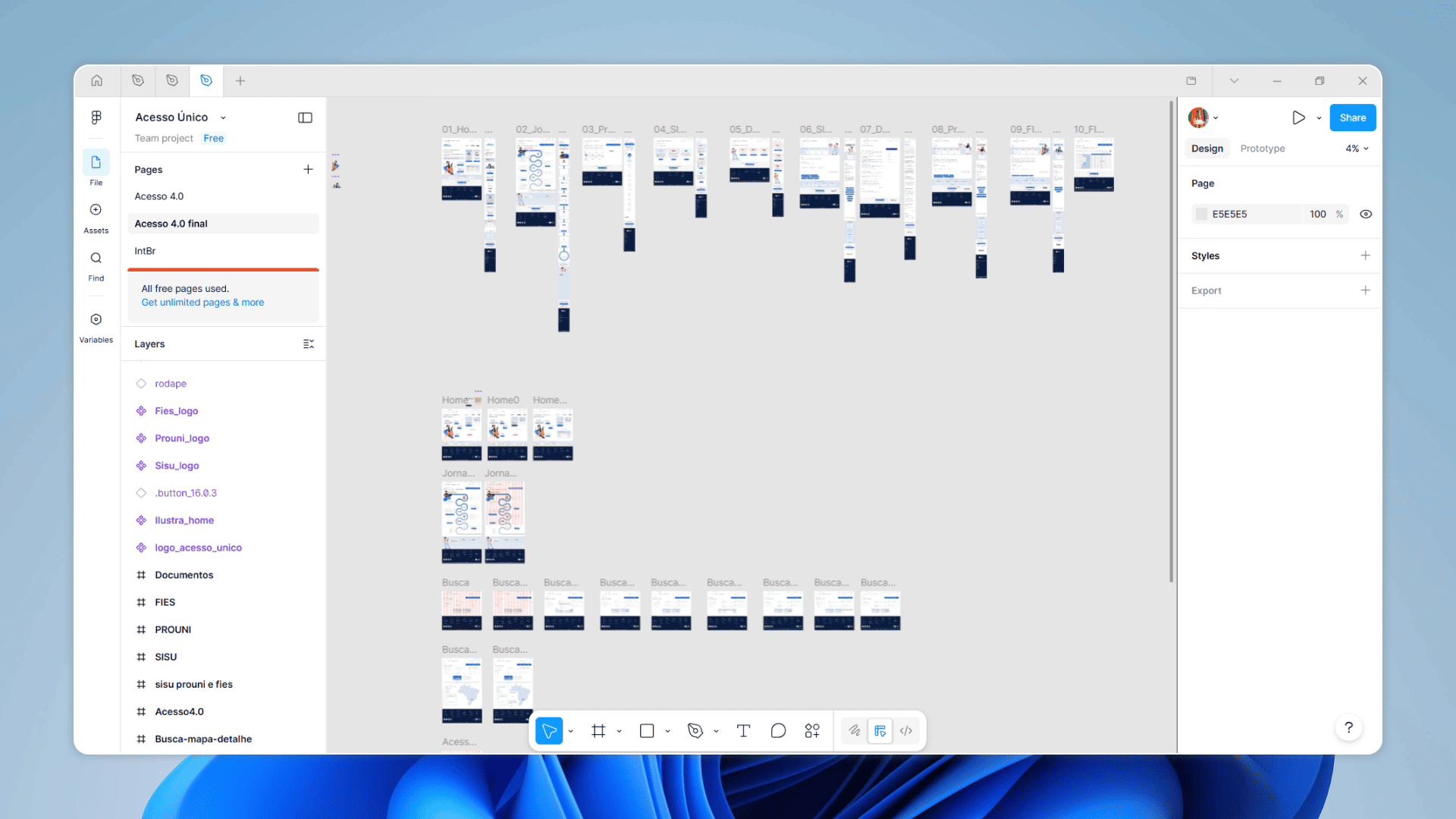
Accelerated high-fidelity prototyping (Figma + gov.br Design System)
Collaborative development with Engineering under a tight timeline
Design Sprint (5 days)
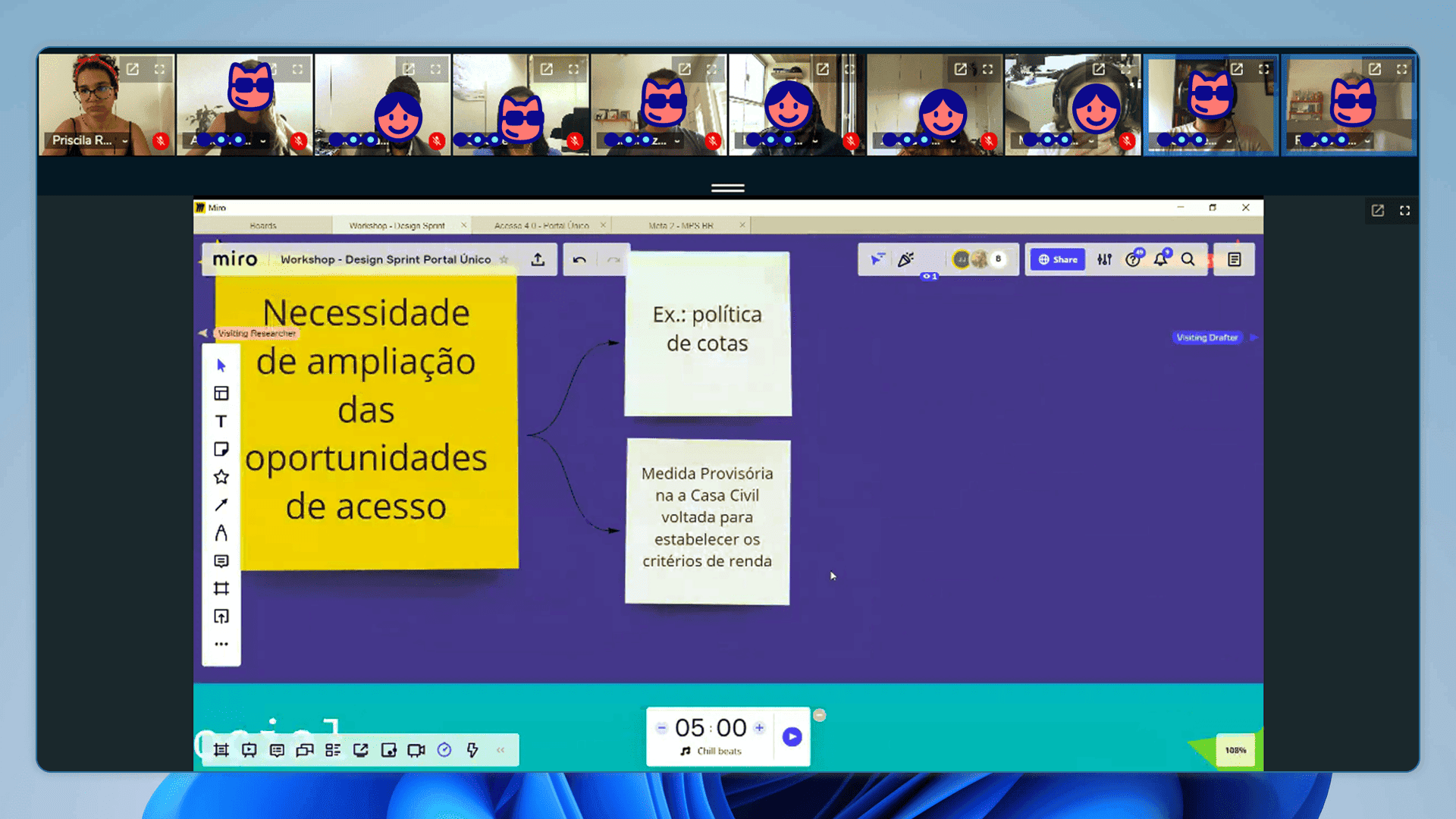
The project started with a full five-day Design Sprint, bringing together key stakeholders — including product, technology, business teams, and representatives from the Ministry of Education.
This phase was critical to quickly align on:
Product vision and strategic goals
Technical and regulatory constraints
Complex eligibility rules
Core user journeys
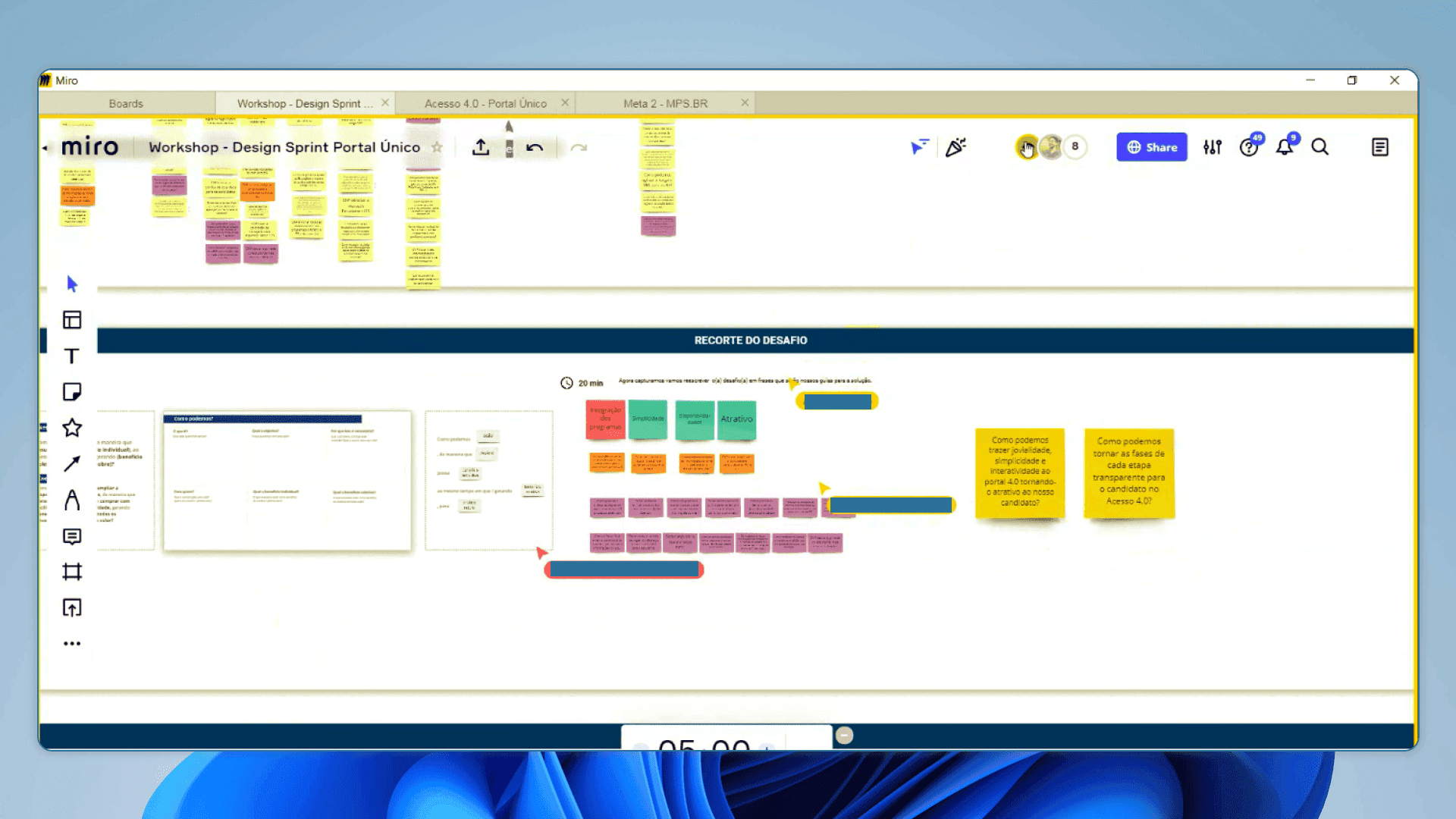
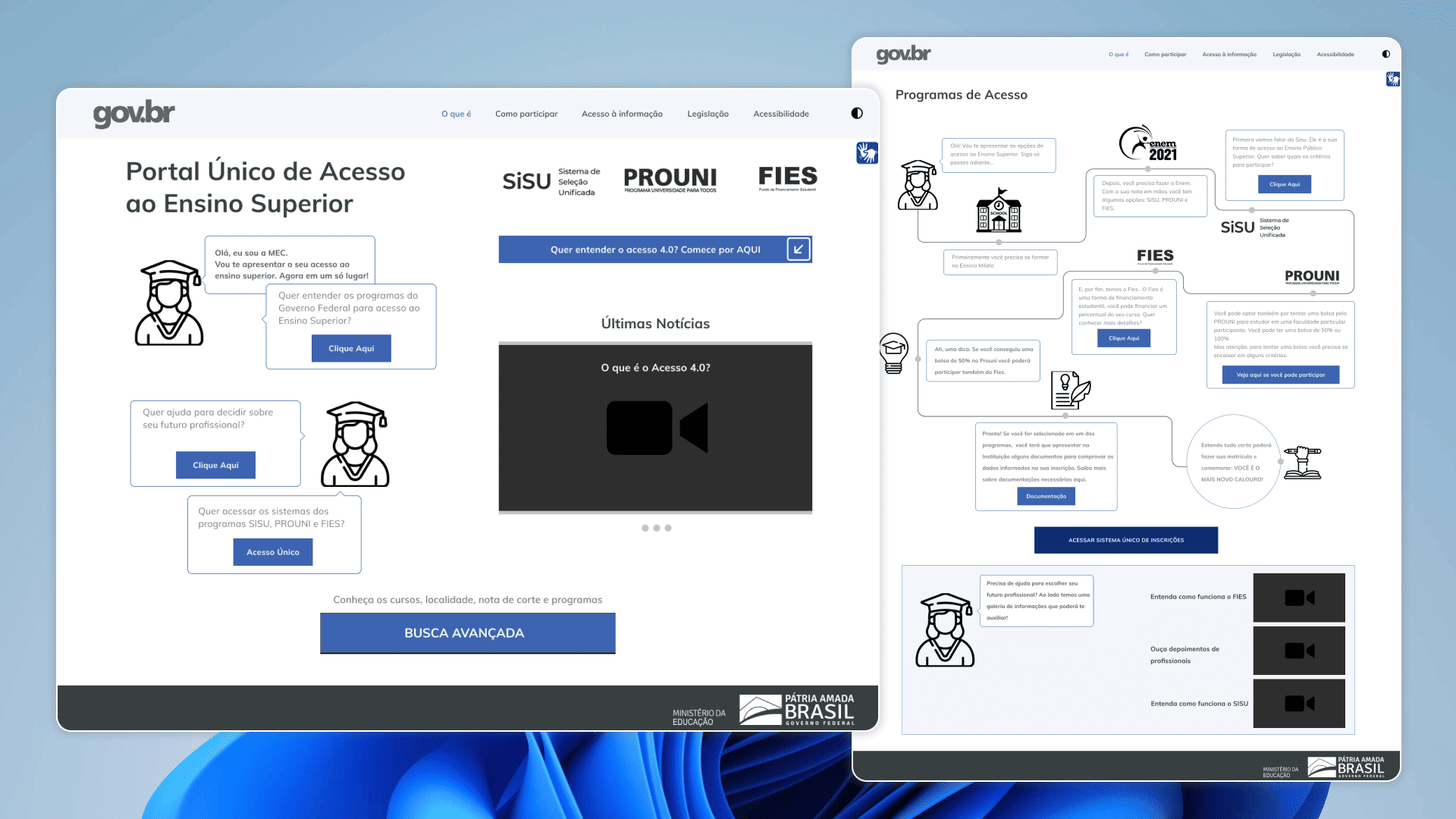
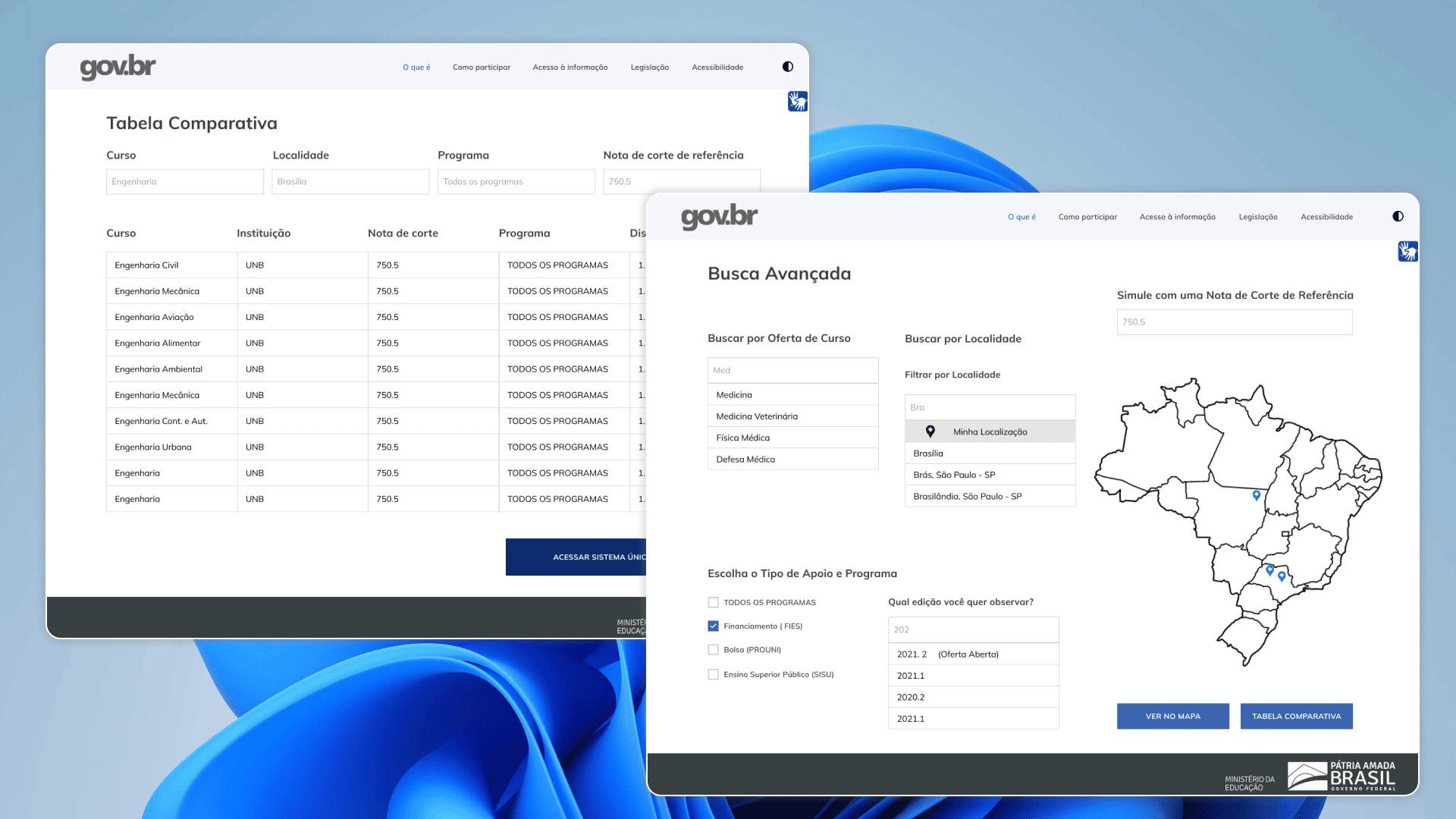
By the end of the fifth day, we had already produced structured low-fidelity prototypes covering the platform’s main flows.
Validation with prototypes (Maze)
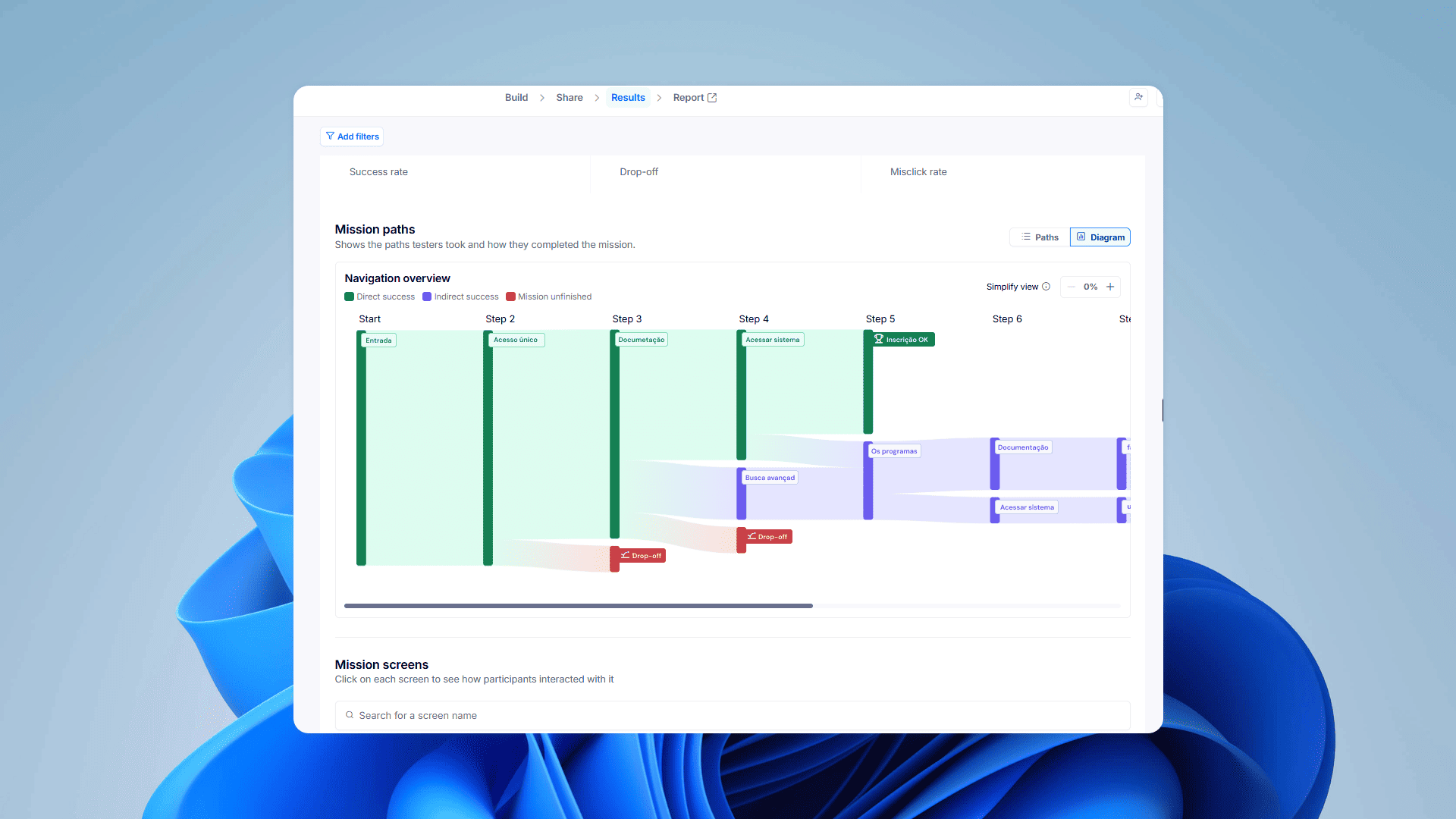
With low-fidelity prototypes defined, we immediately moved into validation with real users using Maze.
The tests focused on:
Understanding the unified journey
Clarity of eligibility criteria
Ease of data entry and reuse
Navigation across flows
These insights allowed us to quickly refine key usability issues before scaling to high-fidelity design.
High-fidelity design (gov.br Design System + Figma)
The design evolved rapidly into high-fidelity prototypes in Figma.
We fully adopted the gov.br Design System, ensuring:
Accessibility compliance
Visual and interaction consistency
Faster implementation
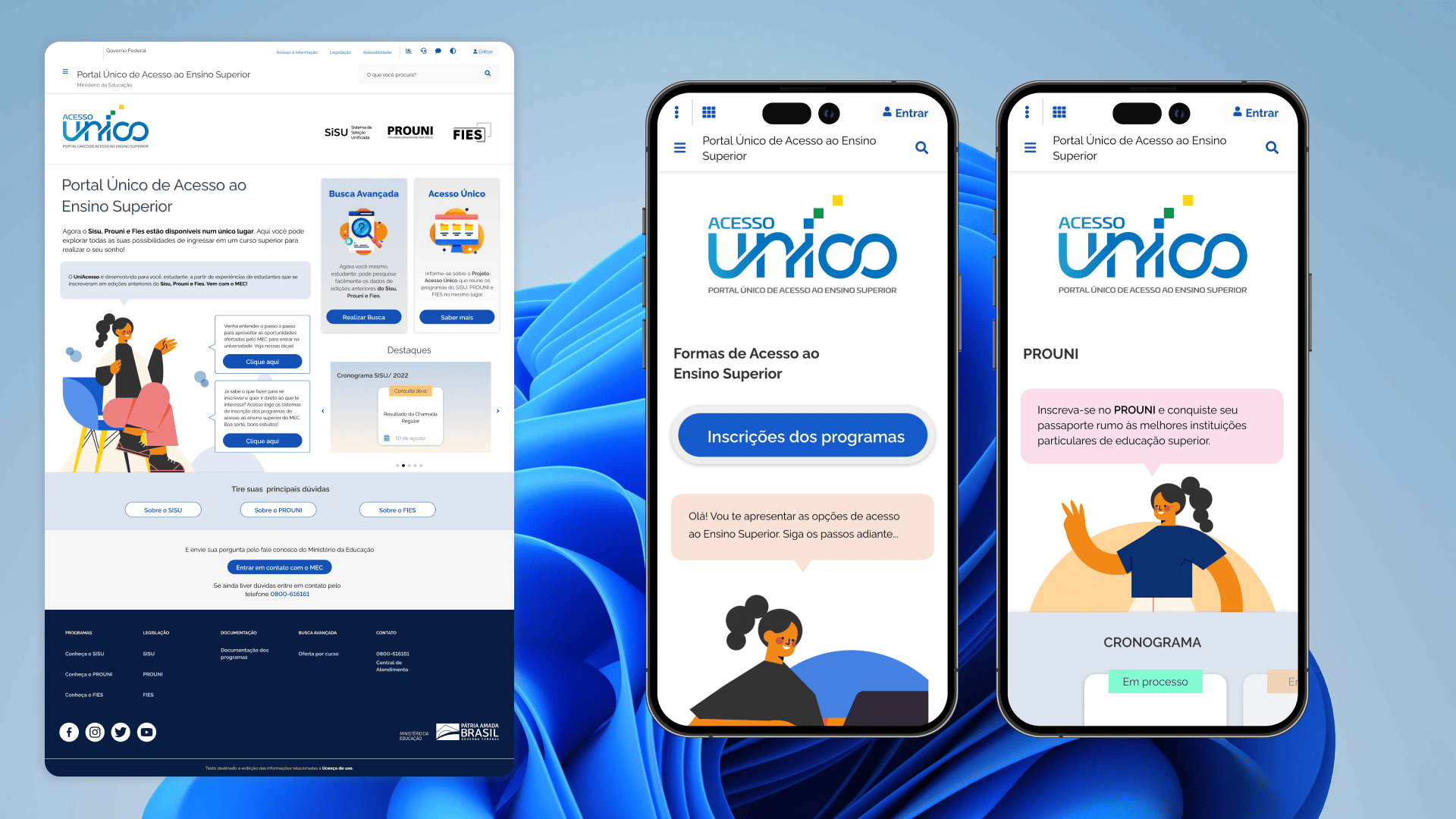
The responsive version was designed in parallel, considering real usage contexts.
Responsive validation
Responsive flows were also tested with users via Maze, ensuring usability across devices, especially mobile.
Collaborative development and delivery
Design and development happened in parallel, with strong collaboration between Product, Design, and Engineering.
The system was launched in just 3 months, without additional testing cycles before go-live due to time constraints.
Results and impact
The platform reached over 2 million users in its first year, with peak access during the ENEM application period. It established a unified entry point for federal education programs, reducing fragmentation and improving accessibility at scale.
Key Decisions & Trade-offs
Decision | Trade-off | Outcome |
|---|---|---|
Design Sprint | Less deep discovery | Fast alignment |
Low-fi testing | Limited depth | Early validation |
gov.br DS | Less flexibility | Speed + consistency |
Parallel dev | Less iteration | On-time delivery |
No final testing | Higher risk | Met deadline |
What I’d Do Differently
Add post-launch discovery loops
Implement analytics tracking from day one
Expand edge-case validation
Strengthen content design for clarity