ROLE:
Product Designer
COMPANY:
TOTVS S/A
PROJECT:
Aplicativo de acompanhamento escolar
YEAR:
2019
Executive Summary - Pocket Case Study
Overview
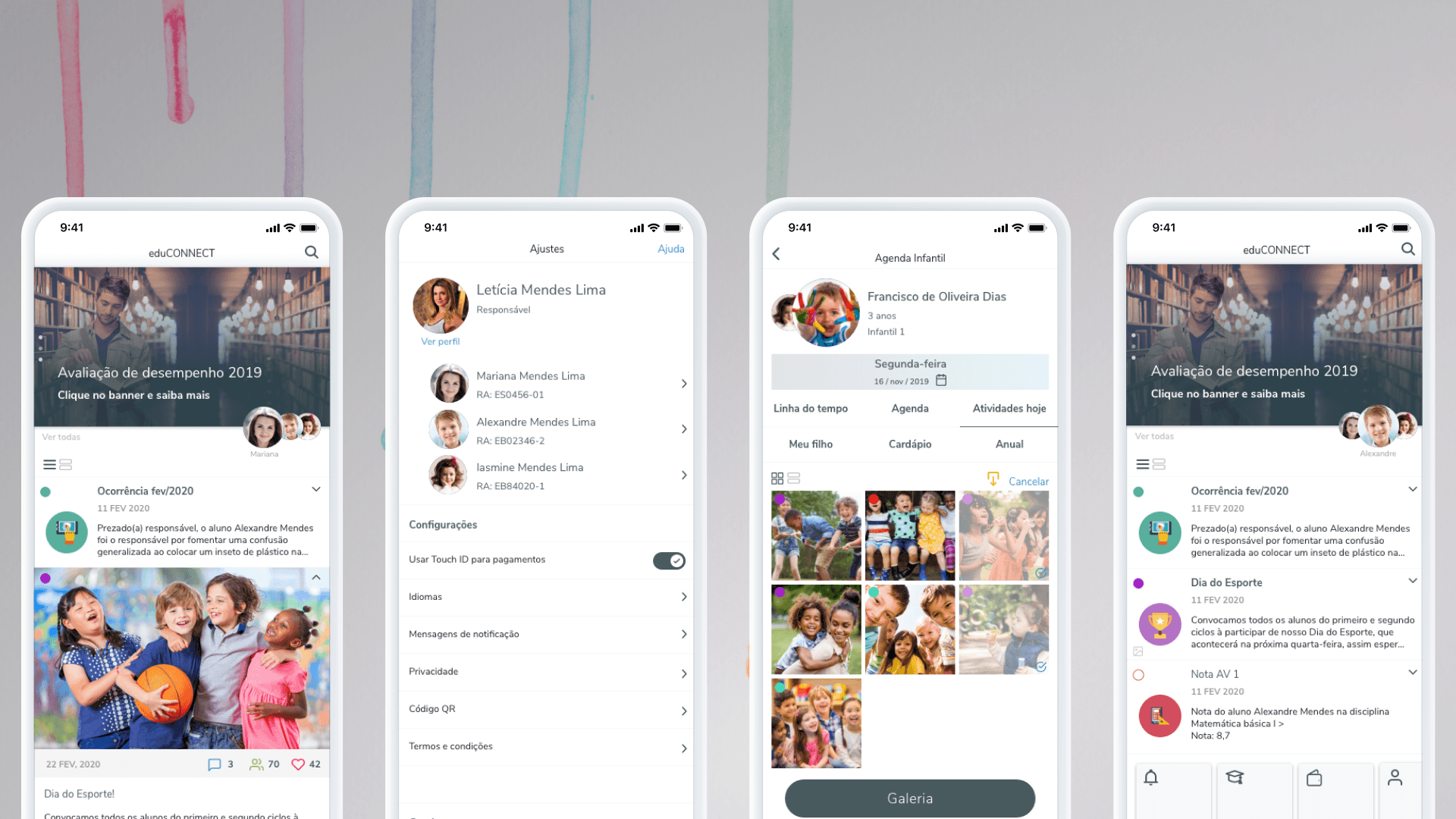
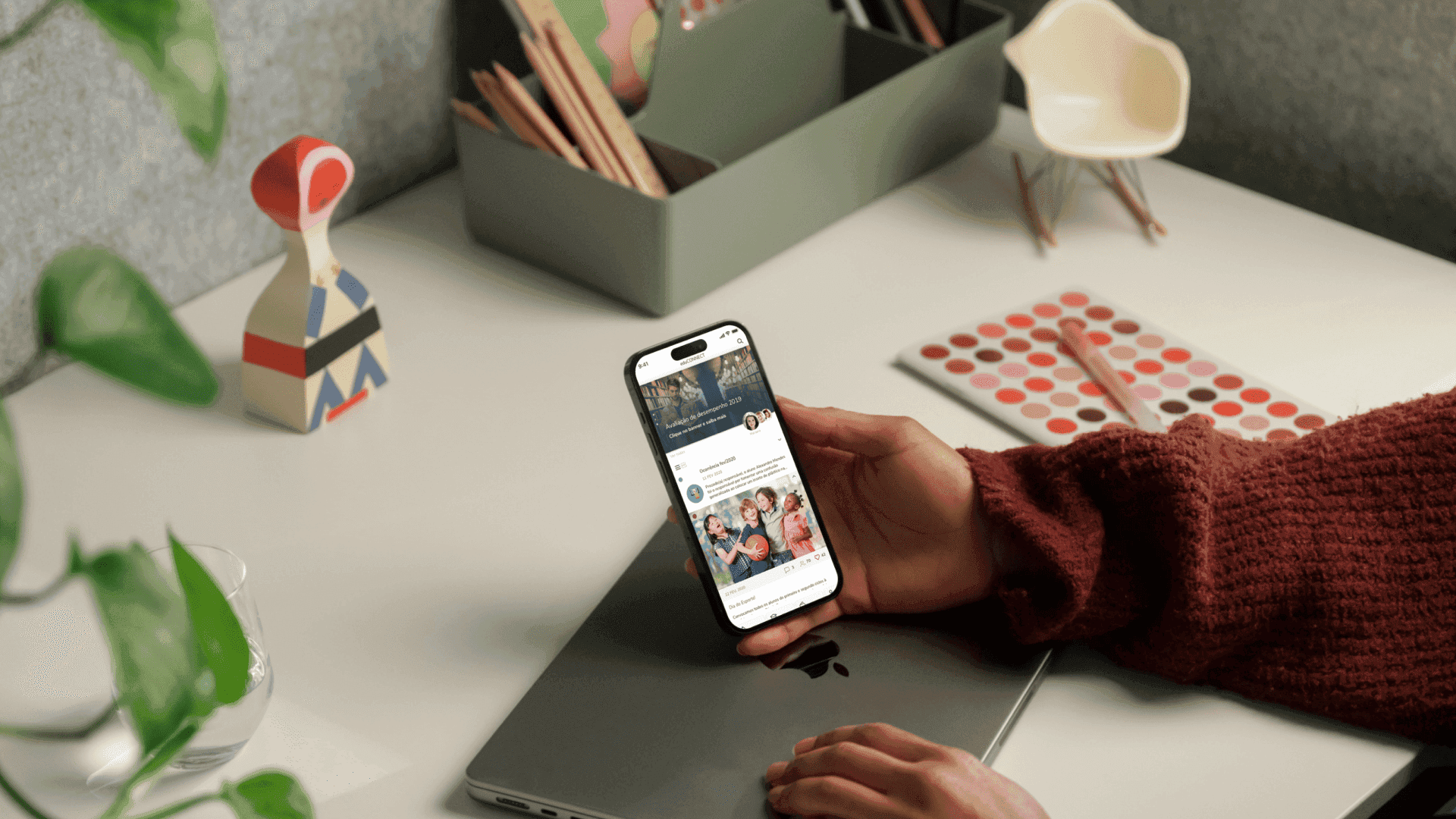
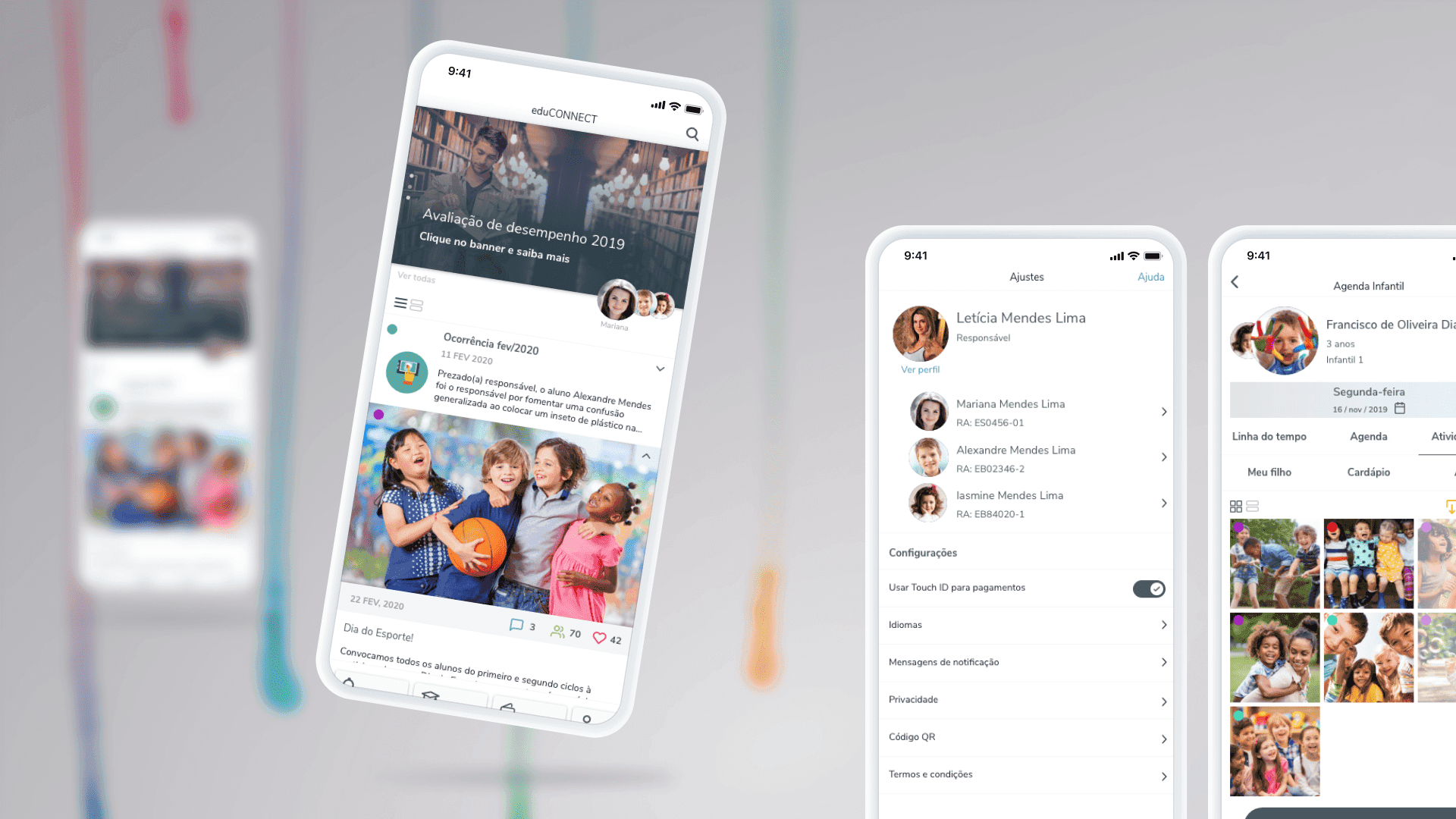
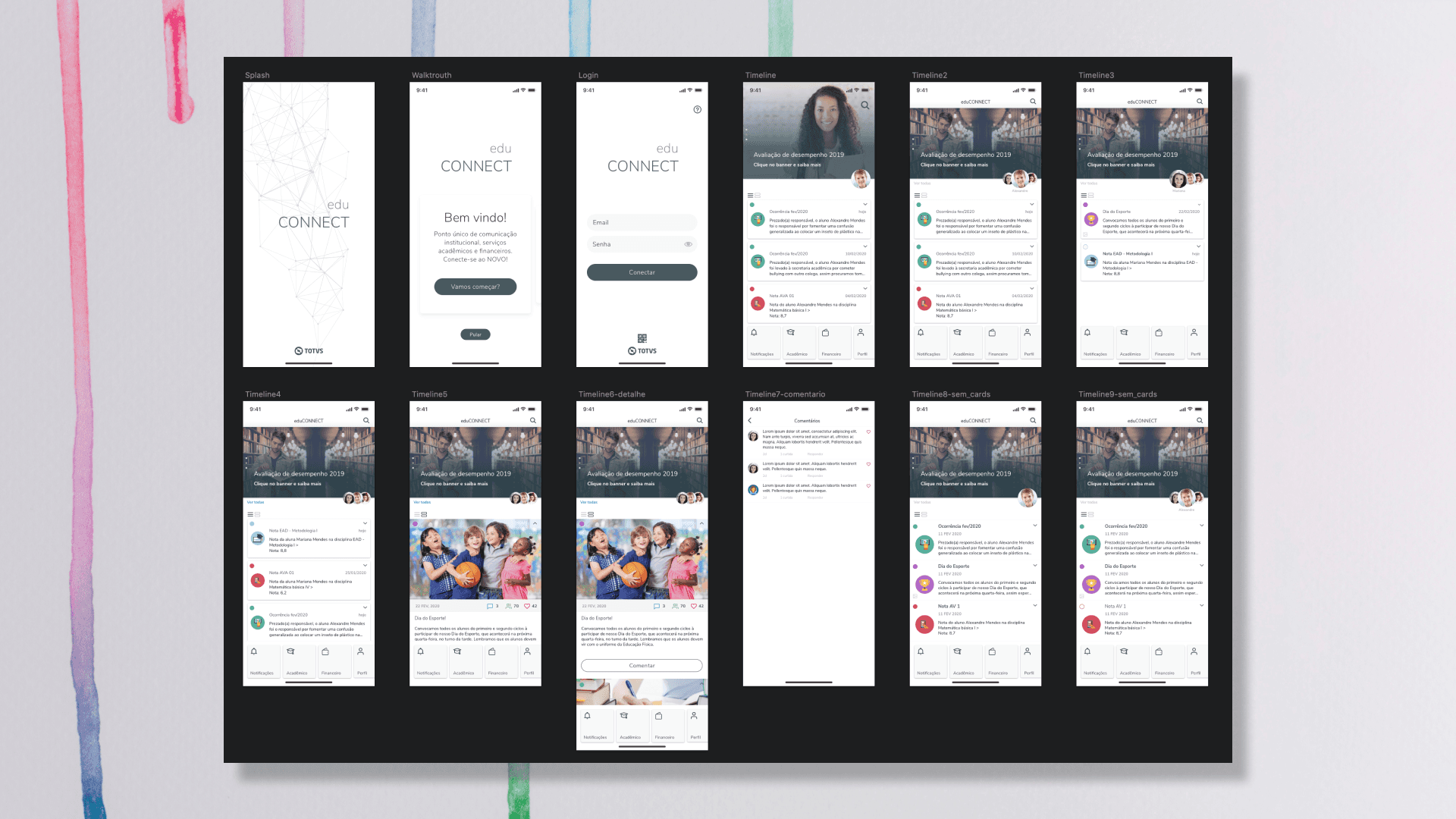
Meu EduCONNECT, part of the TOTVS Educacional ecosystem, was designed as a mobile engagement and operations platform connecting educational institutions, students, guardians, and teachers within a unified digital experience.
The product centralized communication, academic management, and financial workflows into a real-time mobile ecosystem, reducing operational friction while strengthening institutional engagement and accessibility across different educational contexts.
The platform was integrated with the RM ERP ecosystem, enabling synchronized academic and administrative operations at scale.
My Role
Product Designer
Participated in product strategy definition through Lean Inception workshops
Helped structure mobile journeys and scalable engagement flows
Contributed to prioritization and discovery processes across business and user needs
Developed low-fidelity prototypes for early validation and rapid iteration
Collaborated closely with Product and Engineering teams throughout continuous delivery cycles
The Challenge
Design a mobile experience capable of:
Centralizing fragmented academic, communication, and financial services into a unified experience
Supporting real-time interactions between institutions, students, guardians, and teachers
Reducing operational friction in educational and administrative workflows
Delivering fast and intuitive mobile experiences across different user profiles
Scaling across institutions with different operational models and maturity levels
Increasing engagement while simplifying access to critical information
Ecosystem Complexity
The project required orchestrating multiple operational and communication layers simultaneously:
Academic management
Institutional communication
Financial operations
Real-time notifications
Multi-profile access and permissions
ERP synchronization
Mobile accessibility and usability
The main challenge was creating a mobile experience capable of simplifying institutional complexity while maintaining operational depth and real-time connectivity.
Key Decisions
Conduct UX workshops based on Lean Inception → accelerated strategic alignment
Adopt prioritization and discovery frameworks → structured product decision-making
Validate flows early through low-fidelity prototypes → reduced risks before development
Develop the product through agile multidisciplinary teams → enabled continuous platform evolution
Impact
Consolidated academic, financial, and communication operations into a unified mobile platform
Improved engagement between institutions, students, and families
Reduced friction across administrative and communication workflows
Expanded accessibility to institutional services through mobile-first experiences
Strengthened the digital ecosystem of TOTVS Educacional through scalable mobile operations
Key Learnings
Mobile platforms require prioritizing clarity, speed, and accessibility simultaneously
Engagement ecosystems depend on reducing operational friction across all touchpoints
Early prioritization frameworks accelerate alignment in complex products
Real-time experiences require close integration between product, operations, and technology
Scalable ecosystems are built through orchestration, not isolated features
Deep Dive
The platform was structured around a centralized mobile self-service model, enabling students, guardians, teachers, and institutions to access critical academic, financial, and communication workflows through a unified experience.
The solution focused on:
improving accessibility to institutional services;
strengthening engagement between schools and families;
reducing operational bottlenecks;
and increasing real-time visibility across educational operations.
Integration with the RM ERP ecosystem enabled synchronized academic and administrative operations, supporting scalability across different educational institutions.
Process
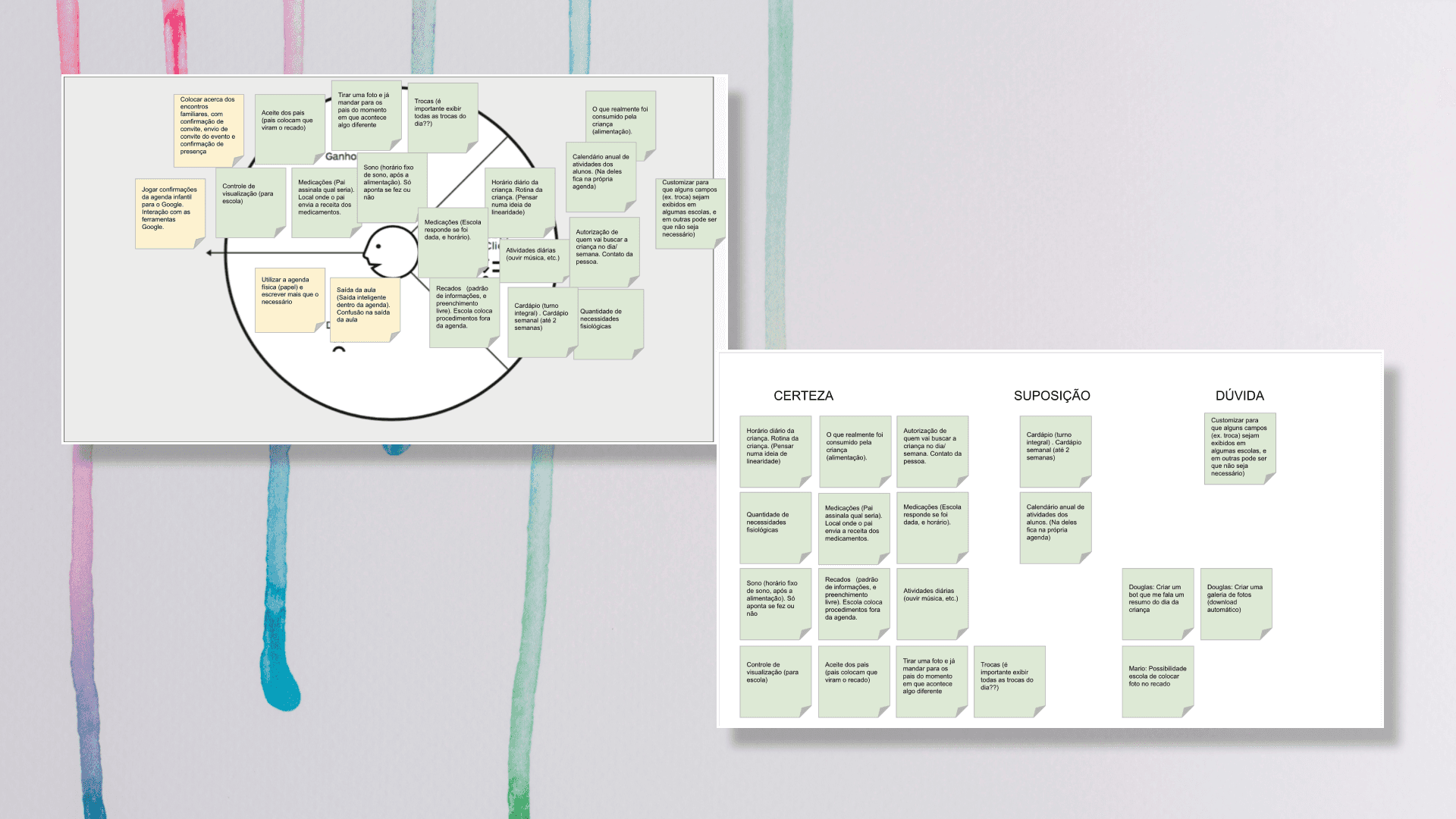
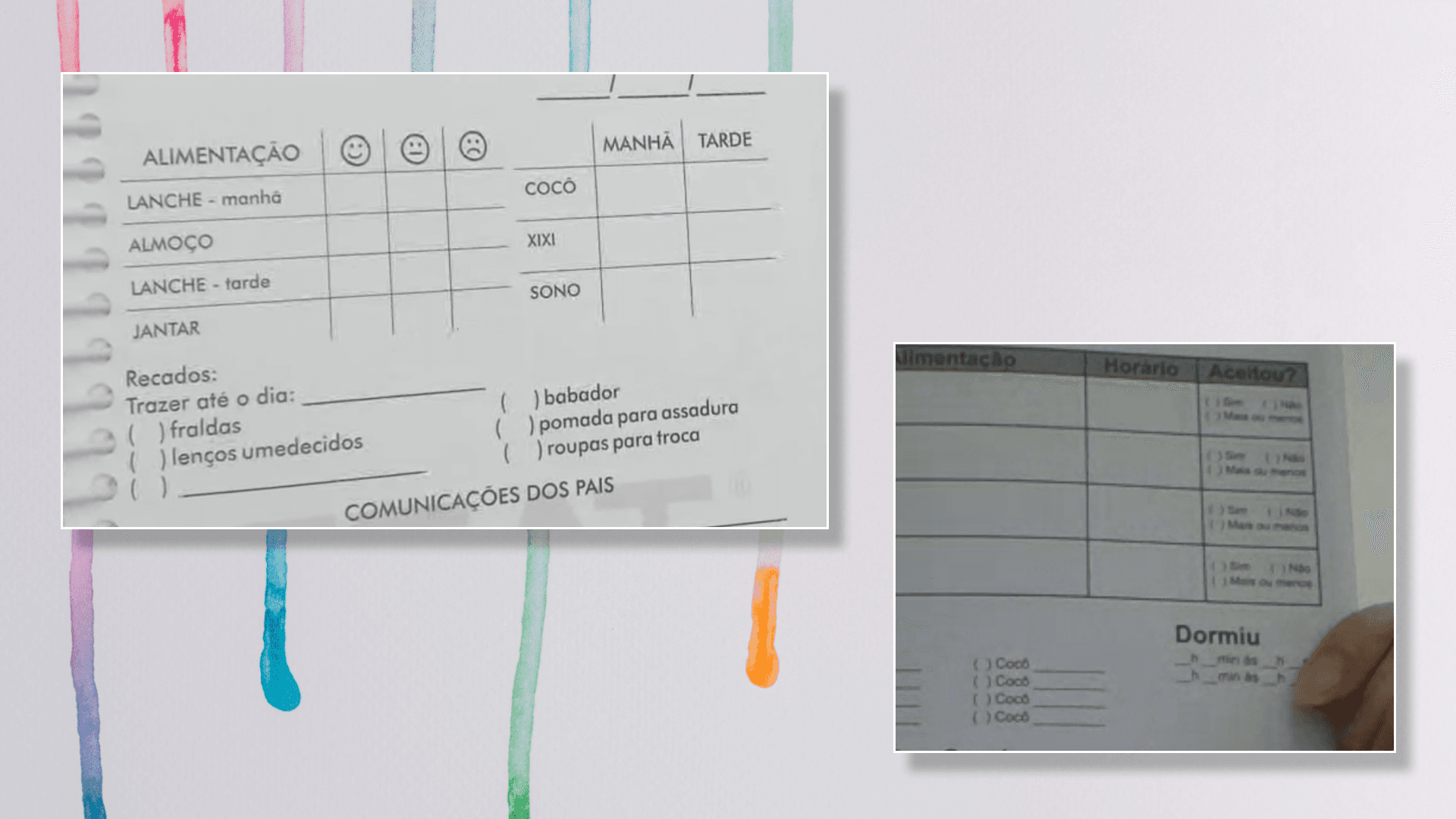
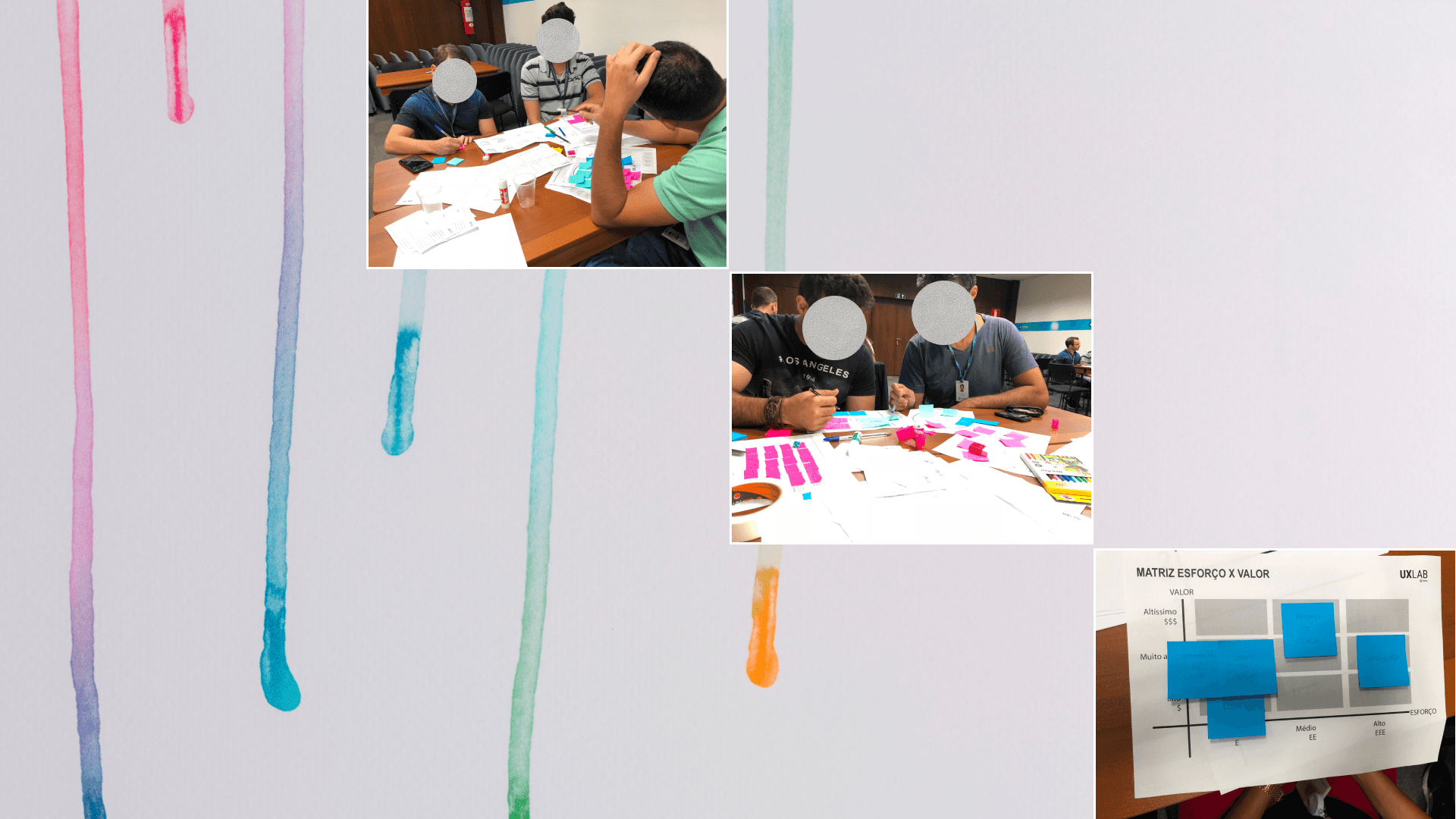
The project started with a UX Workshop based on Lean Inception, bringing together stakeholders, Product, Design, and Engineering teams to collaboratively define the product vision.
During the process, frameworks such as the following were adopted:
Effort vs. Value Matrix
CSD Matrix (Certainties, Assumptions, and Doubts)
Value Proposition Canvas
Competitor Desk Research
These tools helped structure:
Product priorities
Business hypotheses
User needs
Differentiation opportunities
Prototyping & Validation
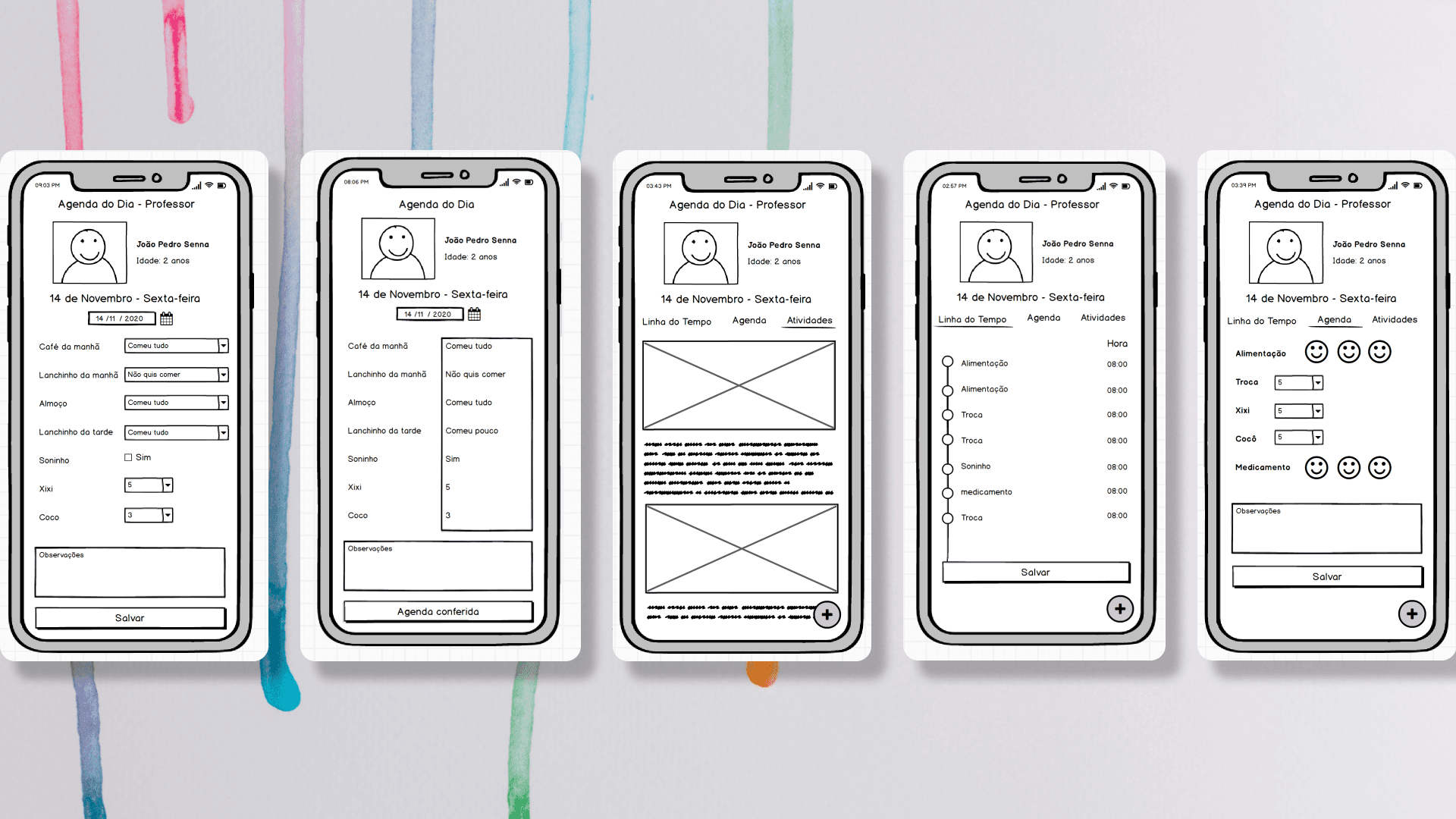
Initial flows were designed through low-fidelity prototypes using Balsamiq.
Goals of this stage:
Rapidly explore mobile journeys
Validate information architecture
Identify friction points early
The prototypes were presented to users and tested through navigable experiences in InVision, enabling early validation before development.
Development
Development was carried out collaboratively through agile multidisciplinary teams, promoting continuous collaboration between Product, Design, and Engineering.
This approach enabled:
Incremental product evolution
Continuous feature prioritization
Fast adaptation to institutional needs
Results
Meu EduCONNECT became a mobile solution capable of strengthening connections between educational institutions, students, guardians, and teachers through a centralized digital experience.
Observed impacts:
Easier access to academic and financial information
Improved communication between institutions and families
Reduced friction in administrative processes
Consolidation of the mobile experience within the TOTVS Educacional ecosystem
Key Takeaways
Mobile products require simplicity and fast access to information
Lean Inception accelerates strategic alignment in digital products
Early prototyping reduces risks and improves decision-making
Agile collaboration strengthens product scalability