ROLE:
Product Designer
COMPANY:
TOTVS S/A
PROJECT:
Human-centered AI for predictive student retention
YEAR:
2019
Executive Summary
Overview
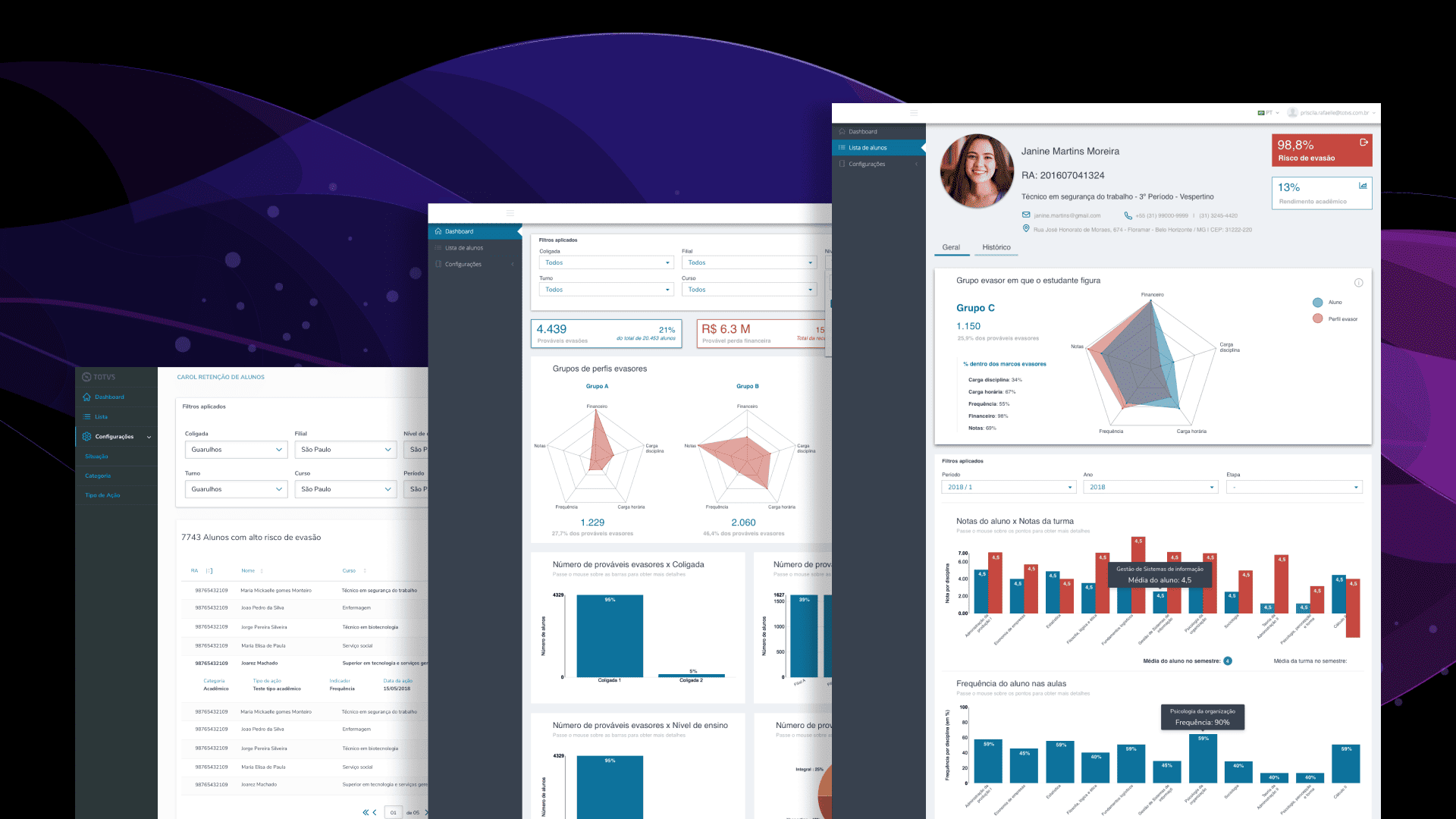
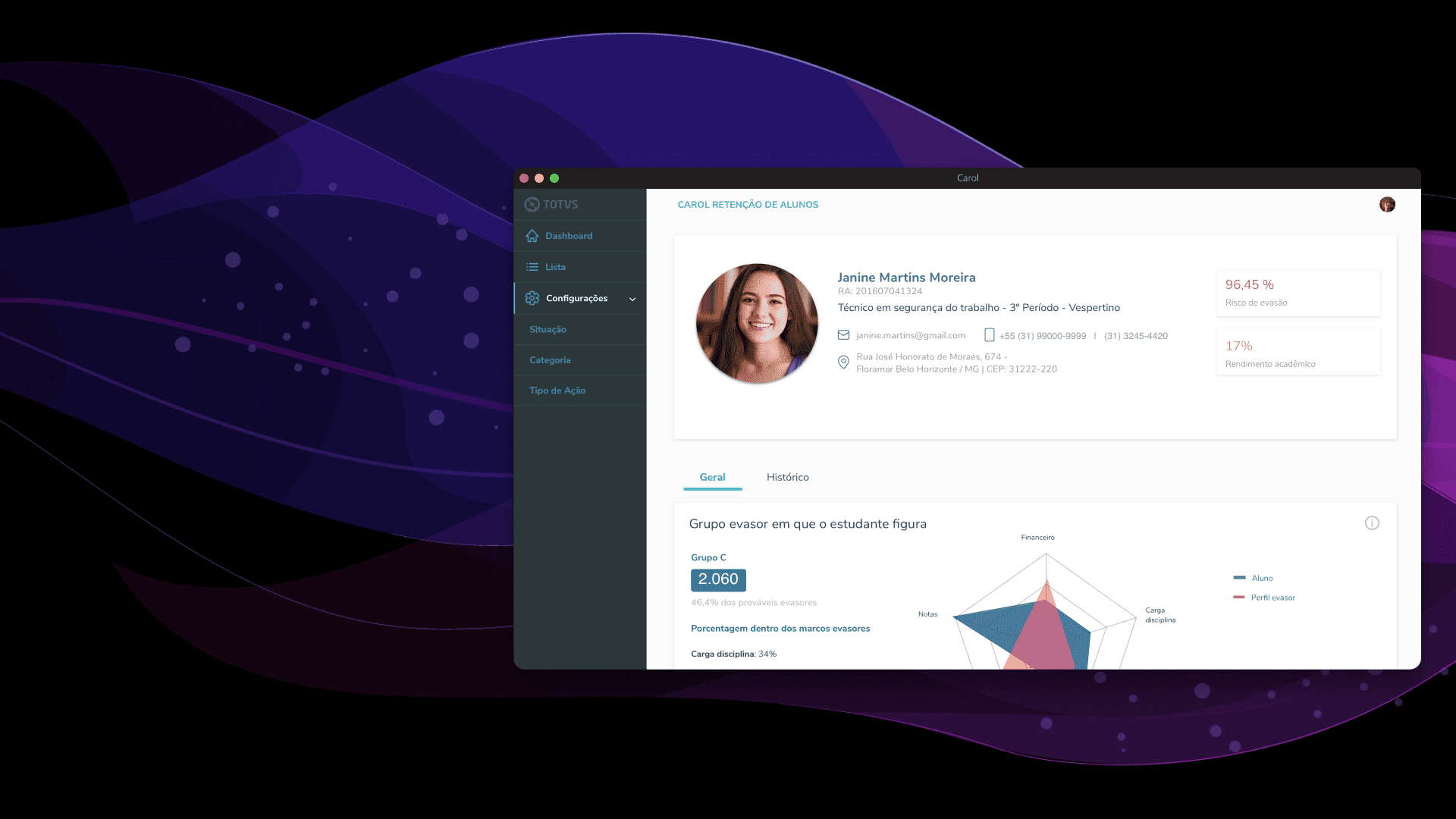
Carol is an AI-powered predictive analytics platform developed by TOTVS for the education sector, focused on helping institutions anticipate student dropout risks and improve retention strategies.
The platform combines behavioral, academic, and operational data to support proactive decision-making through predictive intelligence and actionable insights.
My role focused on translating complex predictive models into intuitive, human-centered experiences that enabled educators and administrators to confidently interpret data and act earlier in the student journey.
My Role
Design Lead — Education Vertical (2016–2019)
Led end-to-end product experience strategy for AI-powered educational analytics
Structured user-centered workflows for predictive decision-making
Conducted qualitative research with educators and academic leaders
Translated complex predictive models into actionable and intuitive product experiences
Defined scalable interaction and visualization patterns for analytical environments
Facilitated collaboration across Product, Engineering, and Business teams
Helped bridge data science capabilities and real-world user behavior
AI Explainability & Trust
One of the key UX challenges was making predictive intelligence understandable and trustworthy for users with low data literacy:
The experience strategy focused on:
reducing ambiguity in predictive insights
increasing confidence in decision-making
clarifying risk indicators and recommendation logic
simplifying analytical interpretation
supporting proactive intervention workflows
The goal was not only to display predictions, but to help users confidently act upon them.
The Challenge
Design a human-centered AI product capable of transforming predictive educational analytics into actionable decision support for institutions with varying levels of digital maturity.
The platform needed to:
translate complex predictive models into intuitive experiences
reduce cognitive overload in analytical environments
support proactive intervention workflows
integrate fragmented institutional data
increase trust in AI-assisted recommendations
enable faster and more confident decisions
Key Decisions
Adopt a user-centered approach from the ground up → grounded the product in real institutional needs
Prioritize clarity over data density → reduced cognitive overload in dashboards
Create reusable patterns for analytics → ensured scalability across the platform
Implement structured usability evaluation (severity model) → enabled objective prioritization
Impact
Improved usability and clarity of analytical insights
Reduced friction in identifying at-risk students
Enabled more data-informed decision-making in institutions
Established a scalable design foundation for the platform
Key Learnings
Data products succeed when insights are actionable, not just available
Visual hierarchy is critical in analytical environments
Continuous validation is essential for complex, evolving products
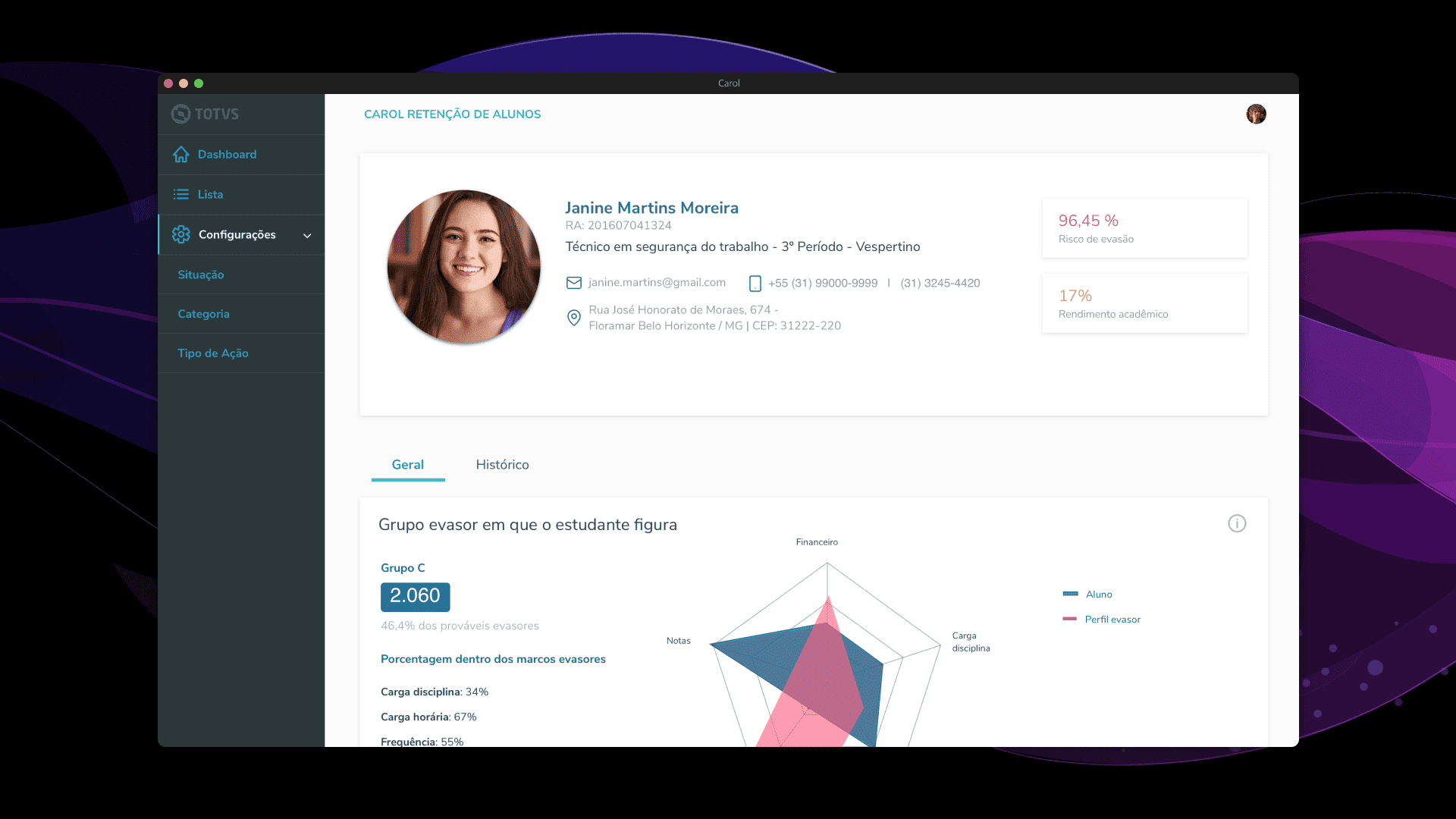
Deep Dive
Carol is an artificial intelligence platform developed by TOTVS for the education sector, focused on predictive analytics and reducing student dropout throughout the academic journey.
I was part of the team from 2016 to 2019, acting as the Design Lead for the Education vertical. During this time, I was responsible for driving and structuring the product experience, leading UX and UI from concept to final delivery.
As a result, we built the entire visual identity of the Carol Platform – Student Retention, grounded in a deeply user-centered approach. Extensive customer research was conducted, including in-depth interviews with educators and administrators, to understand their real needs, challenges, and contexts of use.
Process
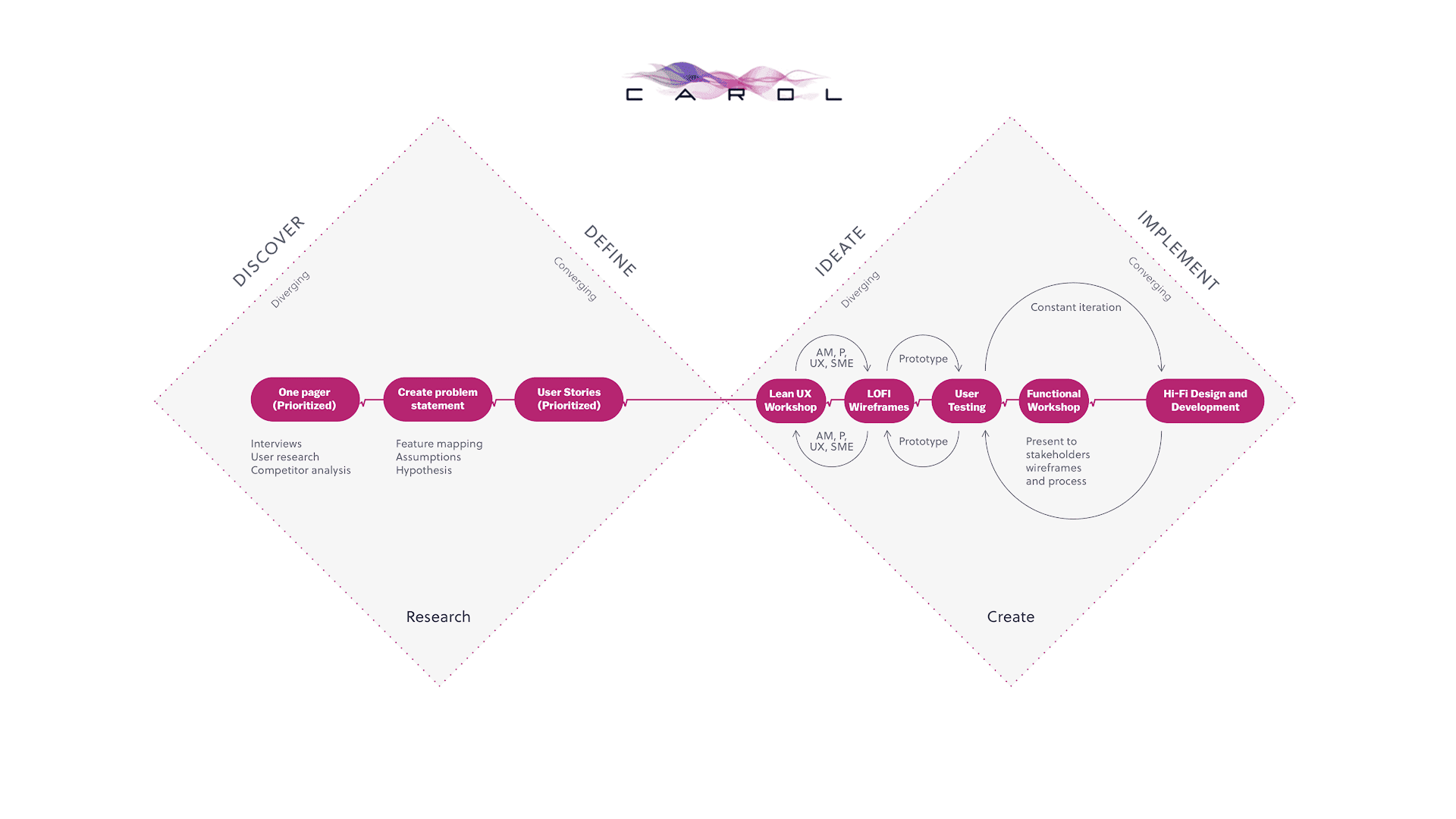
Our process was based on the Double Diamond framework and Lean UX, incorporating Discovery, Definition, Ideation, and Implementation across the project lifecycle.
Understanding the problem
Before Carol was fully structured as a product, initial concepts had limited validation and were not strongly grounded in real user needs. This created gaps between the platform’s capabilities and the day-to-day challenges faced by educational institutions.
To address this, I conducted in-depth research with key users — including educators and academic managers — through field visits and interviews at institutions such as Pontifícia Universidade Católica de São Paulo.
Research focus:
Understanding goals, expectations, and decision-making contexts
Identifying pain points in fragmented data and retention workflows
Evaluating how users interpret and act on predictive insights
Gathering insights
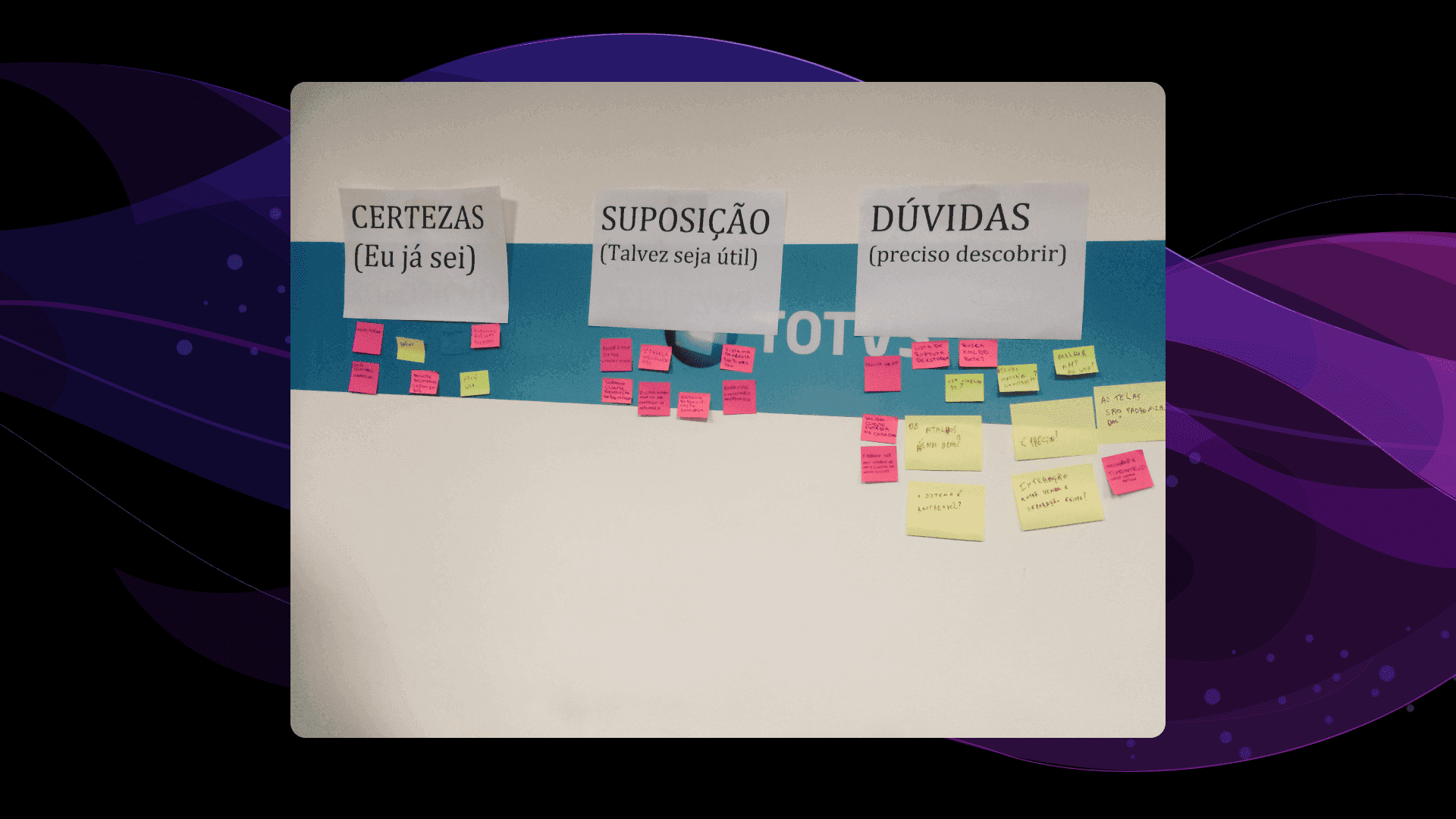
We structured findings using a CSD matrix (Certainties, Assumptions, Doubts) to organize knowledge and identify gaps.
I also conducted affinity mapping to cluster user pain points and translate them into product opportunities. To prioritize usability issues, I introduced a severity evaluation model:
Task criticality x impact x frequency = severity
Task criticality - how important is the task to the user? (1 = low, 5 = critical)
Impact - how much of an impact does this issue have on the user's task? (1 = suggestion, 5 = blocker)
Frequency (%) - how many times does this come up out of total participants?
Prioritization of issues
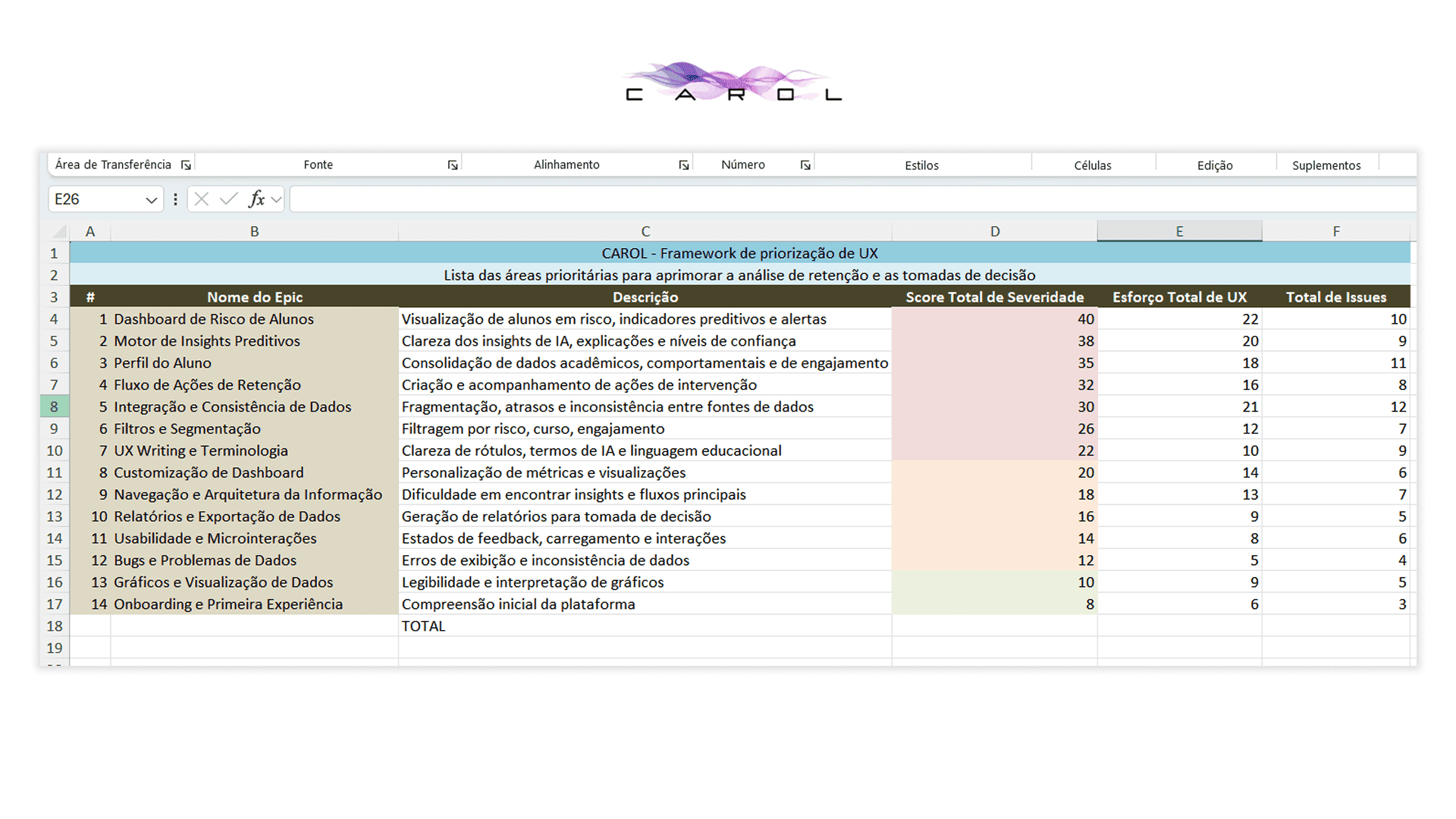
Usability issues were grouped into Epics aligned with core platform flows, giving Product and Engineering clear visibility into high-impact areas.
This approach helped:
Prioritize based on real user impact
Structure the product roadmap
Focus on decision-making and analytical flows
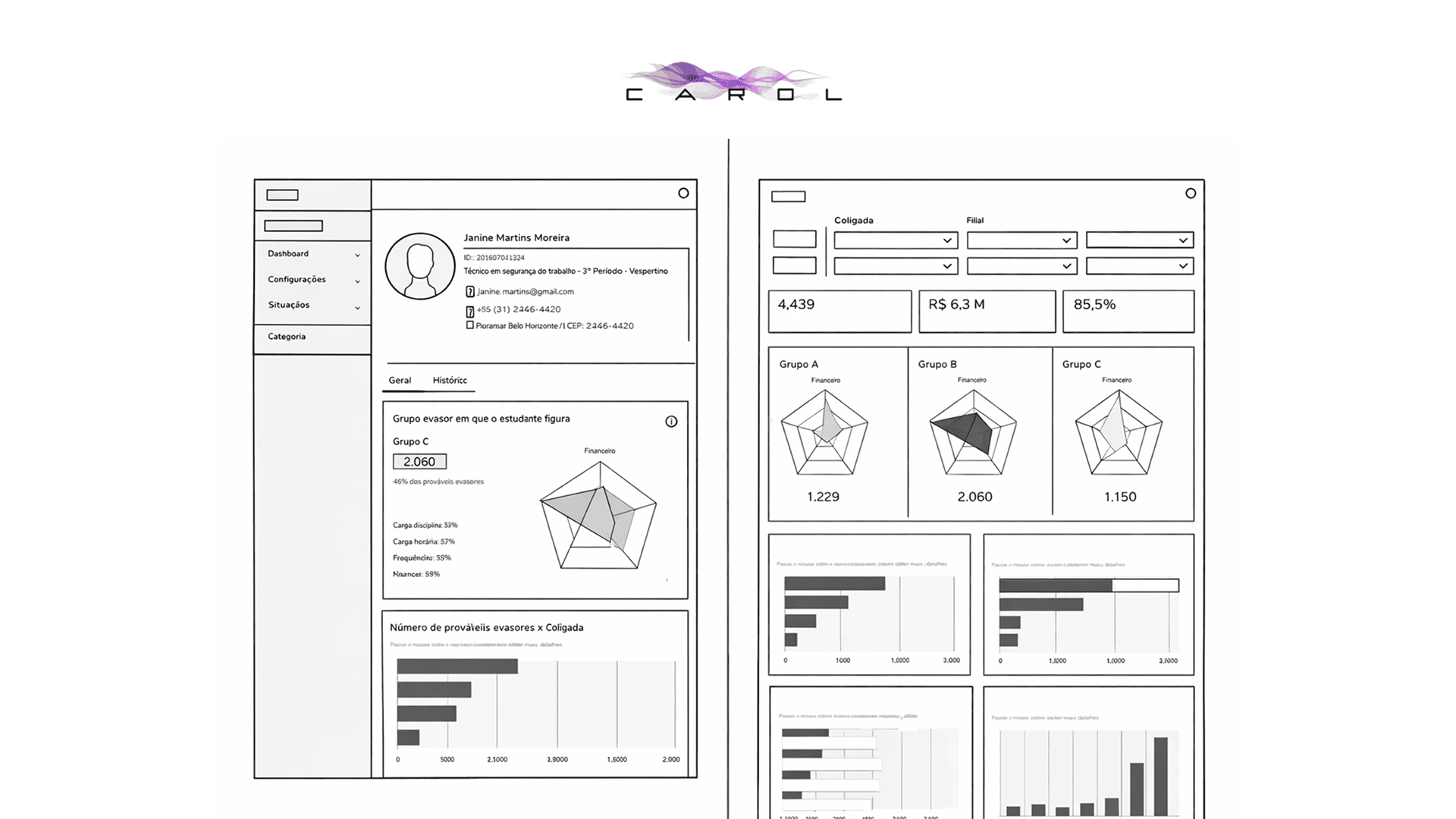
Wireframing the solution
Based on identified issues, I proposed solutions focused on improving data interpretation and decision-making:
Reduced steps in analytical workflows
Highlighted critical data and validation states
Established clear visual hierarchy
Standardized UI patterns for dashboards
Created reusable structures for insight modules
Wireframes were developed in Balsamiq and iterated collaboratively with stakeholders.
Validating the designs
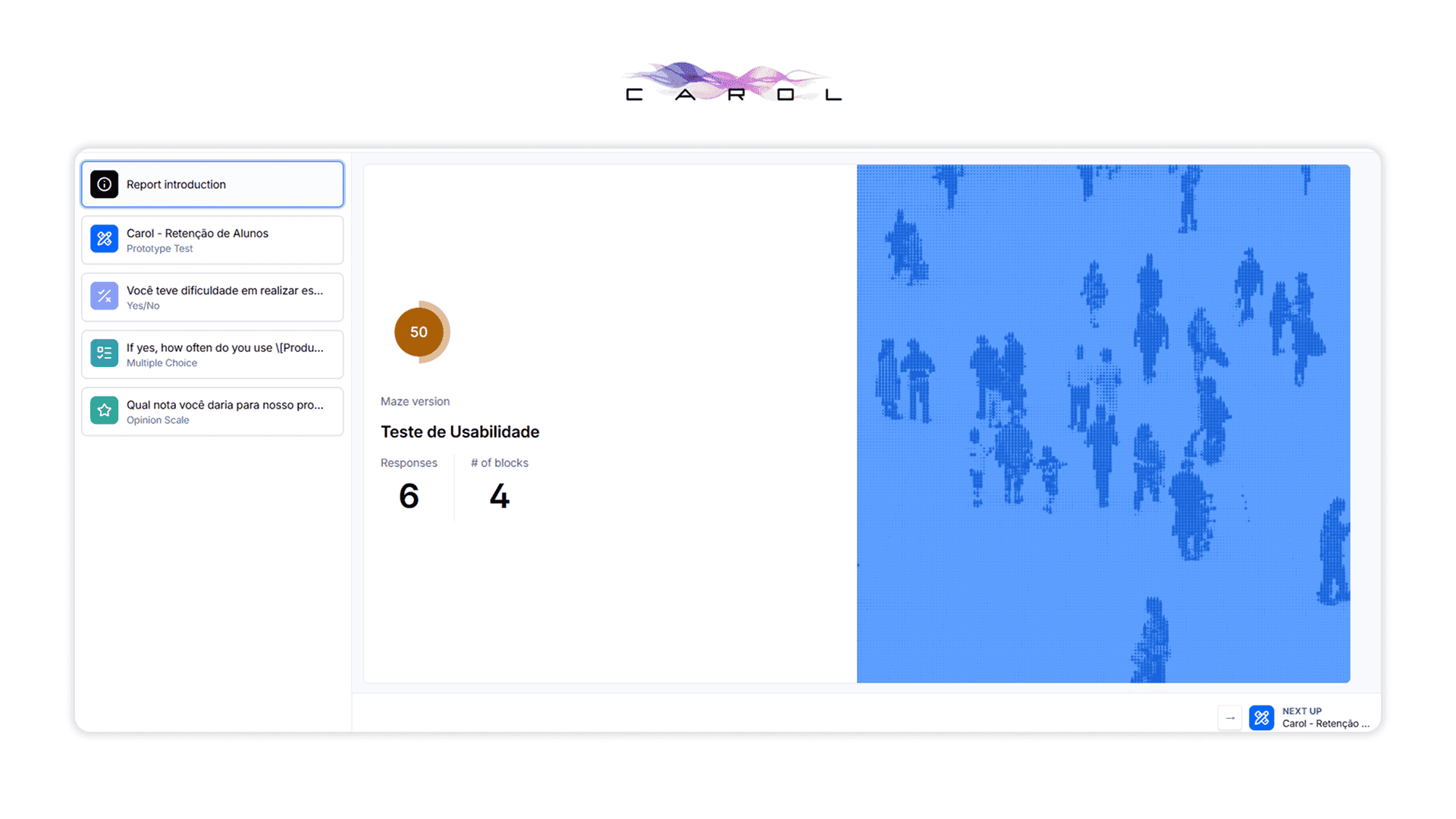
I conducted usability testing sessions with educators and academic managers.
Testing approach:
Scenario-based tasks (identify at-risk students, interpret data)
Navigation across dashboards and student profiles
Evaluation of decision-making flows
We used Maze to scale testing and gather both qualitative and quantitative feedback.
Outcome:
Improved clarity in dashboards
Reduced cognitive load
Better prioritization of information
High-Fidelity Design & Development
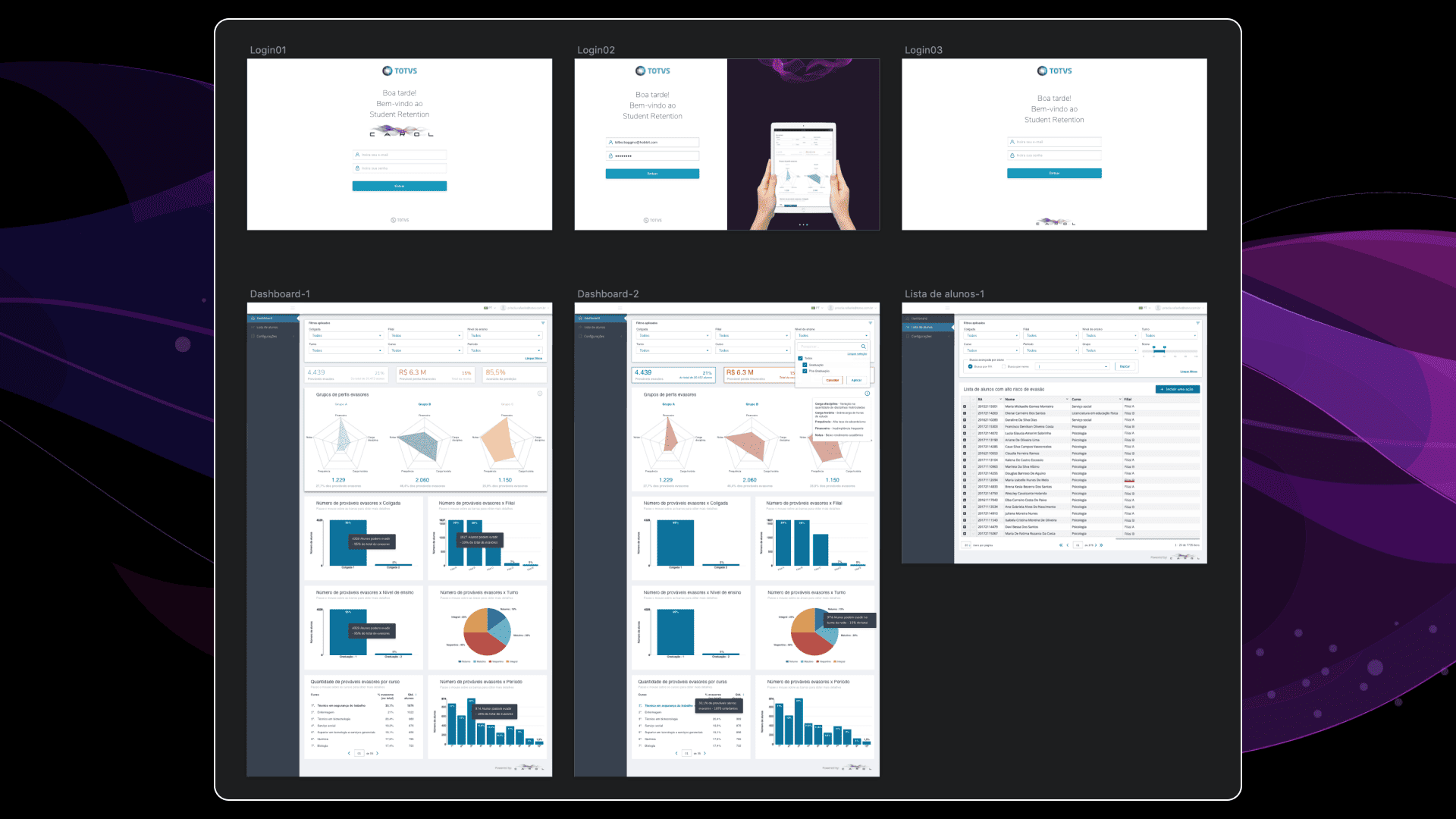
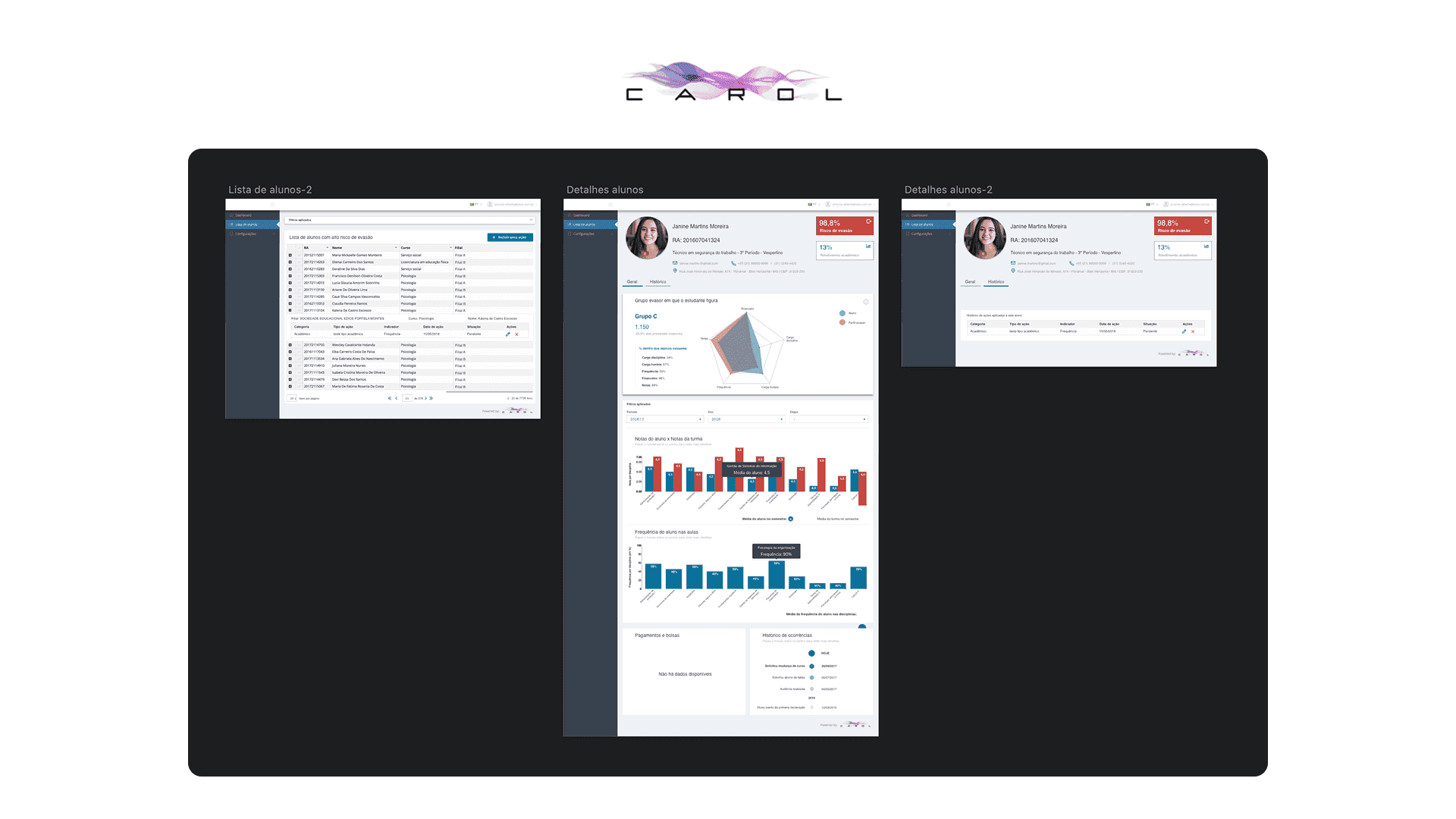
I developed high-fidelity prototypes in Sketch, translating validated concepts into scalable UI solutions. At that time, I also contributed to front-end implementation, ensuring fidelity between design and final product.
Close collaboration with Engineering ensured:
Alignment on interactions and edge cases
Consistency across features
High-quality delivery
Results
Following implementation:
Improved interpretability of predictive insights
Reduced cognitive load in analytical workflows
Increased confidence in AI-assisted decision-making
Enabled earlier identification of at-risk students
Established scalable UX foundations for predictive educational products
Strengthened alignment between data intelligence and institutional workflows
Takeaways
AI products only create value when insights are understandable and actionable
Predictive systems require strong UX foundations to generate trust
Human-centered AI depends on reducing cognitive complexity, not increasing data exposure
Decision-support products must balance intelligence, clarity, and operational usability
Cross-functional collaboration is essential in AI-driven product ecosystem