ROLE:
Product Designer
COMPANY:
DSM-Firmenich
PROJECT:
Scaling AI-driven decision making in livestock operations
YEAR:
2026
Executive Summary
Overview
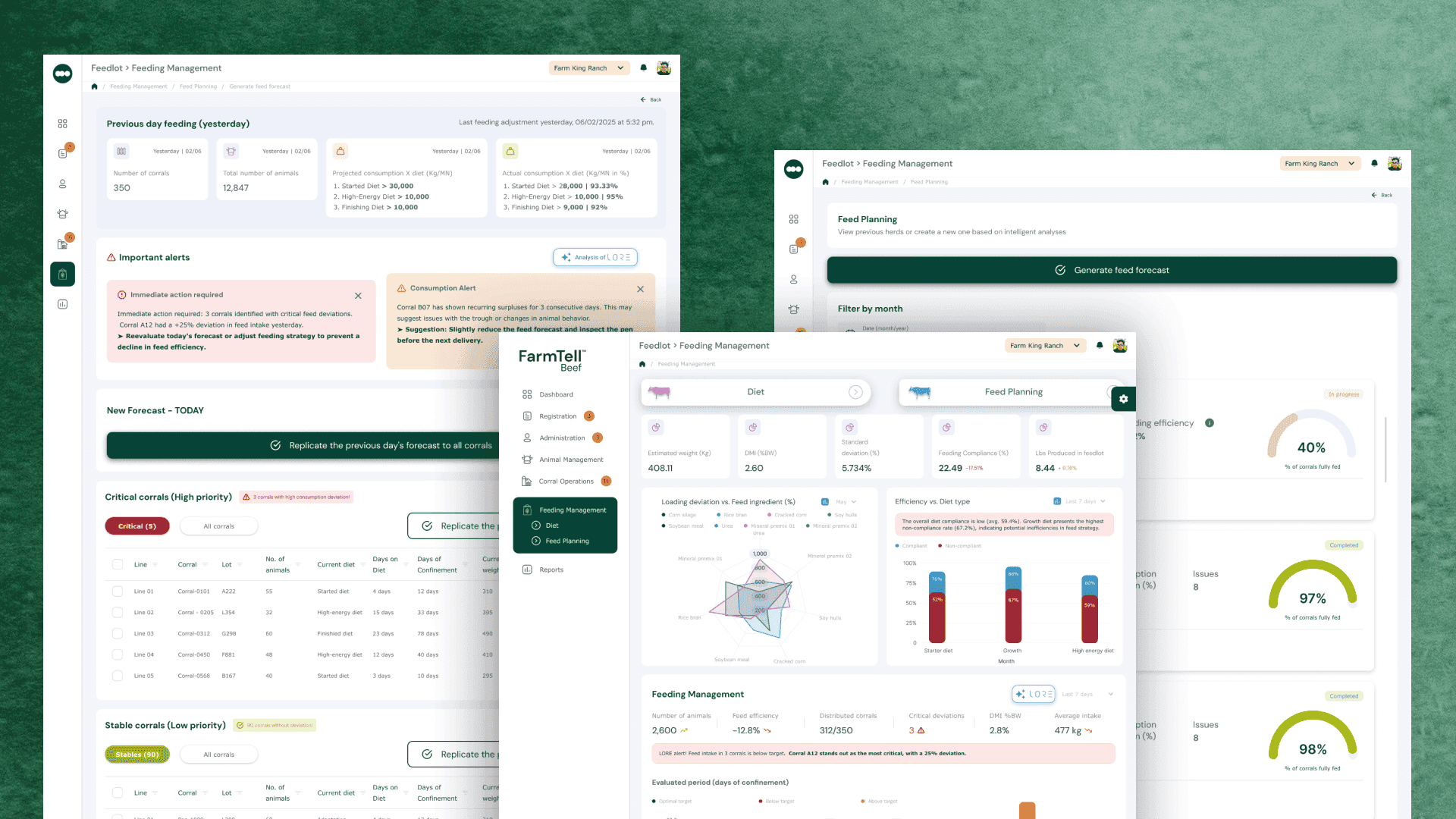
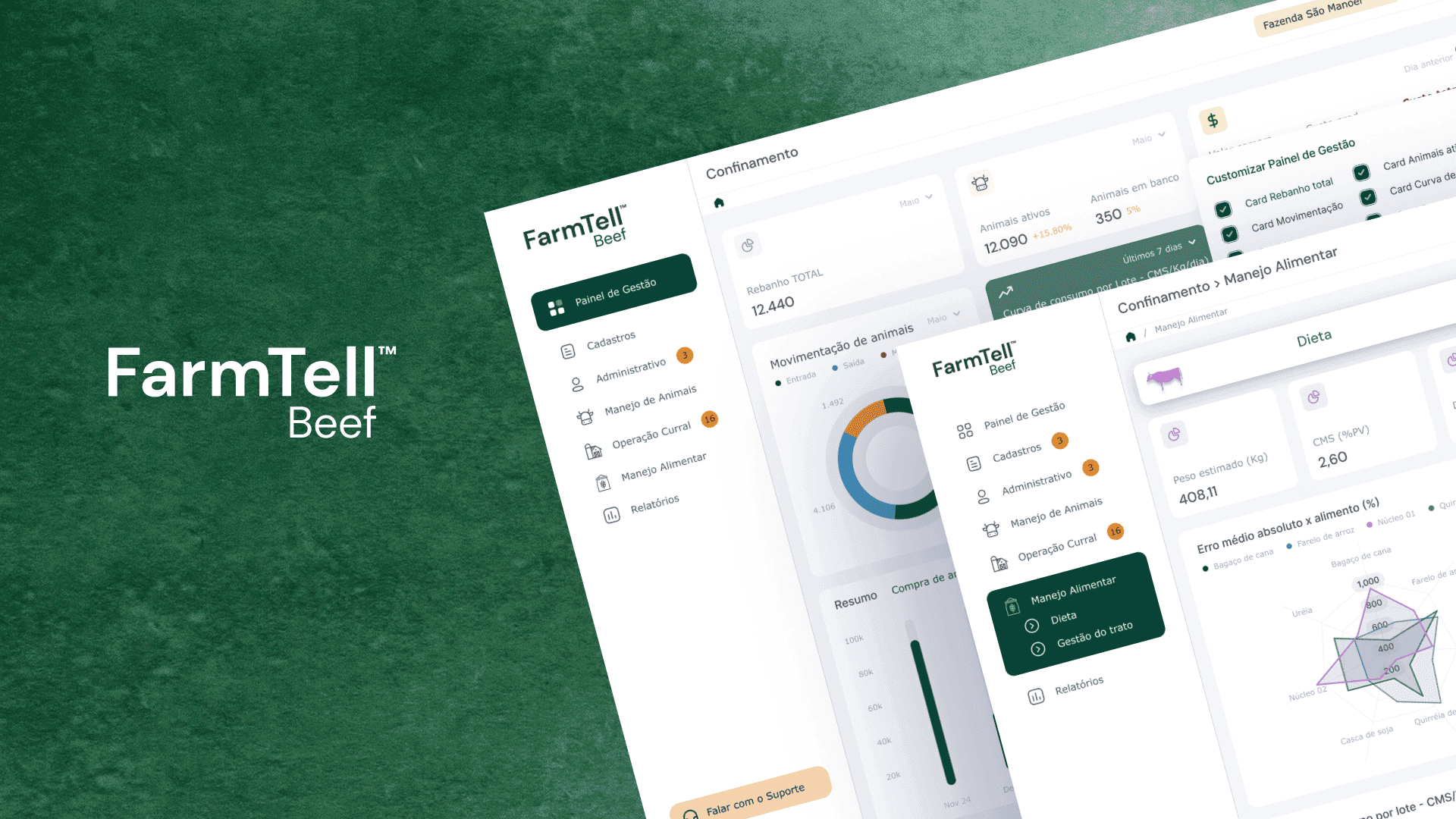
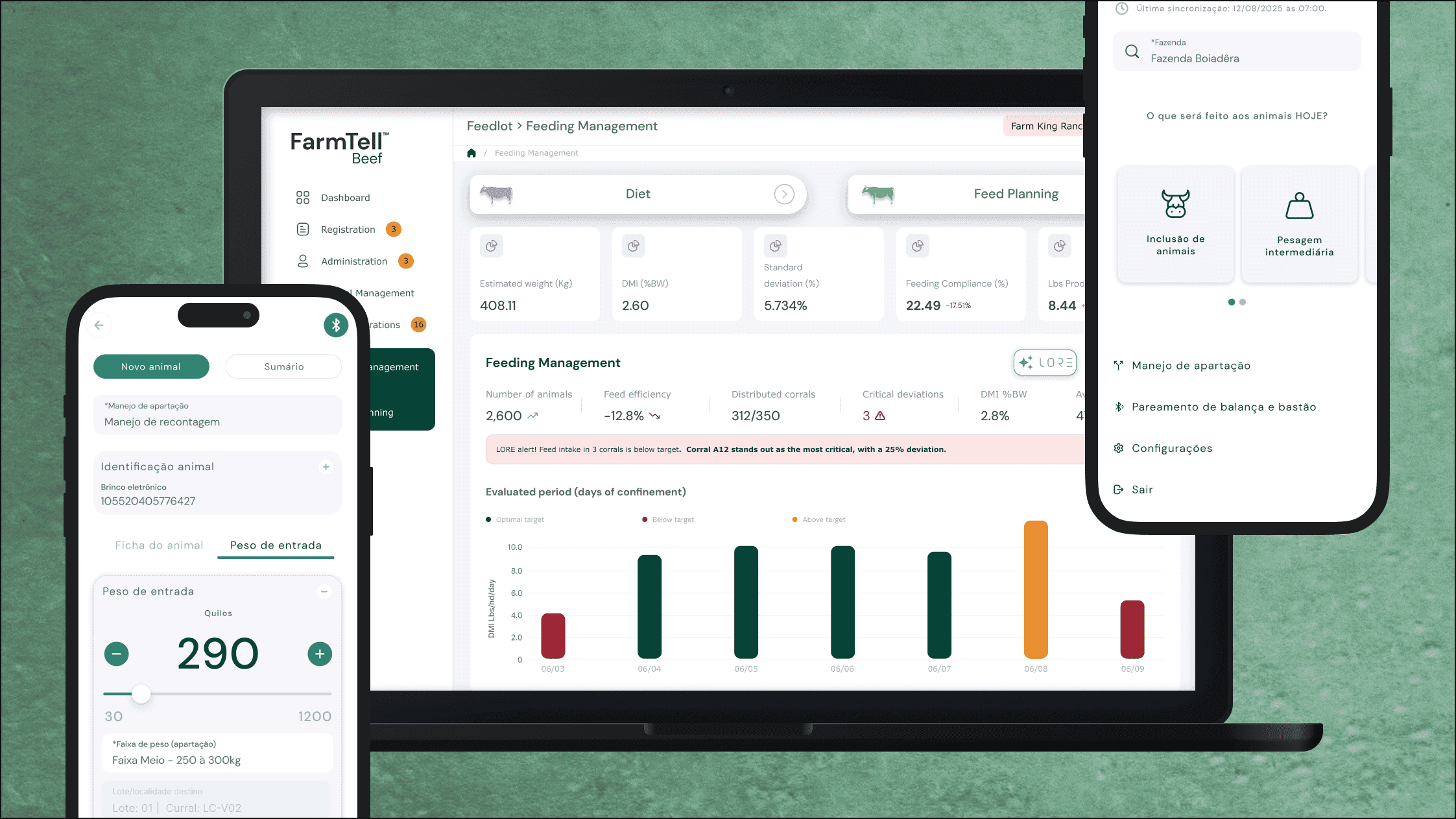
New Beef Feedlot is an AI-assisted livestock intelligence platform designed to support operational decision-making in large-scale cattle operations.
The platform combines predictive analytics, operational workflows, biological data, and financial indicators to help producers transform complex information into actionable decisions across the entire cattle lifecycle.
More than a redesign effort, the project represented the evolution of a highly adopted legacy system into a scalable, data-driven product ecosystem prepared for global expansion and AI-powered operational support.
My Role
Lead Product Designer
Led product experience strategy across complex operational workflows
Structured AI-assisted decision-making experiences for livestock operations
Facilitated collaboration between Product, Engineering, Data and Business teams
Conducted user research and translated operational insights into scalable product decisions
Defined interaction models and contributed to the evolution of a scalable Design System
Supported product prioritization through behavioral metrics and operational data analysis
Helped bridge technical constraints, business goals, and user needs in a highly complex B2B environment
The Challenge
The challenge was not only to modernize a legacy platform, but to redesign how operational intelligence was consumed, interpreted, and acted upon in highly complex livestock environments.
Redesign a highly adopted legacy system that:
Manages large-scale cattle operations with high financial impact
Integrates biological, operational, and financial data in real time
Supports AI-driven predictions (weight gain, feed efficiency, cost optimization)
Serves users with different levels of technical and digital maturity
Needs to scale for global expansion (Latin America, Mexico, Europe)
Requires modernization without disrupting critical workflows already in use
Key Decisions
Refactor instead of rebuilding from scratch → preserved adoption and reduced risk
Adopt Jobs To Be Done (JTBD) → aligned features with real operational needs
Leverage AI-driven insights as core UX elements → shifted from data display to decision support
Structure discovery through Blueprint + field research → ensured systemic understanding
Use Figma Make for rapid ideation → accelerated exploration of complex flows
Build a scalable Design System → supported consistency and internationalization
Drive decisions through real usage metrics (Tableau + Google Analytics) → ensured continuous product evolution
Impact
Successful validation with pilot operations of different sizes and maturity levels
Improved clarity in decision-making and operational monitoring
Enabled predictive and data-driven livestock management
Established foundation for global scalability (LATAM, Mexico, Europe roadmap)
Key Learnings
AI products only deliver value when insights are actionable
Legacy systems require careful evolution, not disruption
Designing for both high-tech and low-tech users is a strategic challenge
Continuous measurement is essential in data-intensive products
Deep Dive
New Beef Feedlot is part of a broader ecosystem focused on precision livestock farming, integrating data, artificial intelligence, and operational management.
The platform enables:
Monitoring animal performance
Optimizing feeding strategies
Predicting weight gain and slaughter timing
Managing financial and operational indicators
The project focuses on the modernization of a legacy system with high adoption in the livestock industry, especially in Brazil, now expanding globally.
Despite its strong market presence, the previous system presented:
Outdated technology
Poor usability
Fragmented workflows
Limited scalability
Problem Complexity
This project operates at a highly complex intersection:
Scale: management of some of the largest cattle operations in the world
Biological variability: animal performance influenced by multiple factors
Operational complexity: feeding, health, logistics, cost management
Data density: multiple real-time inputs and predictive models
User diversity: from highly technical operators to low digital literacy users
Global expansion: need for adaptability across regions and regulations
operational intelligence;
cognitive load;
decision support.
The challenge was to reduce cognitive load and transform dense operational workflows into intuitive decision-support experiences without sacrificing reliability, flexibility, or system depth.
Process
The project follows a continuous discovery and delivery model within agile methodology, combining structured research, rapid iteration, and data-driven validation.
Main stages:
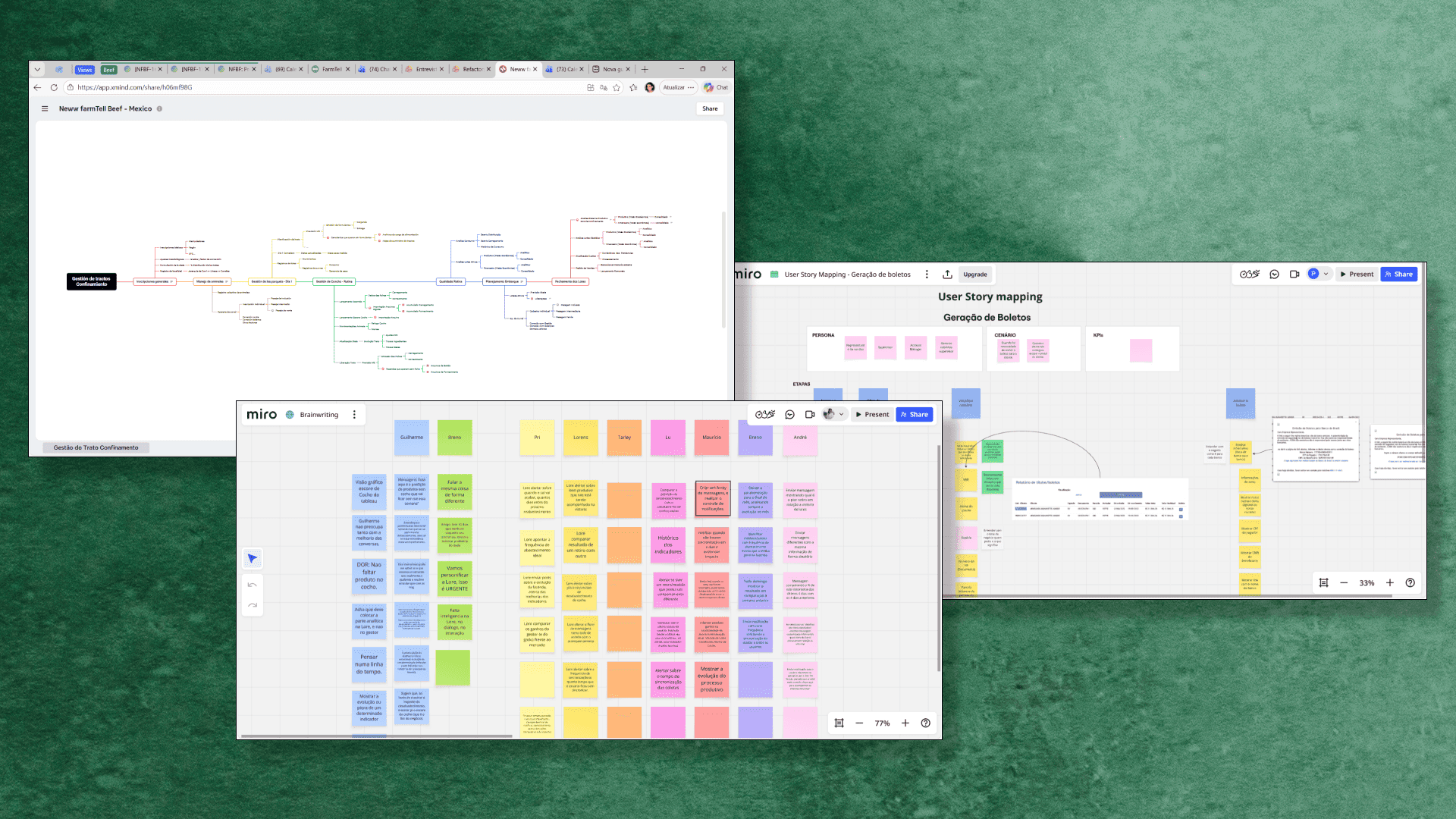
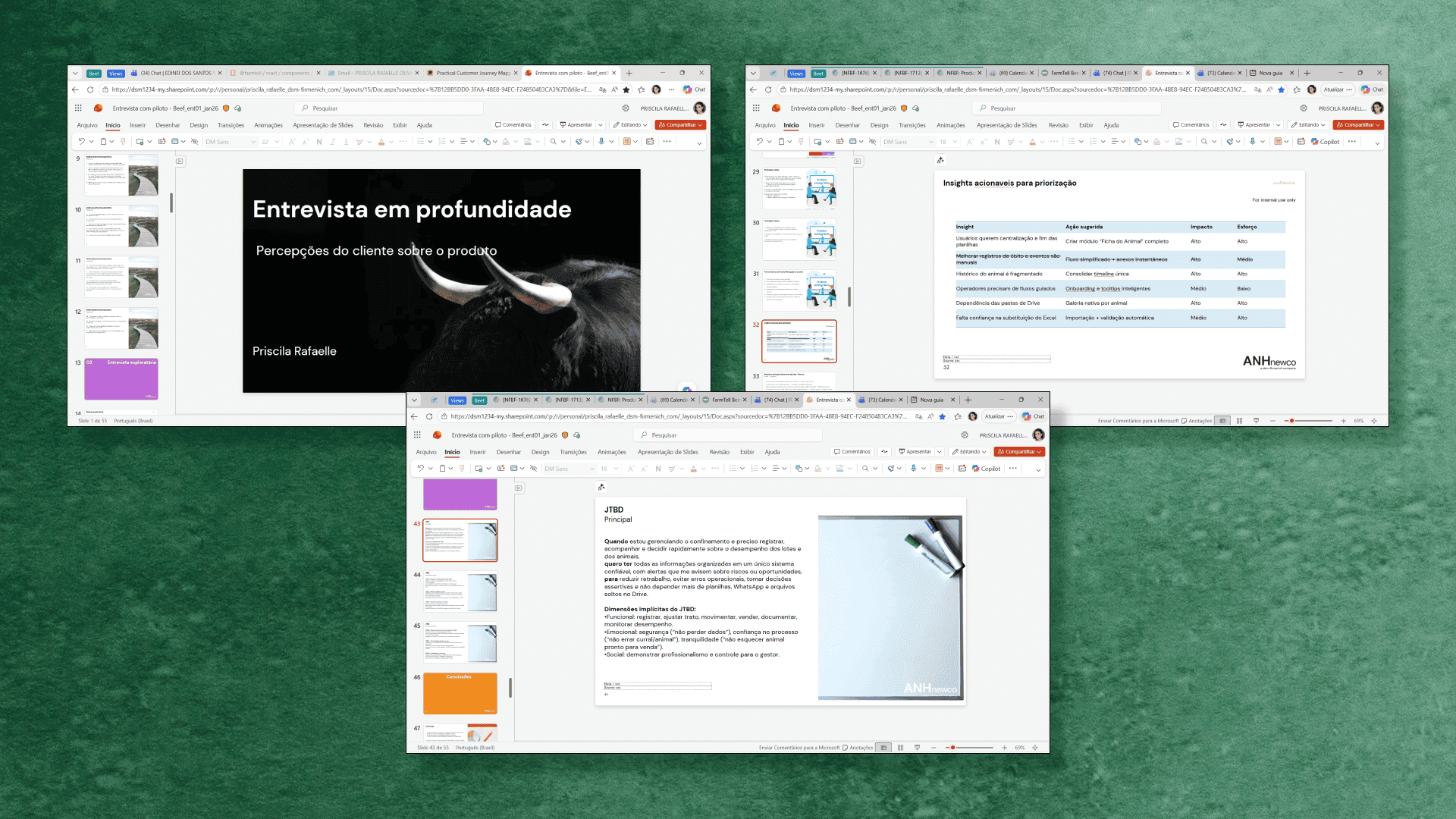
Brainwriting and diagrams
Blueprints (system and journey mapping)
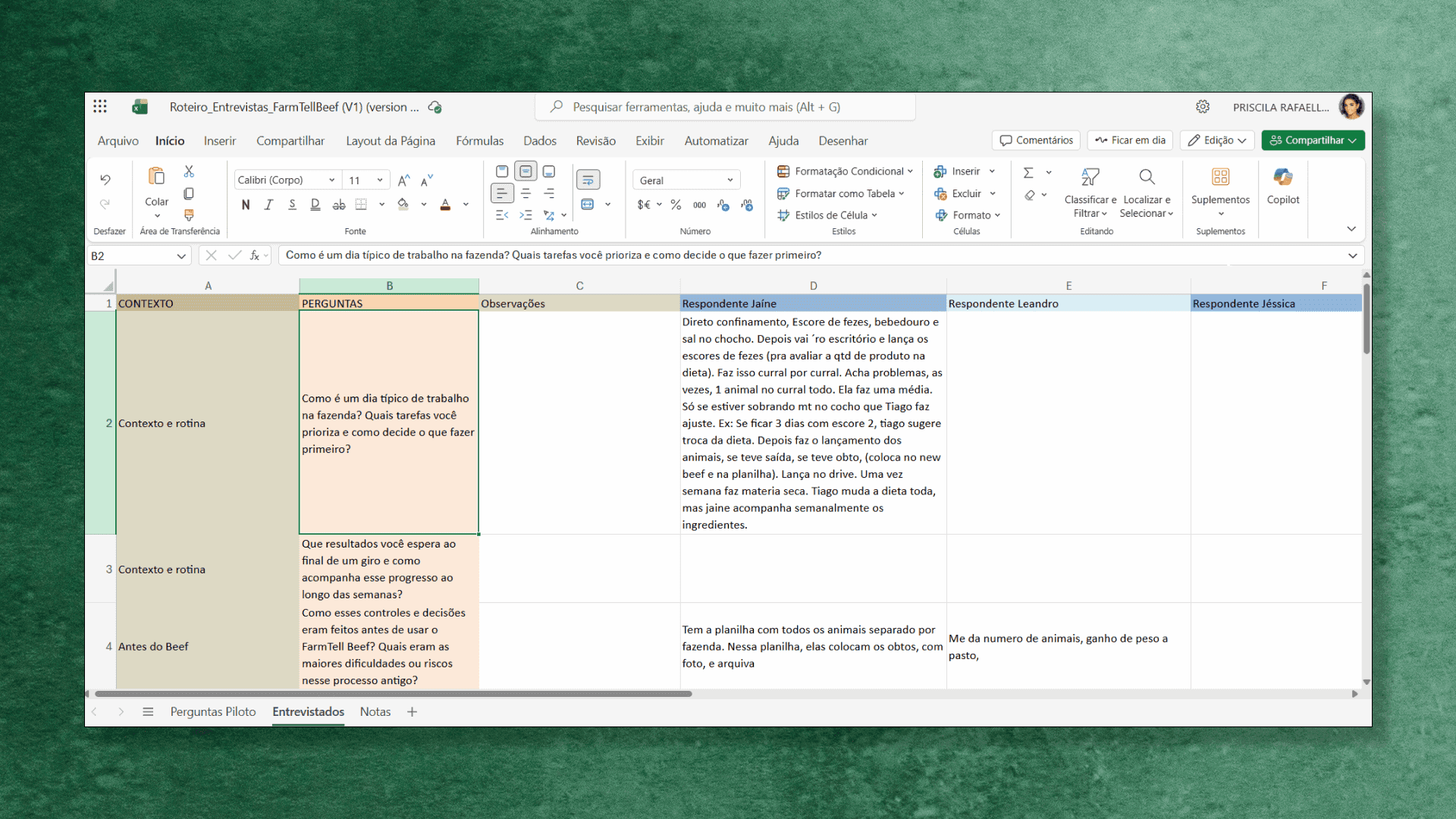
Interview script design
Customer interviews
Insight generation
JTBD definition
Ideation with Figma Make
Low-fidelity prototyping
Design System creation
High-fidelity prototyping
Validation and metrics tracking
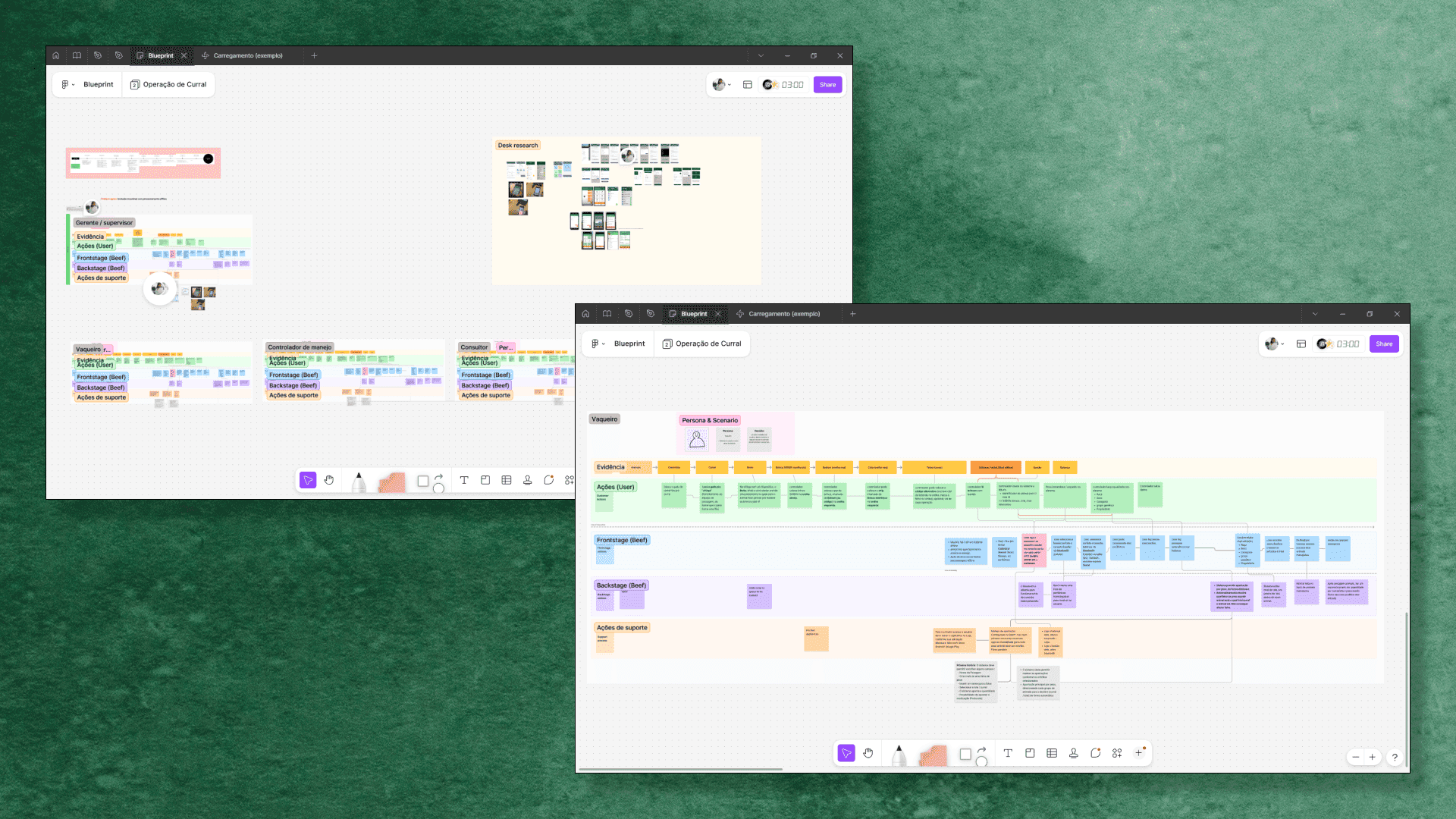
Discovery (Blueprint + Research)
We started with a Blueprint to understand the full ecosystem:
End-to-end user journeys
Operational dependencies
Data flows
Pain points
User Research
Conducted interviews with real customers to understand:
Daily operational workflows
Decision-making processes
Data interpretation challenges
Informal workarounds
Insights & JTBD
Research findings were translated into actionable insights, structured using Jobs To Be Done (JTBD).
This enabled alignment between product features and real needs such as:
Monitoring herd performance
Optimizing feed efficiency
Reducing operational costs
Supporting critical decisions
Guideline & Design System
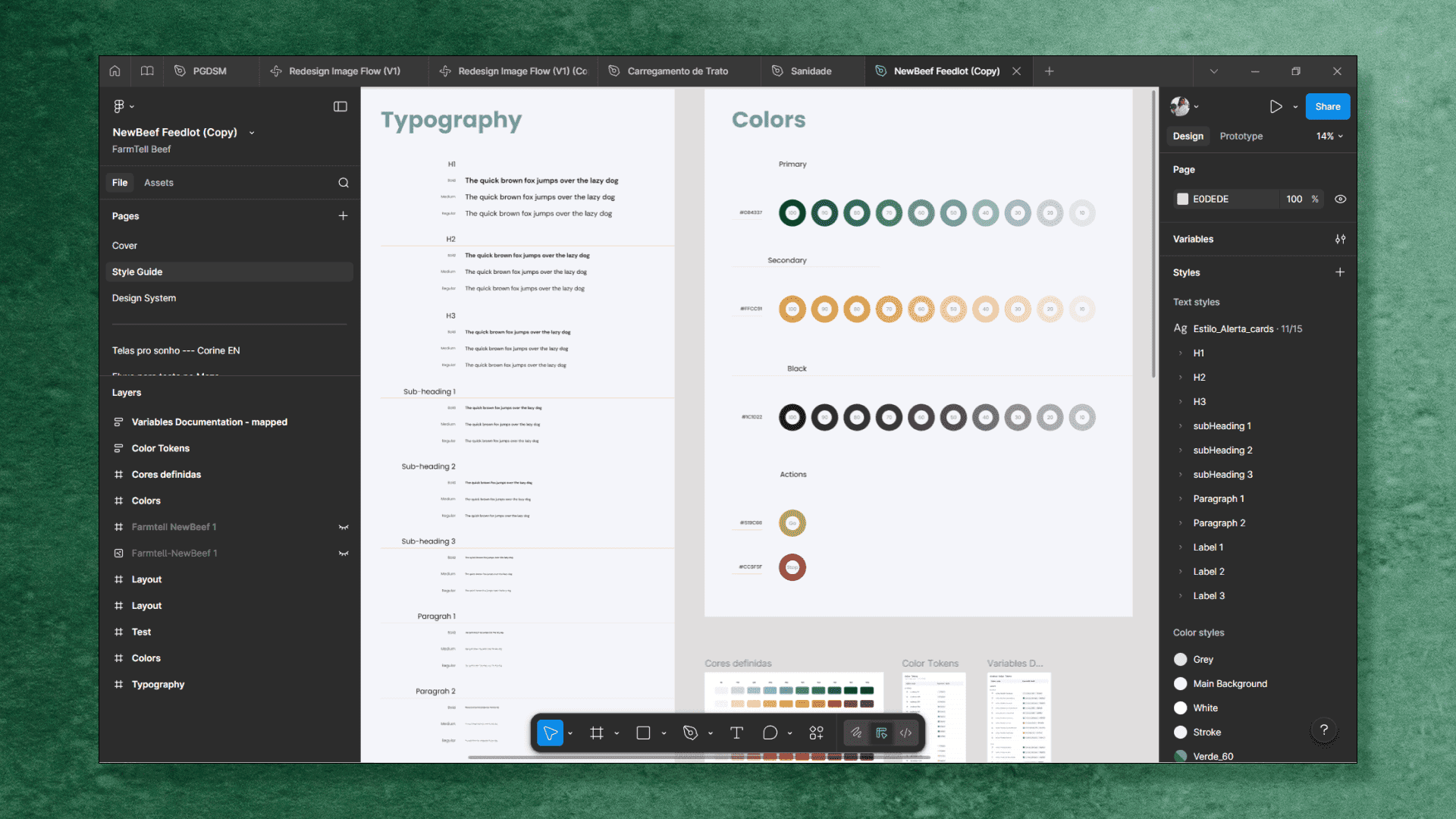
A Design System was created to support:
Consistency across the platform
Scalability for new features
Adaptation for international expansion
AI-assisted Decision Support
One of the core product principles was shifting the experience from passive data visualization to active operational support.
The platform integrates predictive models and operational indicators to help users:
anticipate performance outcomes
optimize feeding strategies
identify operational bottlenecks
prioritize critical actions
reduce uncertainty in day-to-day decisions
The UX strategy focused on making AI-driven insights understandable, actionable, and seamlessly integrated into real operational workflows.
Ideation & Low-Fidelity Prototyping
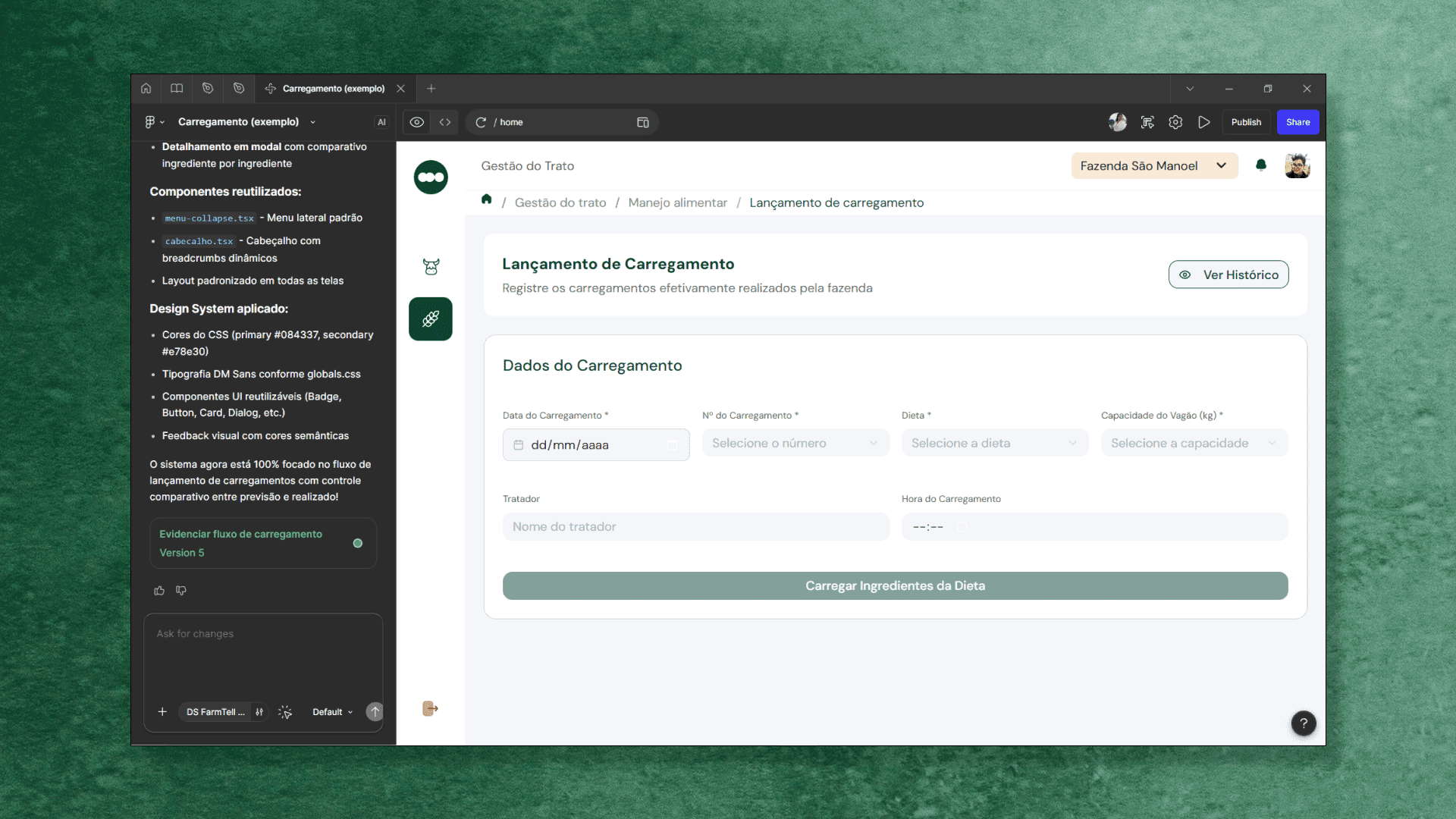
Leveraged AI-assisted design workflows with Figma Make to accelerate ideation, explore interaction patterns, and rapidly prototype complex operational scenarios:
Key activities:
Generated low-fidelity prototypes
Tested multiple interaction models
Simplified complex data visualization
High-Fidelity Design
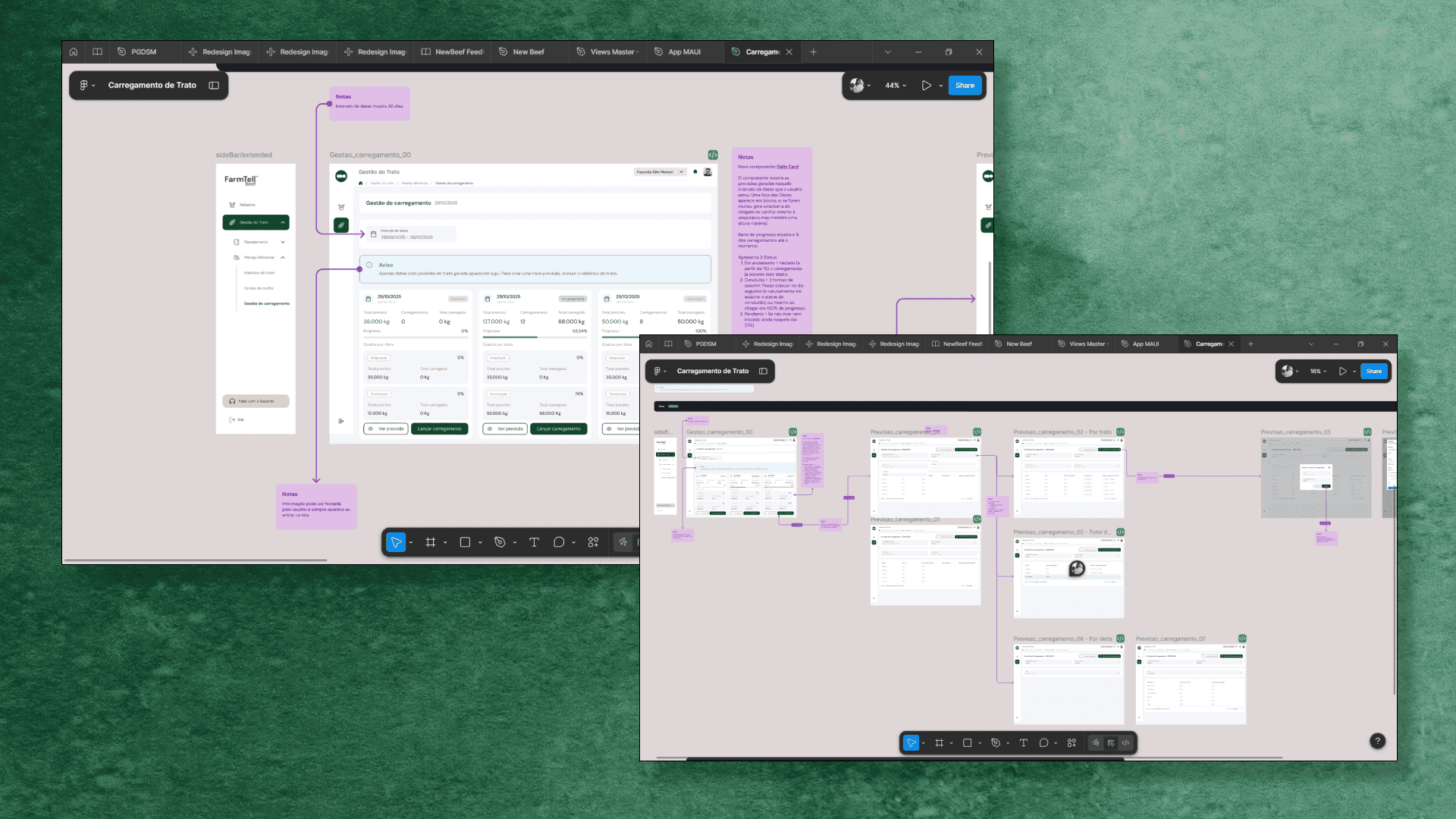
High-fidelity prototypes focused on:
Data visualization clarity
Hierarchical organization of information
Efficient workflows for decision-making
Validation & Development
The project runs in an agile environment, with strong collaboration between Design and Engineering.
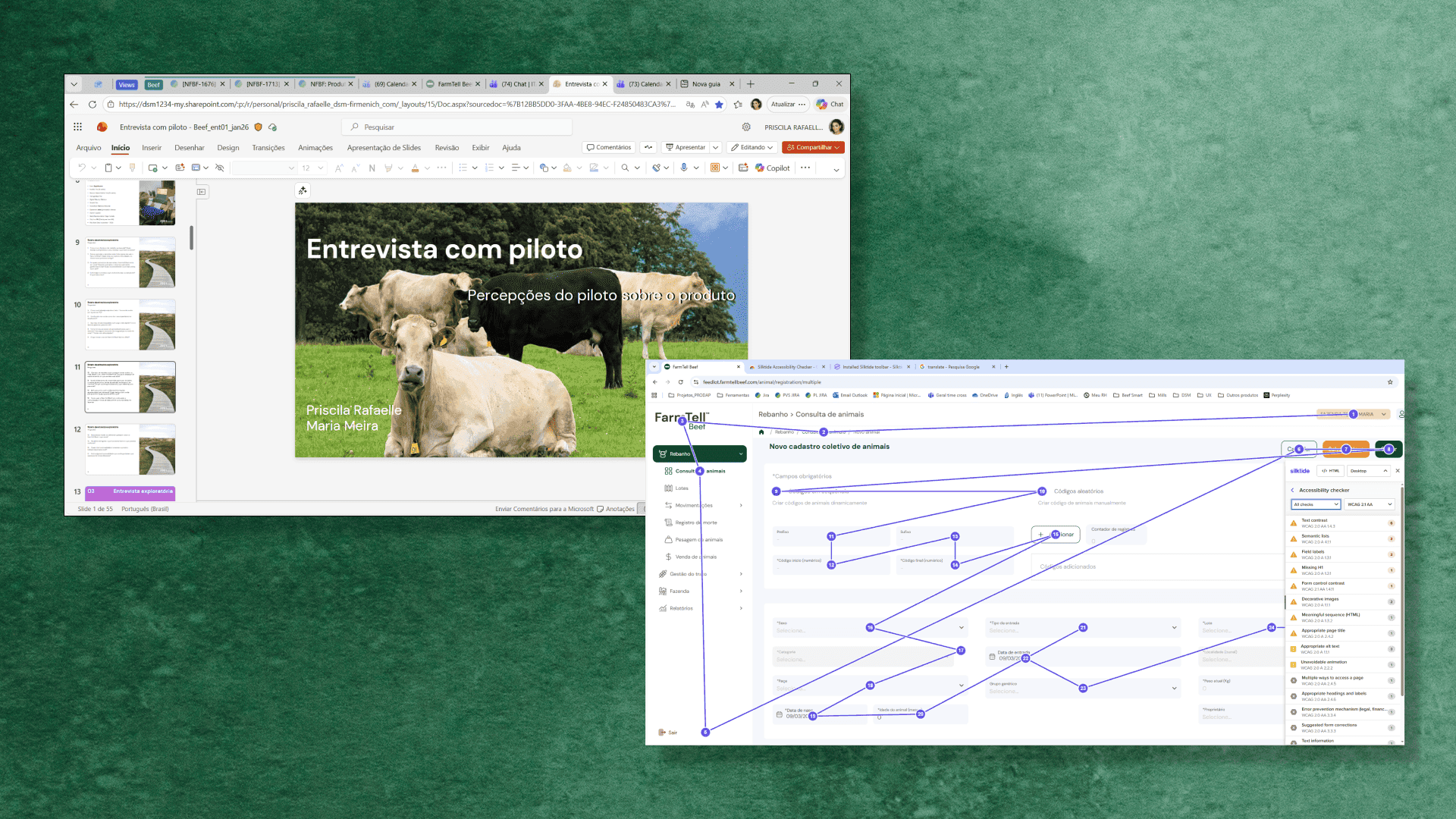
Validation included:
Pilot Customer Interviews
Usability testing
Accessibility validation
Interface consistency testing
Design decisions were validated alongside developers to ensure feasibility and qualit
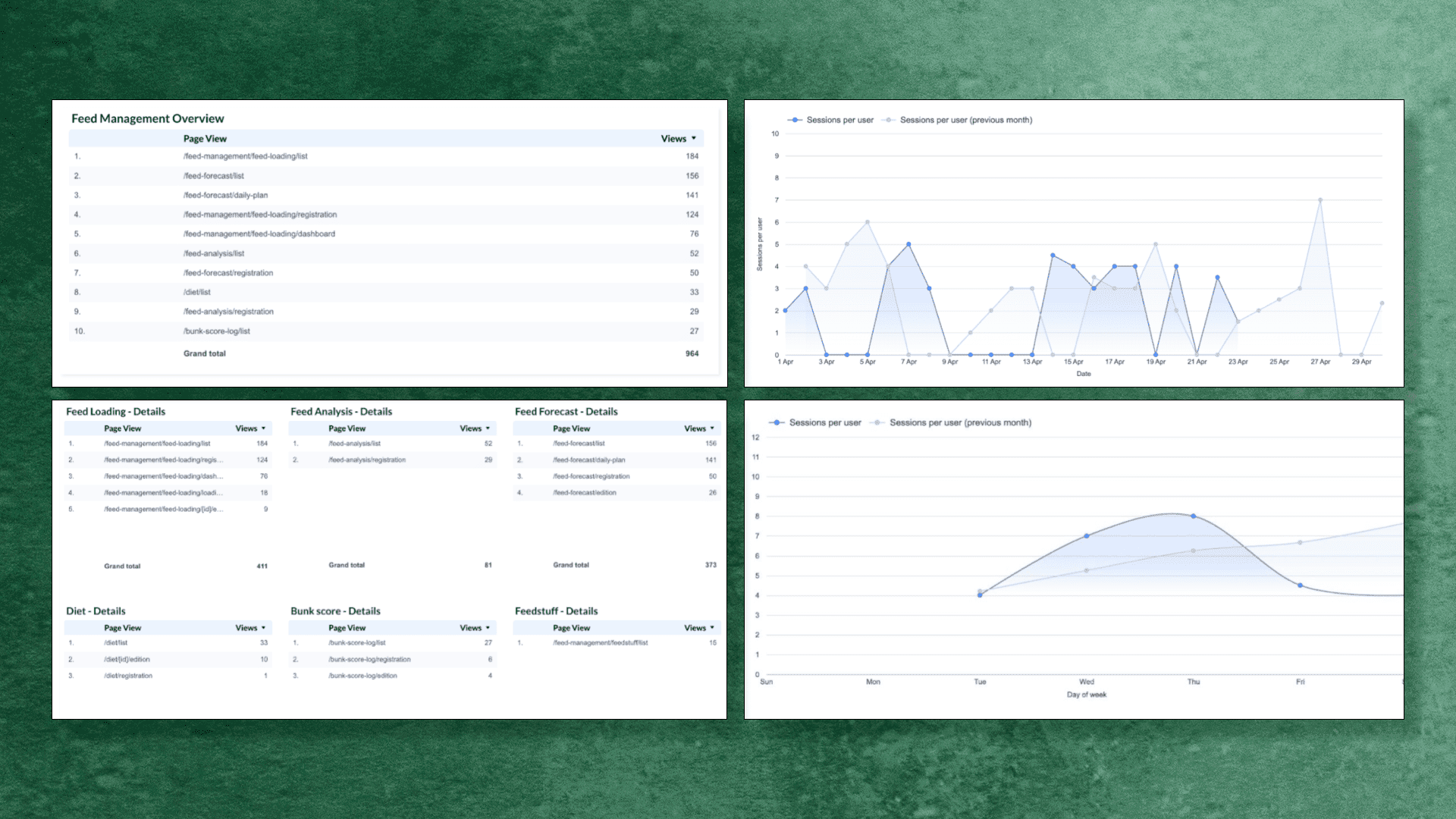
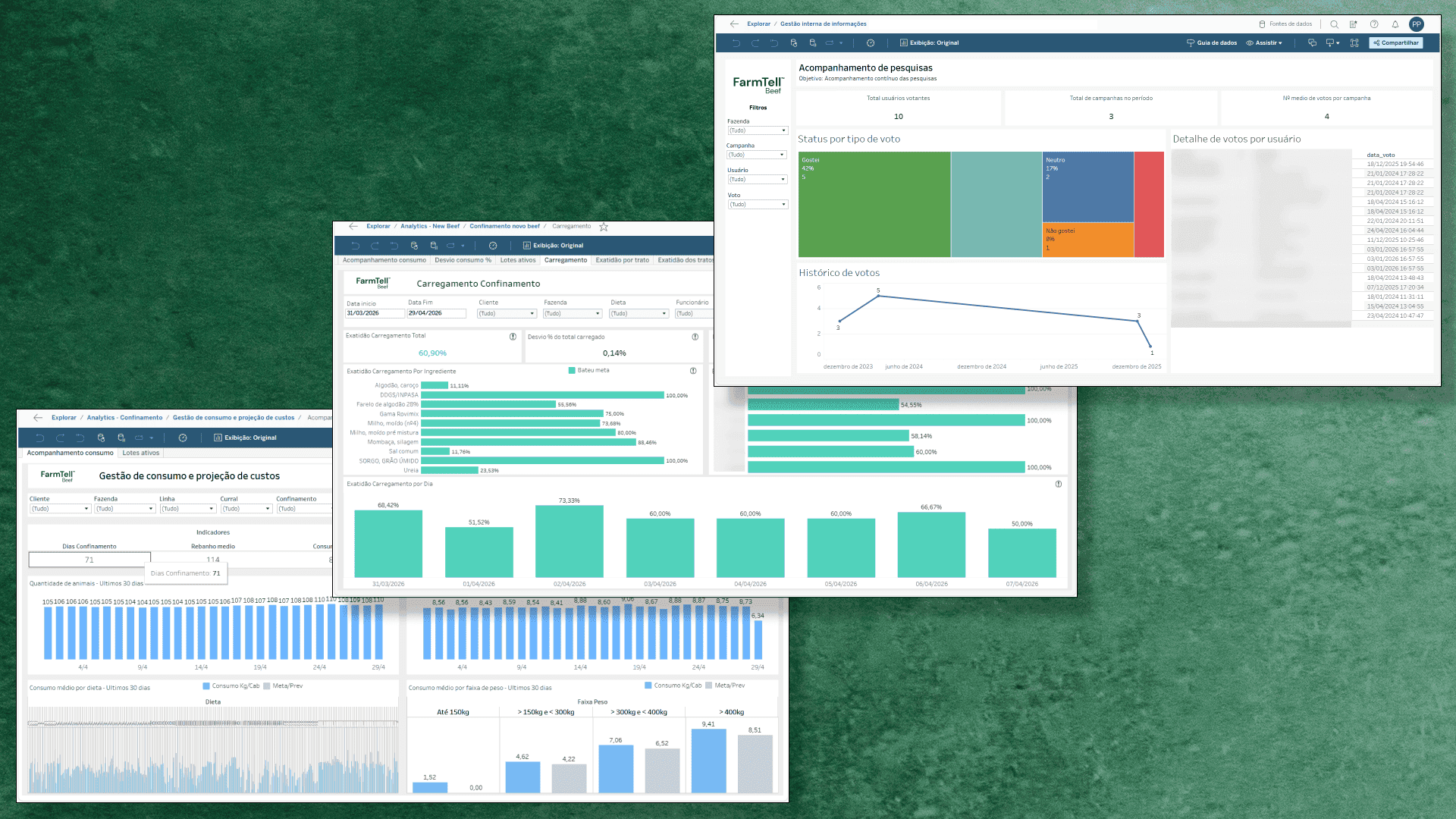
Data & Metrics (Tableau + Google Analytics)
A key differentiator is the continuous monitoring of real usage data.
Tools:
Tableau → operational and product metrics
Google Analytics → user behavior tracking
Focus:
Feature usage
User flows
Drop-offs
Interaction patterns
Behavioral and operational metrics continuously informed prioritization, workflow optimization, and evolution of AI-assisted product experiences.
Results & Expansion
The platform has been validated through pilot programs, with strong adoption and positive feedback.
Current stage:
Expansion in Latin America and Mexico (pilot phase)
Progressing to Phase 3: Europe expansion (second half of 2026)
Vision:
To become a globally scalable platform, supporting livestock operations worldwide.
Key Takeaways
AI products only create value when insights are actionable within real workflows
Operational complexity should be abstracted, not exposed
Scalable platforms require alignment between systems thinking, business strategy, and user behavior
Predictive experiences depend as much on UX clarity as on data quality
Enterprise products must balance flexibility, operational depth, and usability simultaneously