ROLE:
Product Designer
COMPANY:
TOTVS S/A
PROJECT:
Plataforma de acompanhamento para Alunos e Professores
YEAR:
2019
Executive Summary - Pocket Case Study
Overview
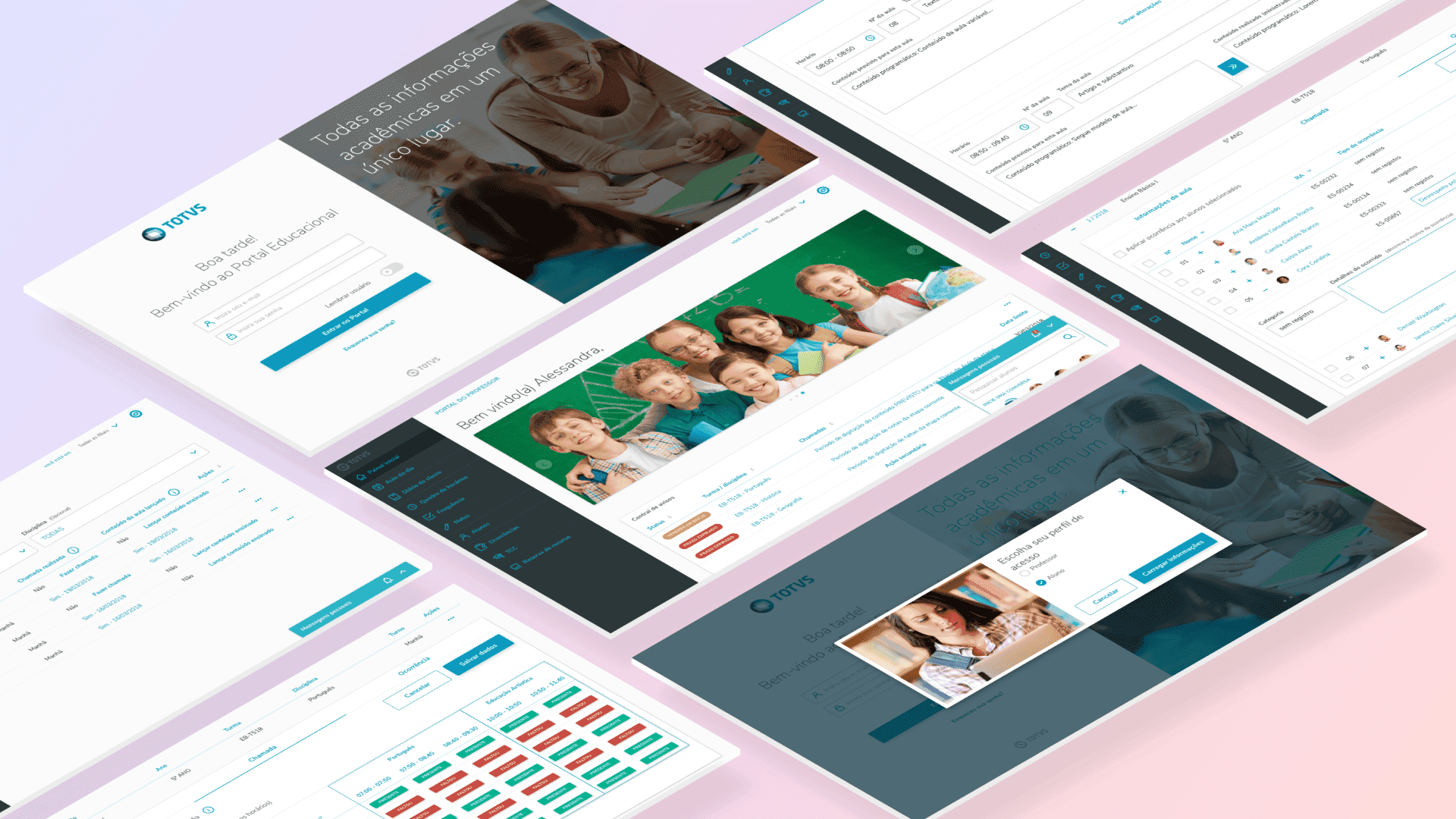
The Student/Teacher Portal, part of the TOTVS Educacional ecosystem (RM Suite), was designed as a centralized digital operations platform for educational institutions.
The initiative transformed fragmented academic, financial, and administrative workflows into a unified self-service experience for students, guardians, teachers, and institutions.
The project focused on reducing operational friction, increasing autonomy, and scaling digital educational services across institutions with different operational structures and maturity levels.
My Role
Product Designer
Contributed to the definition of the platform experience and operational workflows
Participated in Design Sprint activities, from journey mapping to solution ideation
Helped structure scalable self-service experiences across academic and administrative operations
Collaborated closely with Product and Engineering teams in an agile delivery environment
Supported the transformation of bureaucratic institutional processes into digital workflows
The Challenge
Design a scalable digital plataform capable of:
Centralizing fragmented academic and administrative operations into a unified ecosystem
Simplifying high-volume institutional workflows for different user groups
Reducing dependency on in-person support and manual processes
Supporting institutions with different operational models and maturity levels
Increasing autonomy while maintaining clarity across dense information environments
Creating scalable experiences capable of evolving across multiple educational institutions
Operational Complexity
The project involved orchestrating multiple operational layers simultaneously:
Academic workflows
Financial processes
Administrative services
Institutional communication
Multi-profile user permissions
Different educational operational models
High information density environments
The core challenge was designing an experience capable of reducing operational and cognitive complexity without oversimplifying critical institutional processes.
Key Decisions
Conduct a full 5-day Design Sprint → accelerated alignment and product definition
Validate ideas quickly through low-fidelity prototypes → enabled fast decision-making
Structure journeys around self-service experiences → reduced operational friction
Develop the project through agile multidisciplinary teams → accelerated implementation and continuous evolution
Impact
Expanded digitization of academic and administrative operations
Reduced operational dependency on in-person institutional support
Increased autonomy for students, guardians, and teachers
Improved operational efficiency and communication flows
Scaled across multiple institutions within the TOTVS educational ecosystem
Established a more unified and service-oriented educational experience
Key Learnings
Enterprise educational products require balancing operational depth with usability
Self-service experiences can significantly reduce institutional friction
Scalability depends on structuring systems, not only interfaces
Cross-functional collaboration is essential in operational ecosystems
Simplicity in complex environments is achieved through orchestration, not reduction
Deep Dive
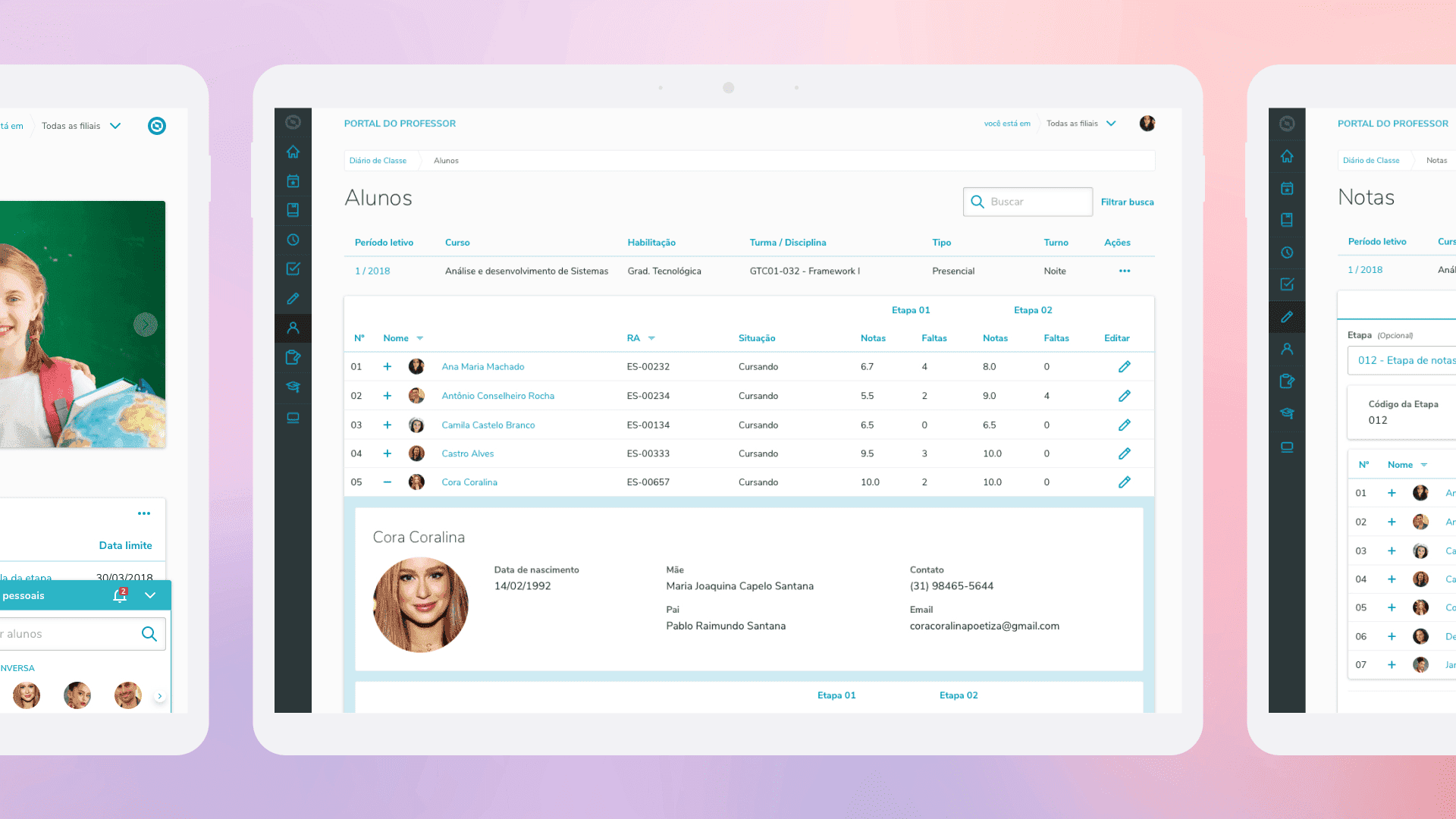
The platform was structured around a self-service operational model, enabling users to manage critical academic and administrative activities through a centralized digital experience.
The solution focused on:
reducing operational bottlenecks;
improving information accessibility;
increasing autonomy;
and simplifying traditionally bureaucratic educational processes.
The experience connected academic, financial, and communication workflows into a unified ecosystem capable of supporting different institutional realities at scale.
Process
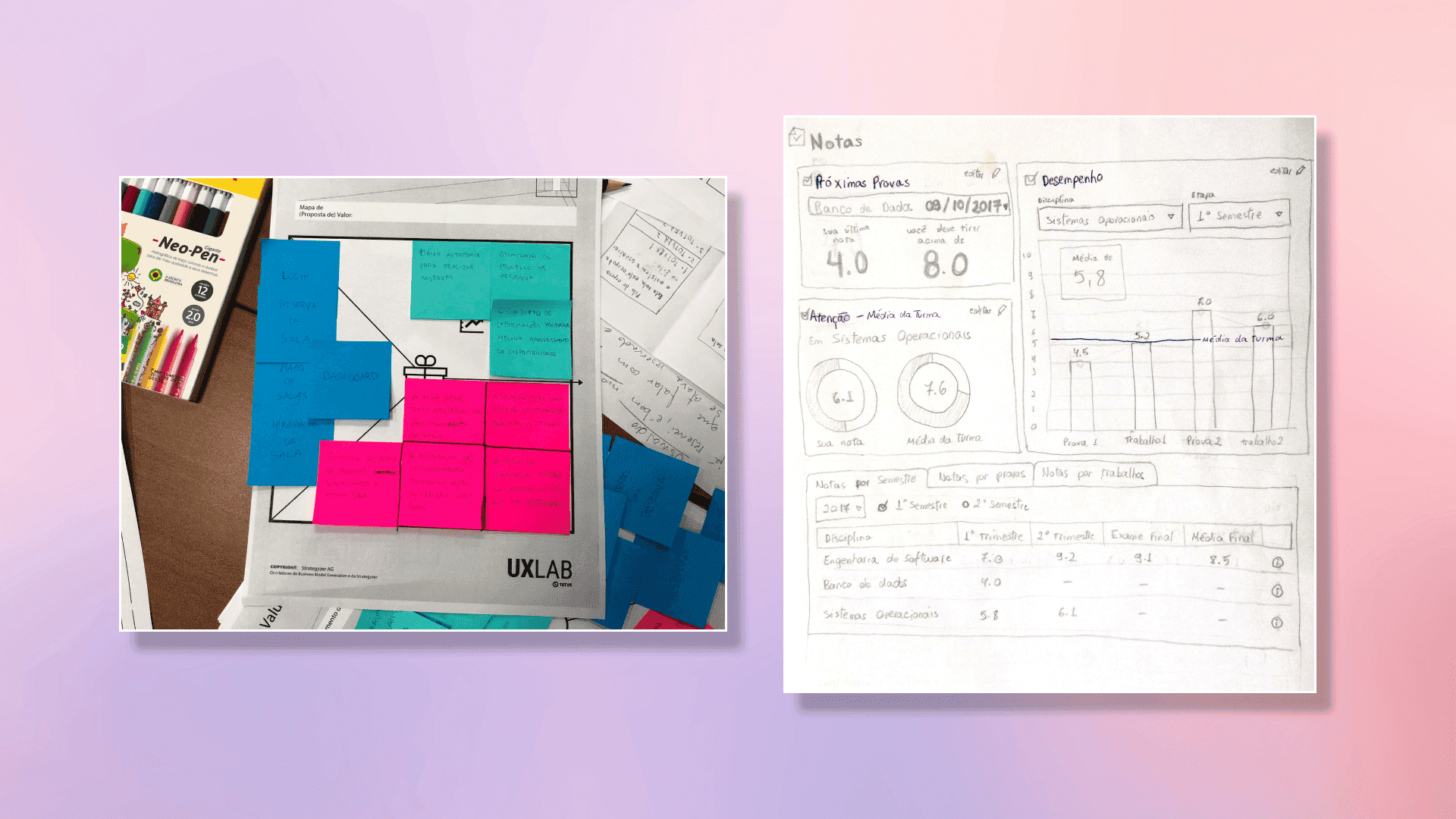
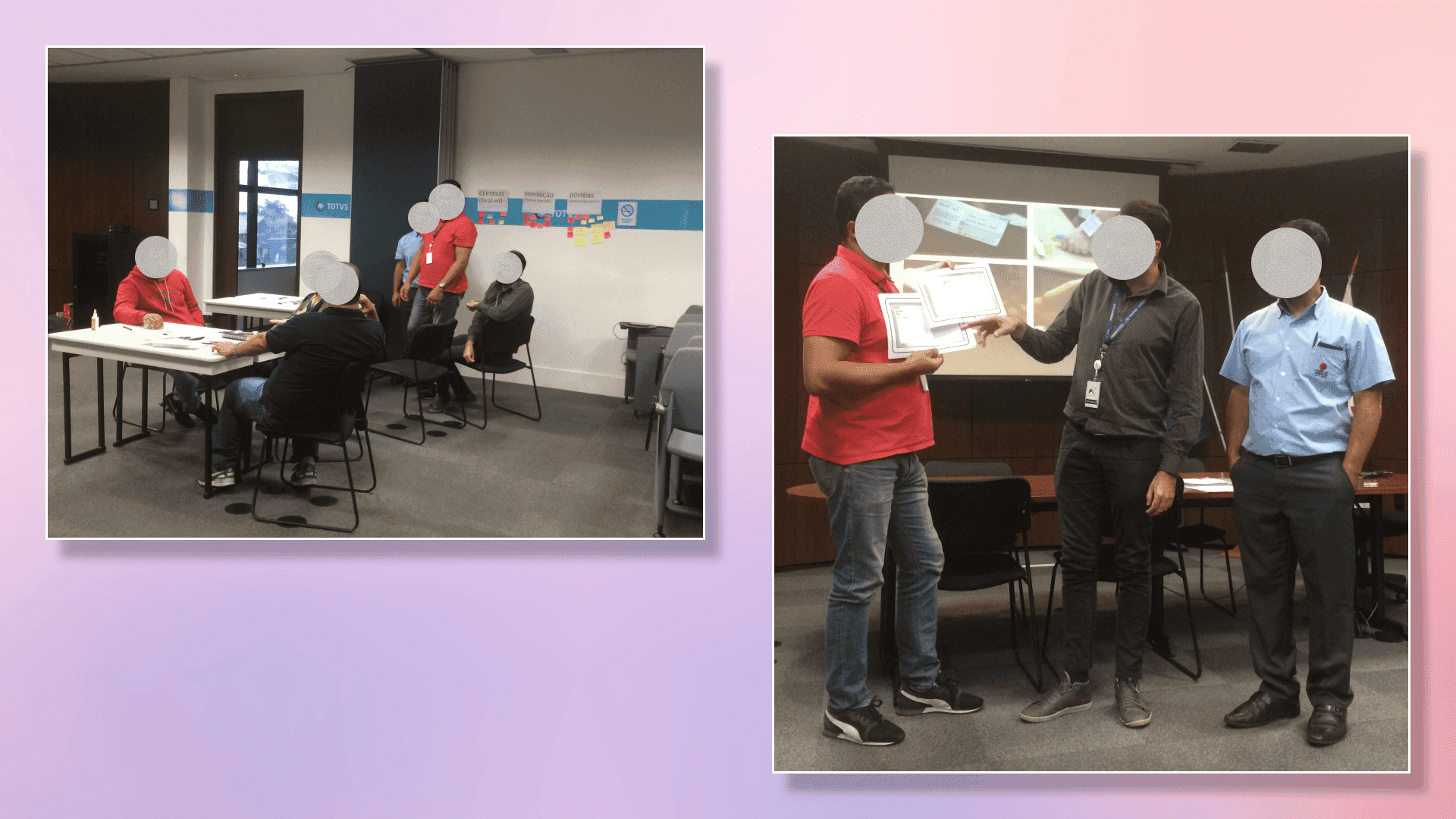
The project started with a 3-day TOTVS Design Sprint, bringing together participants from different areas to accelerate discovery, ideation, and definition of the platform’s core flows.
During the Sprint:
Academic and administrative journeys were mapped
Main operational pain points were identified
Priority workflows were structured
Solutions focused on digital self-service were generated
By the end of Day 3:
Low-fidelity prototypes were presented by workshop participants, consolidating the product direction and serving as the foundation for the platform’s implementation.
This accelerated approach enabled rapid alignment between stakeholders, Product, Design, and Engineering around a shared product vision.
Solution
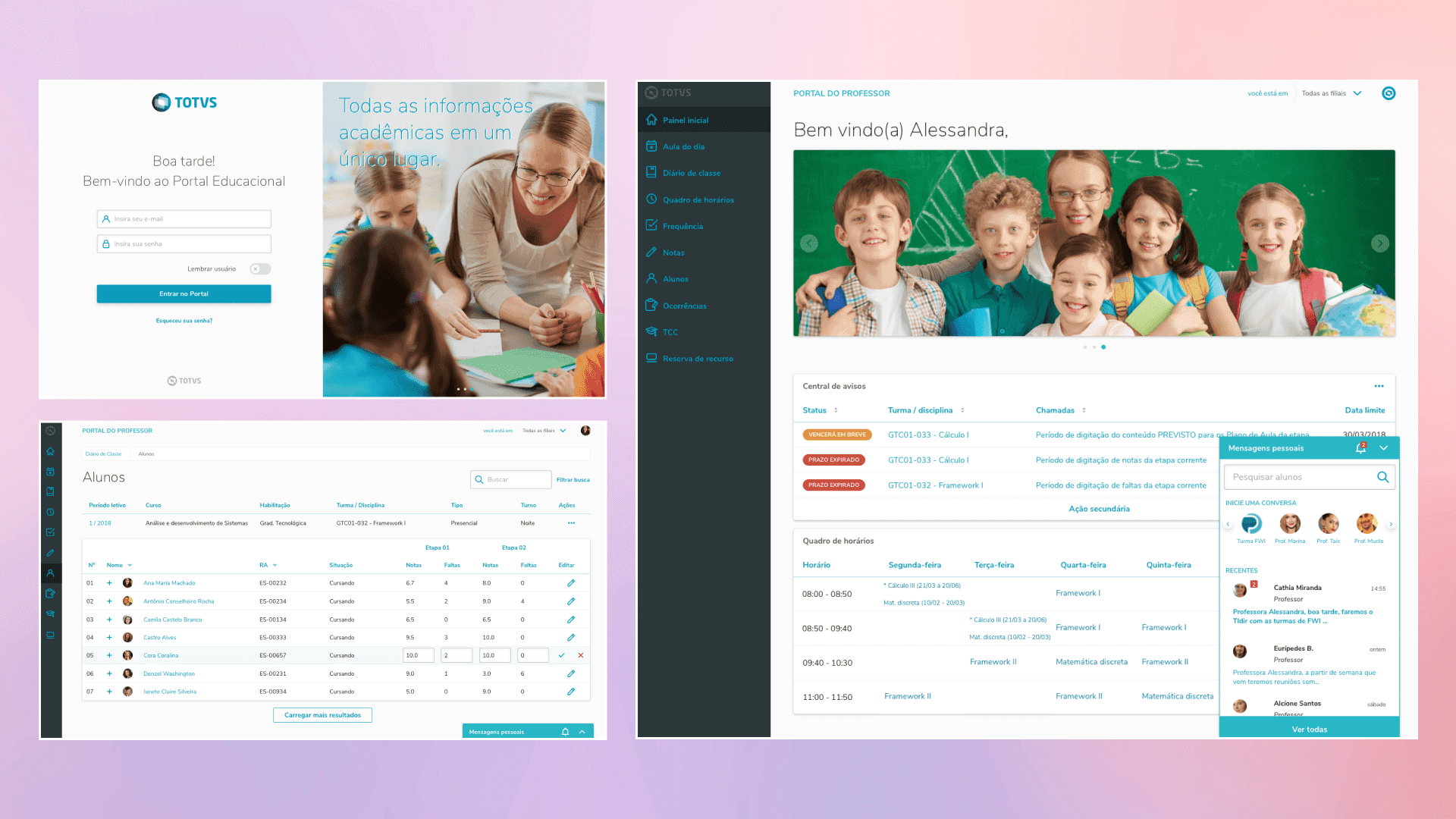
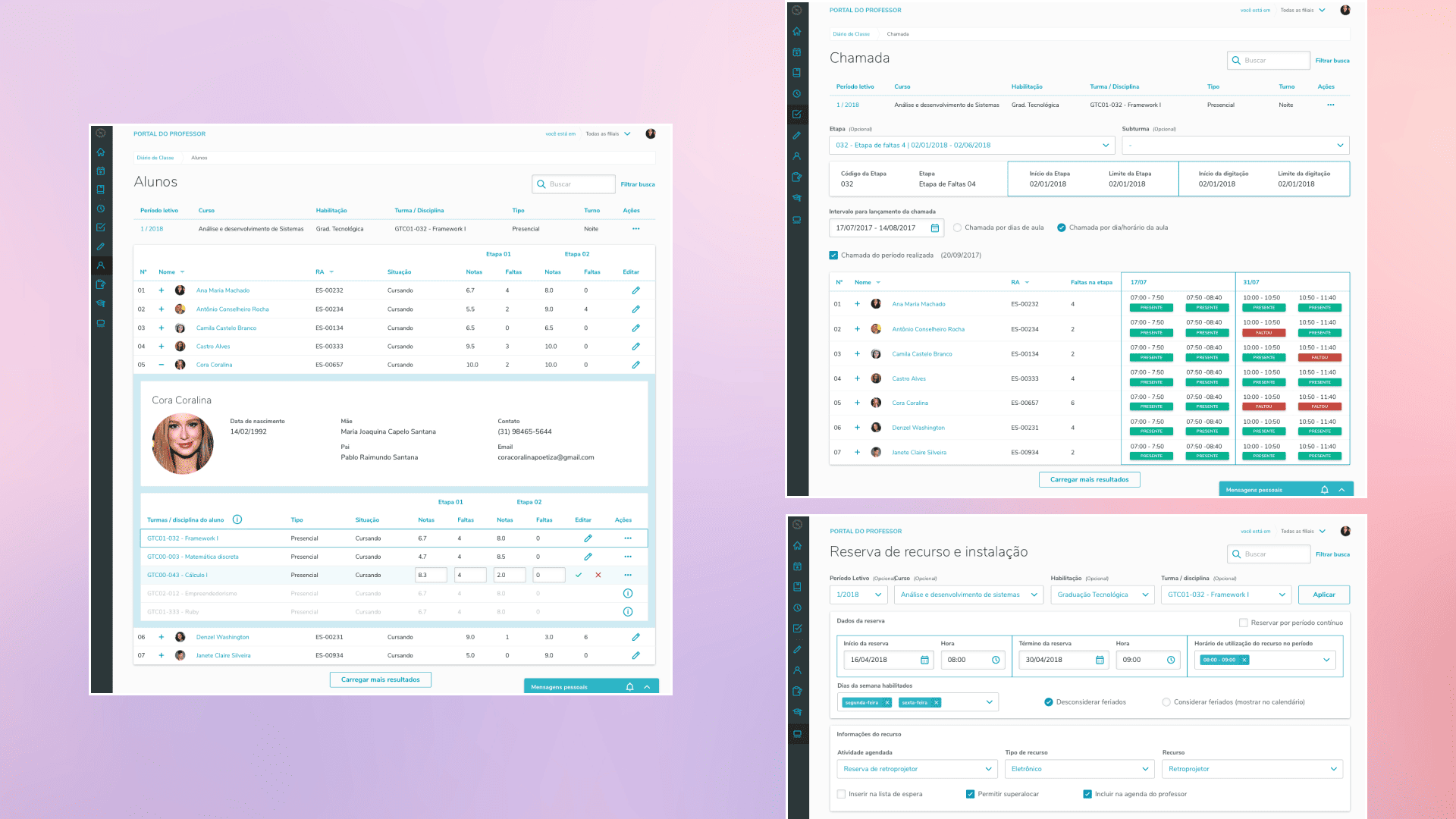
The platform was designed to allow students, guardians, and teachers to perform academic and administrative tasks entirely online.
Main features included:
Grades and attendance tracking
Schedule visualization
Access to academic content
Assessment calendar
Online enrollment
Academic document requests
Digital contract signing
Financial management and invoice generation
Online debt negotiation
The project’s primary goal was to reduce academic bureaucracy while increasing user autonomy through a centralized and accessible experience.
Development
Development was carried out collaboratively through agile Product, Design, and Engineering teams, enabling continuous evolution and incremental delivery.
Cross-functional collaboration was essential to:
Ensure technical feasibility
Prioritize critical features
Maintain consistency across the experience
Quickly adapt workflows to institutional needs
Results
The Student/Teacher Portal became a digital solution capable of reducing academic bureaucracy and strengthening communication between educational institutions, students, guardians, and teachers.
The platform started supporting critical academic workflows across institutions served by the TOTVS Educacional ecosystem, including operations connected to SESI/FIEMG.
Observed impacts:
Increased digitization of academic and financial processes
Reduced dependency on in-person administrative support
Greater user autonomy in administrative workflows
Improved communication between institutions and academic communities
Scalability across different schools and universities
Key Takeaways
Digital educational experiences must prioritize clarity and autonomy
Service digitization directly impacts operational efficiency
Design Sprint accelerates alignment in complex projects
Scalable products require continuous collaboration between Design, Product, and Engineering