ROLE:
Product Designer
COMPANY:
DSM-Firmenich
PROJECT:
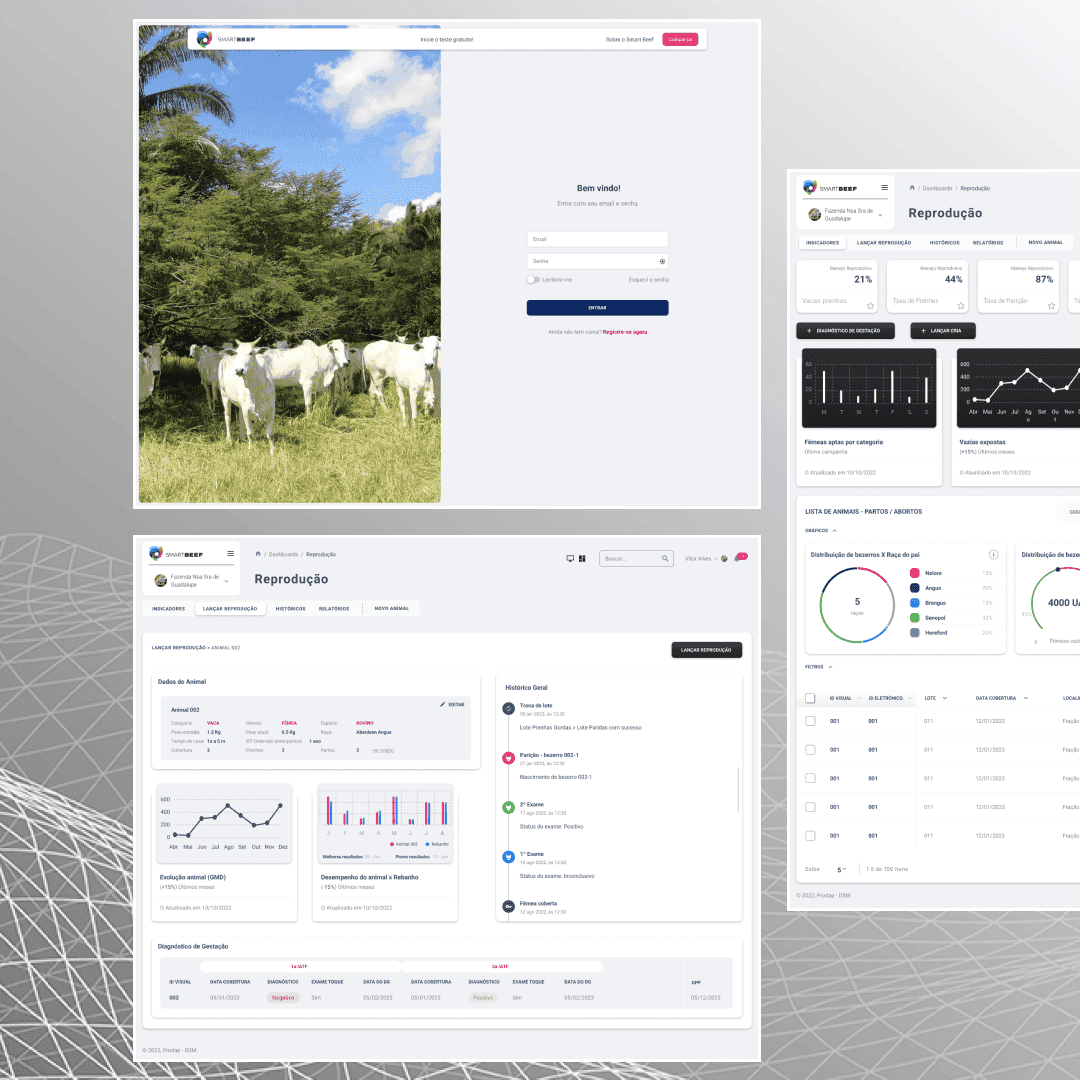
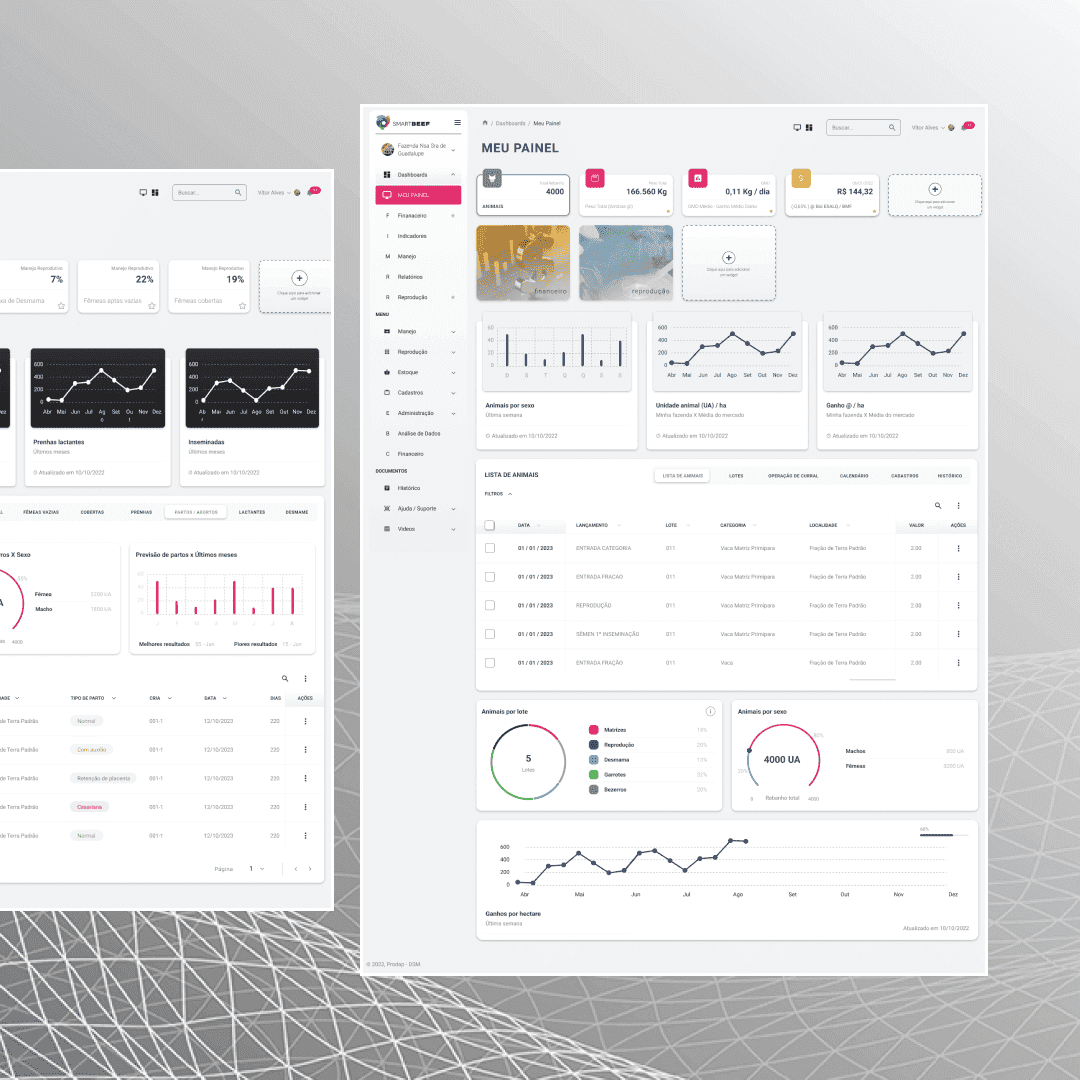
Software para Gestão Pecuária - Reprodução
YEAR:
2022

Executive Summary
Overview
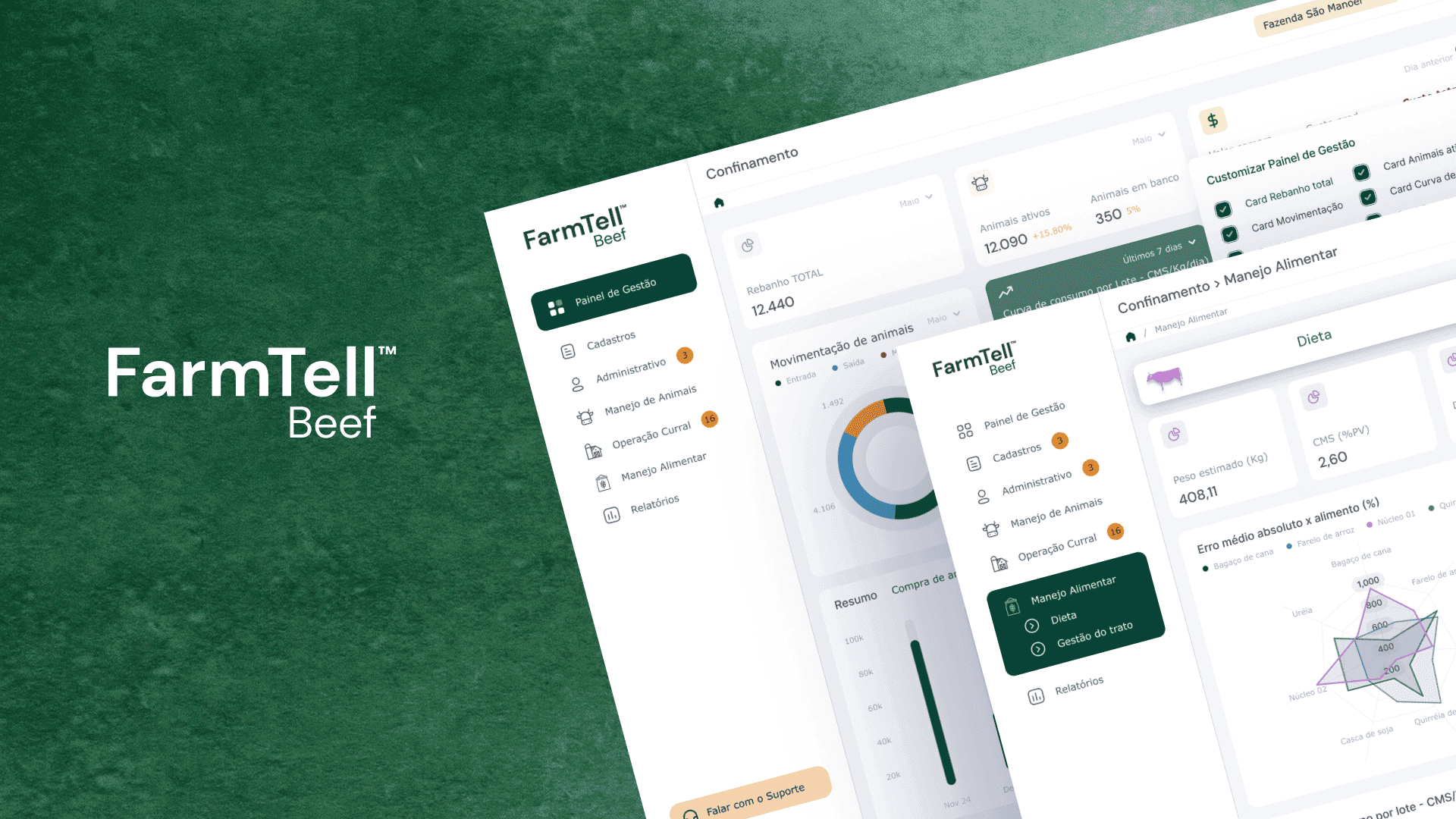
FarmTell Beef Smart, part of the DSM-Firmenich digital livestock ecosystem, is an operational intelligence platform designed to support cattle producers through integrated reproductive, financial, and herd management workflows.
This initiative focused on modernizing a critical reproduction management module inherited from a legacy third-party system, transforming fragmented and operationally complex workflows into a more scalable, data-informed, and user-centered experience.
The project combined churn analysis, ecosystem mapping, field research, and operational workflow redesign to improve product adoption, reduce friction, and support long-term platform evolution.
My Role
Product Designer
Contributed to the product modernization strategy for a critical operational module
Conducted discovery and active listening sessions with clients and former customers
Participated in churn analysis and ecosystem mapping initiatives
Structured user journeys and operational workflow redesigns
Collaborated closely with Product and Engineering teams in agile delivery cycles
Helped balance operational continuity, usability improvements, and scalability goals
The Challenge
Modernize a highly operational legacy module while preserving reliability and user trust across critical livestock management workflows. The platform needed to:
Reduce operational friction and usability barriers inherited from a third-party legacy system
Improve adoption and retention in workflows associated with product churn
Support producers with different operational scales and digital maturity levels
Simplify highly sensitive reproductive management routines without disrupting established behaviors
Enable long-term scalability while maintaining operational continuity
Improve usability in fast-paced field operation environments
Operational & Ecosystem Complexity
The project operated at the intersection of multiple complex layers:
Operationally critical reproductive workflows
Legacy system constraints and user dependency
Product retention and churn challenges
Field operation realities requiring speed and reliability
Diverse user maturity levels across livestock operations
Financial and productivity impact tied directly to workflow efficiency
The core challenge was not simply redesigning interfaces, but evolving an operational ecosystem without breaking the trust and routines already established among producers
Key Decisions
Conduct Lean Inception workshops → aligned business, product, and technical vision
Analyze qualitative and quantitative churn data → identified usability and adoption gaps
Include active listening sessions with clients and former clients → uncovered operational frustrations and unmet needs
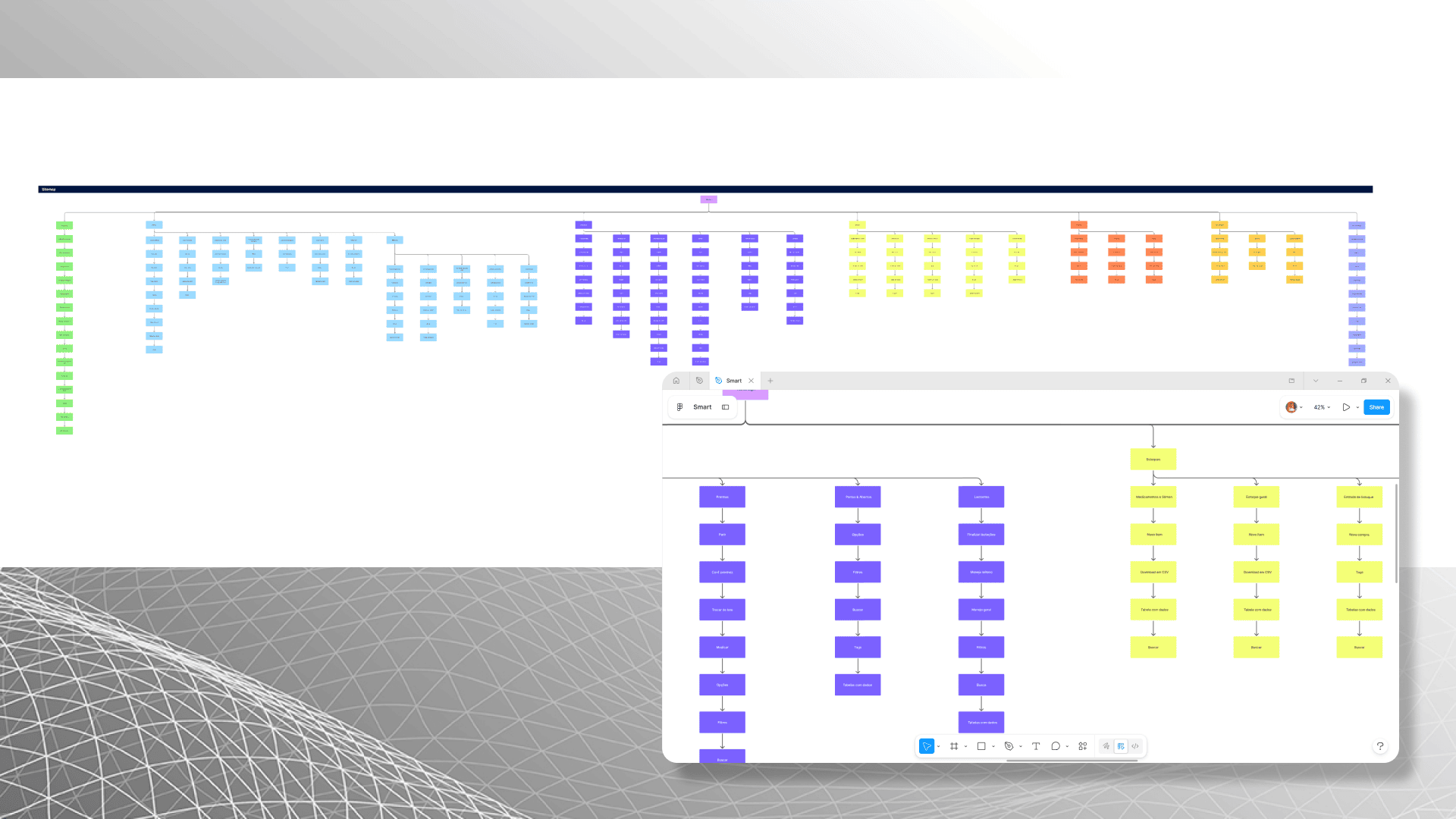
Map the complete service ecosystem → enabled systemic understanding of workflows and dependencies
Refactor instead of rebuilding entirely → preserved operational continuity and reduced adoption risks
Impact
Modernized a critical operational workflow within the FarmTell ecosystem
Improved clarity and usability across reproductive management routines
Reduced friction inherited from legacy interaction patterns
Strengthened alignment between product workflows and real producer operations
Established a more scalable foundation for future platform evolution
Contributed to a more data-informed product evolution strategy
Key Learnings
Legacy modernization requires balancing innovation with operational trust
Churn analysis can reveal strategic product evolution opportunities
Operational products succeed when speed, clarity, and reliability coexist
Ecosystem mapping is essential in highly interconnected operational platforms
Incremental transformation is often more sustainable than disruptive redesign
Deep Dive
FarmTell Beef Smart is part of DSM-Firmenich’s livestock digital ecosystem, supporting producers in feedlot and cattle rearing management through integrated operational and financial tools.
The platform supports:
Feedlot management
Herd performance tracking
Reproduction management
Health and weighing control
Financial and operational monitoring
The project focused specifically on the refactoring of the reproduction module, originally inherited from the legacy system A3 Pecuária, acquired from a third-party provider.
Although the previous module already supported operational routines, it presented:
Legacy interaction patterns
Poor usability
Fragmented workflows
High operational complexity
Product churn indicators
Problem Complexity
The project involved multiple layers of complexity:
Operational sensitivity → reproductive workflows directly impact herd productivity and financial outcomes
Legacy constraints → existing workflows could not be radically disrupted
User diversity → producers with varying levels of technical and digital maturity
Field operation realities → fast interaction and mobile accessibility were critical
Product retention challenges → churn analysis revealed friction points and adoption barriers
The challenge was to redesign the experience while preserving operational trust and continuity for users already dependent on the system.
Product Evolution Approach
The initiative combined strategic discovery, operational analysis, and continuous product evolution through agile collaboration.
The approach integrated:
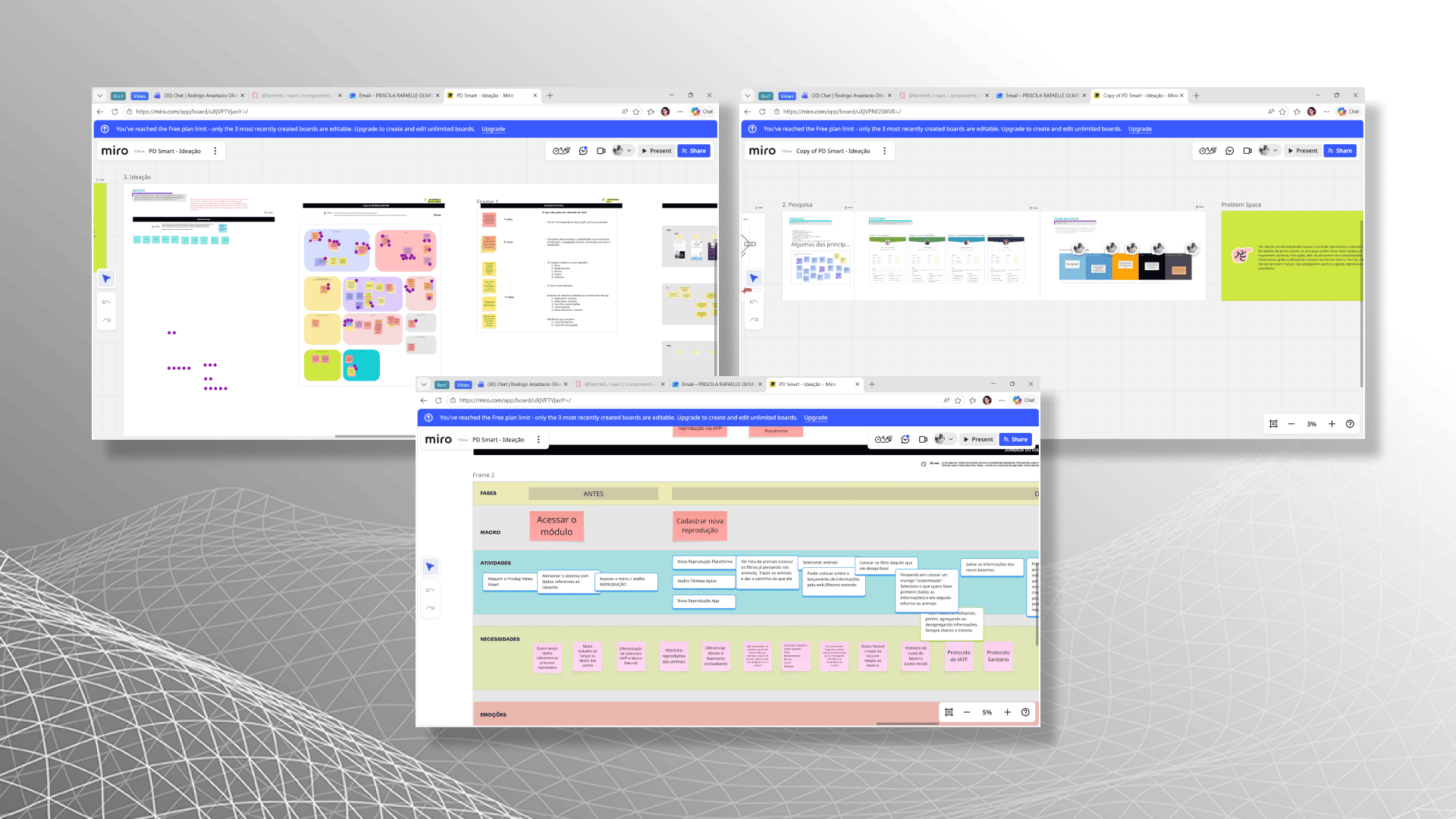
Lean Inception workshops
Churn behavior analysis
Customer and ex-customer active listening sessions
Ecosystem and workflow mapping
Operational prioritization
Incremental product modernization
The objective was to guide product evolution through both behavioral evidence and real operational context.
Discovery & Research
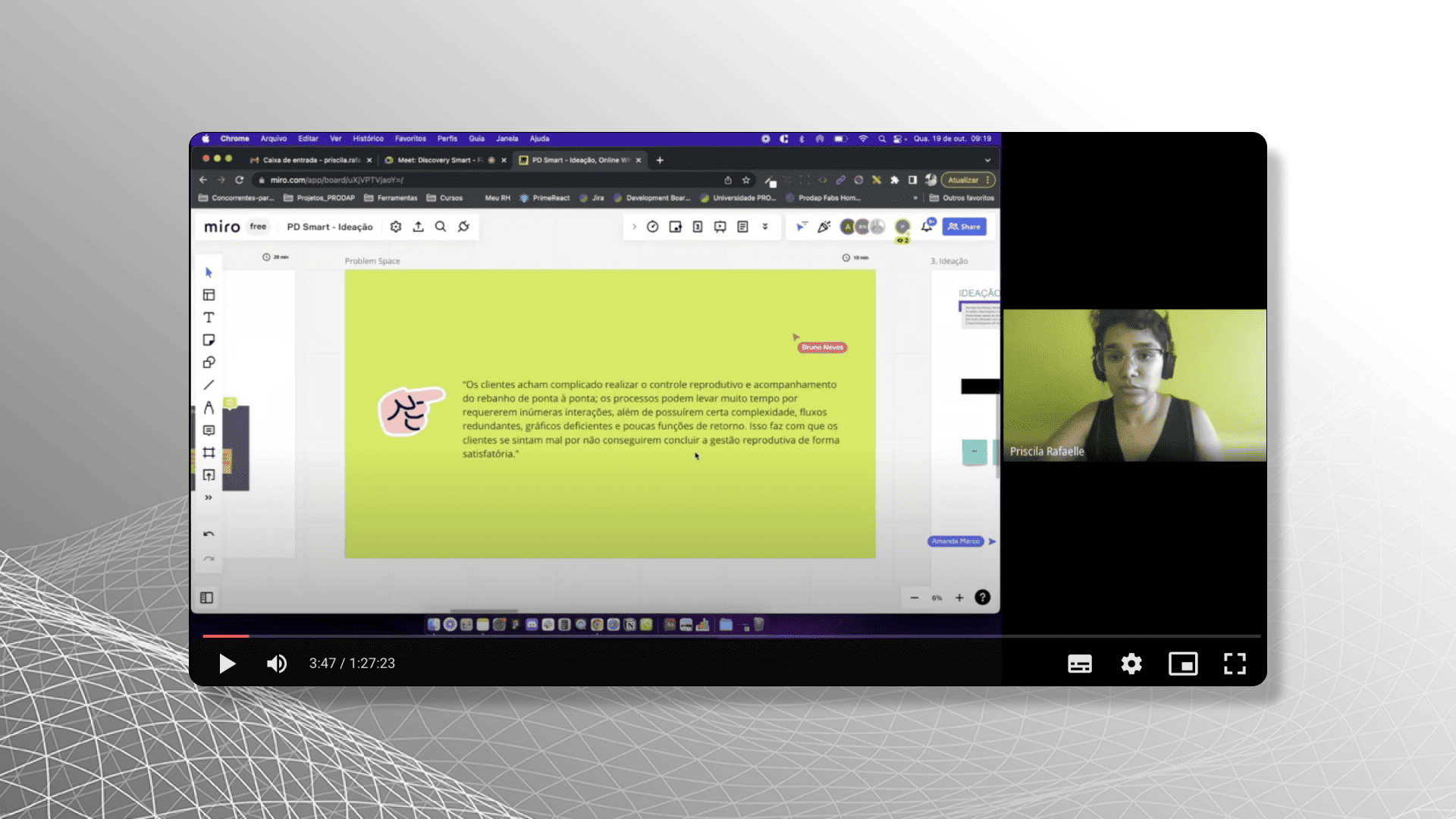
The project began with a UX Workshop based on Lean Inception, bringing together stakeholders, Product, Design, and Engineering teams to align product goals and business priorities.
Research activities included:
Competitor analysis
Evaluation of legacy product pain points
Analysis of churn patterns and adoption issues
Interviews and active listening sessions with customers and former customers
Focus areas:
Operational bottlenecks in reproductive workflows
Reasons for churn and low engagement
Difficulties in data entry and tracking
User expectations regarding mobility and usability
Churn Analysis & Ecosystem Mapping
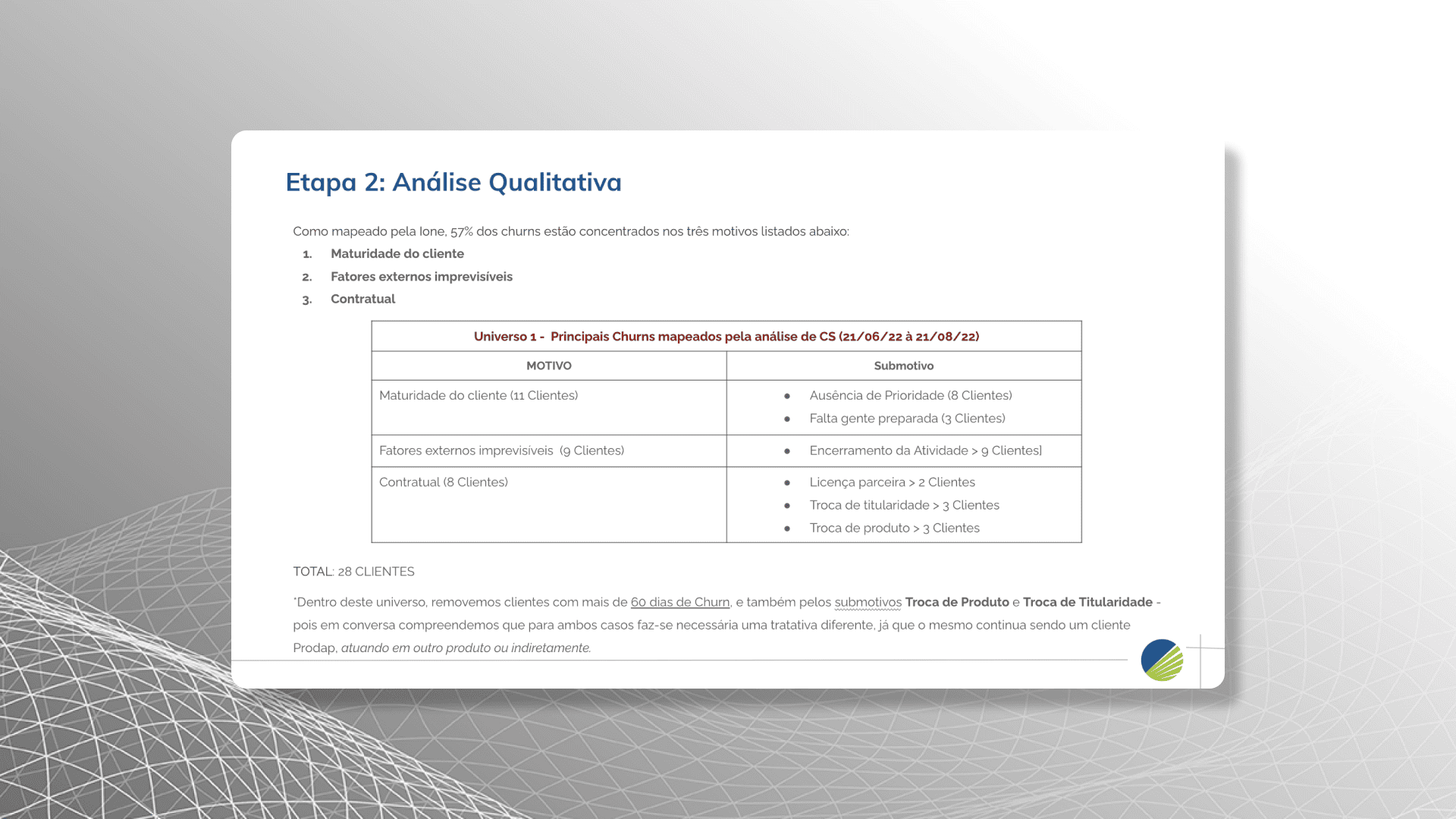
One of the project’s main differentiators was the combination of qualitative research with churn behavior analysis.
We investigated:
operational friction points;
workflow abandonment patterns;
adoption barriers;
repetitive manual processes;
and gaps between product logic and real-world operational routines.
This allowed the team to prioritize product evolution based not only on assumptions, but on real behavioral and operational evidence.
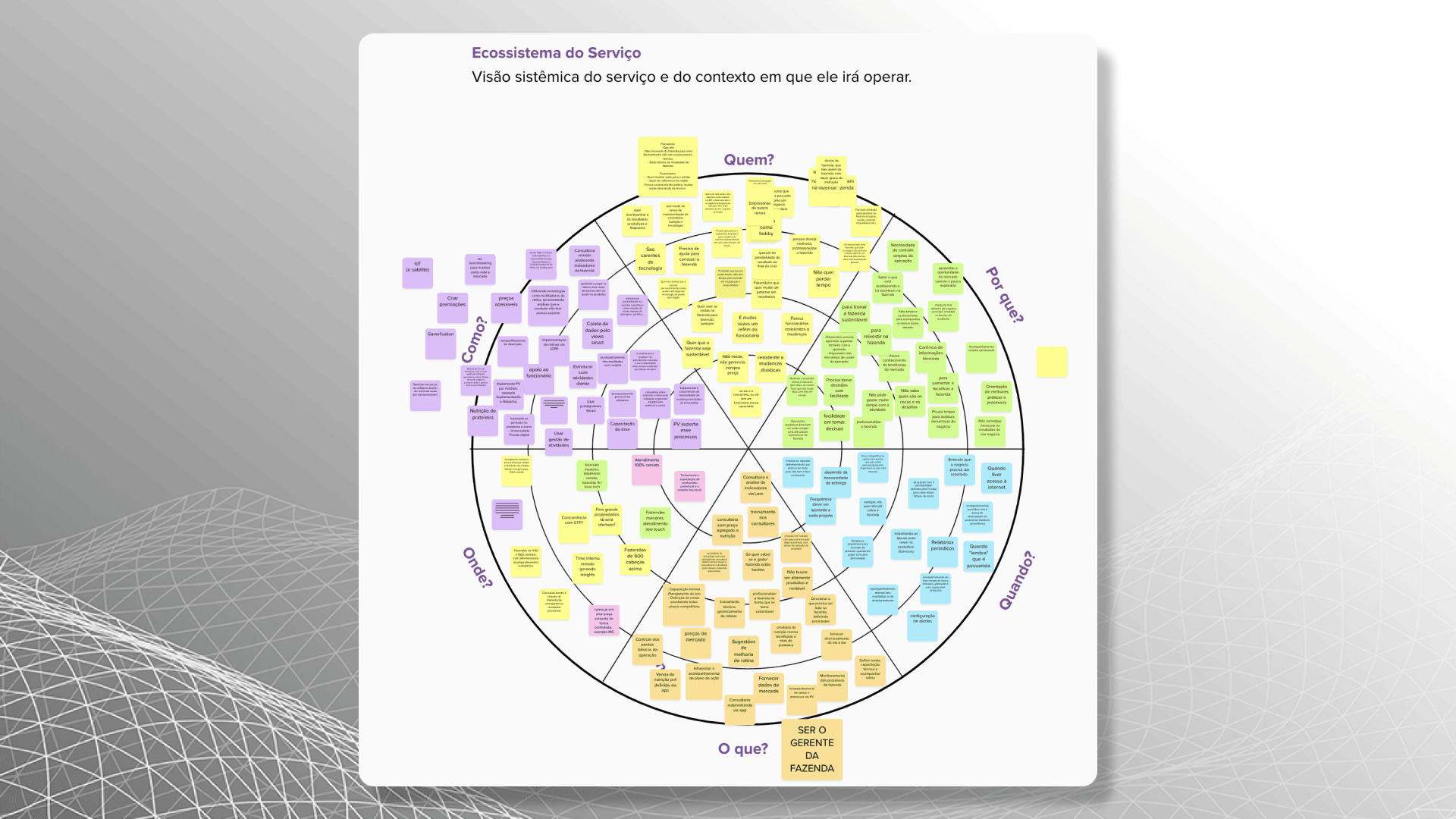
We also mapped the complete service ecosystem, including:
Field operations
Reproductive management routines
Financial dependencies
Technical support interactions
This systemic view helped guide prioritization and product evolution decisions.
Ideation & Product Evolution
Insights generated through research and operational analysis informed workflow redesign decisions focused on:
reducing friction in repetitive operational tasks;
improving information hierarchy;
supporting faster field decisions;
simplifying high-frequency interactions;
and modernizing workflows while preserving operational familiarity.
The product evolution strategy prioritized incremental transformation instead of disruptive replacement, reducing adoption risks while enabling long-term scalability.
Development
The project was developed collaboratively within agile squads, promoting continuous alignment between Product, Design, and Engineering.
This approach enabled:
Incremental evolution of the platform
Faster adaptation to operational needs
Continuous prioritization of critical workflows
Results
The refactoring initiative modernized a critical module within the FarmTell Beef Smart ecosystem, improving operational clarity and reducing friction in reproductive management workflows.
Observed impacts:
Improved organization of reproductive management processes
Better alignment with real producer routines
Reduction of usability pain points inherited from the legacy system
Stronger product foundation for future scalability and evolution
Key Takeaways
Refactoring requires preserving user trust while evolving the experience
Churn analysis can reveal strategic product opportunities
Operational products must prioritize speed, clarity, and reliability
Ecosystem understanding is essential in complex domain products